

I started reading Desert Solitaire by chance while we were in Oman. The beauty and accuracy of the desert descriptions touched me and left me craving more. And here we are, finally, in the national parks of the Southwestern United States. Arid expanses, layers of colorful rocks, and nothing in sight except for a few mesas, hoodoos, spires, fins, canyons, and terraces… New words I discovered with Abbey and whose meaning I now fully appreciate. Abbey describes his book as an evocation, a poem. I could never capture the beauty, the vastness, or the fragility of the desert as he did.
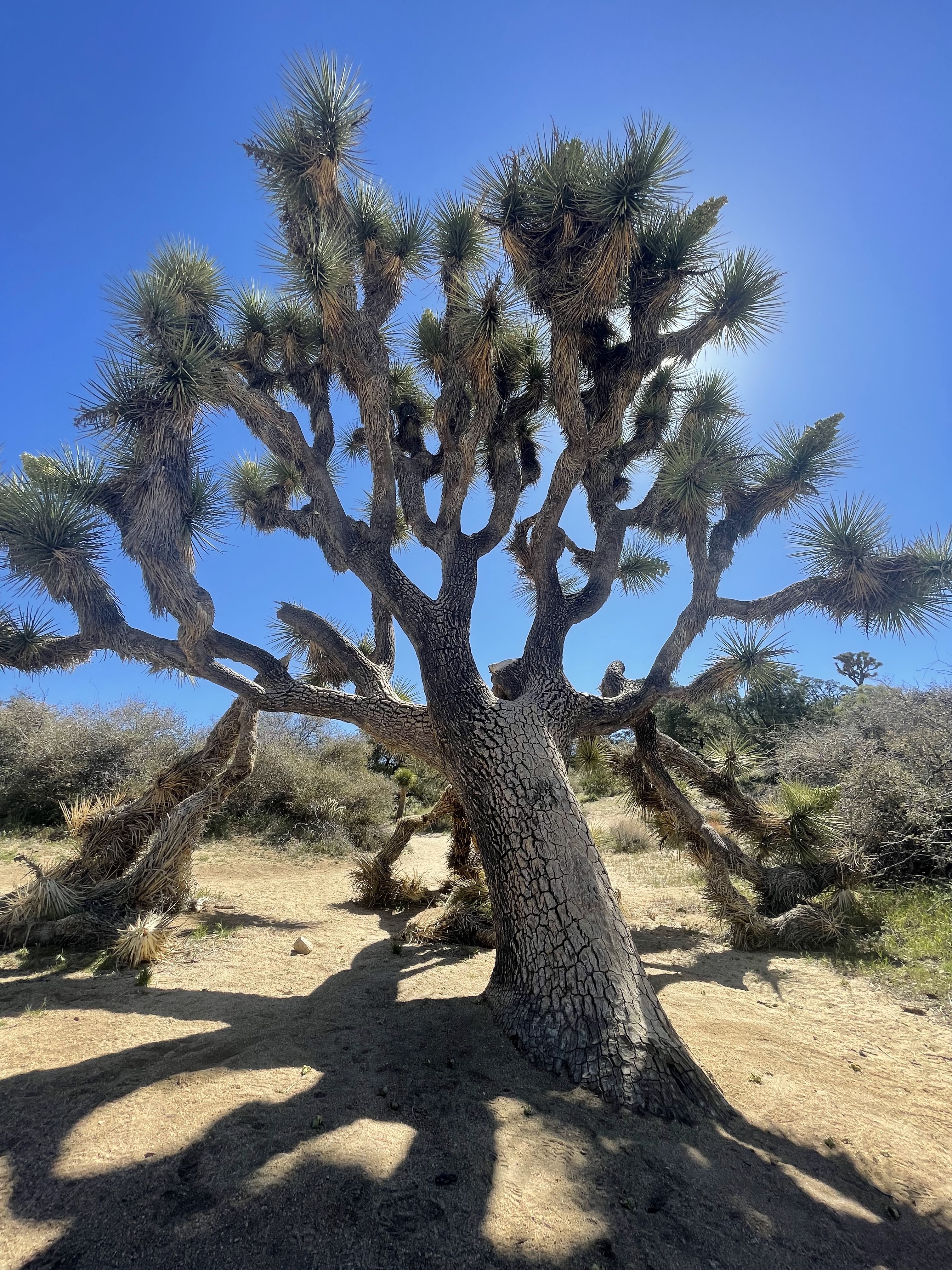
The first national park we visited was Joshua Tree. Its unique vegetation, with Joshua trees, cacti, yuccas, and agaves, left a strong impression on us. Next, we headed to the famous Grand Canyon. Our Lonely Planet guide described it roughly like this: no matter the photos, films, or other descriptions you’ve seen before arriving, nothing can prepare you for the dizzying view of the Grand Canyon, carved over 7 million years by the Colorado River, with a drop of over a thousand meters.
From the South Rim, the southern edge of the canyon, we were indeed left speechless by this elevation drop of more than 1,750 meters. In the following days, we visited Lake Powell and its flooded canyons, Zion with its oasis nestled within rock walls surrounded by desert that would make any cowboy dream, Bryce with its red stone totems standing like a forest of rock, Kodachrome and its rounded red sandstone shaped by wind and rain, Grand Staircase-Escalante with its narrow Peek-a-Boo and Spooky canyons that you navigate through, hoping to squeeze through, Capitol Reef with its petroglyphs at the foot of massive mesas that make you feel so small, Natural Bridges and its natural stone arches formed by rivers, Monument Valley, where our Navajo guide showed us the hidden treasures of iconic stone monuments, and finally, Abbey’s land, Canyonlands and Arches.
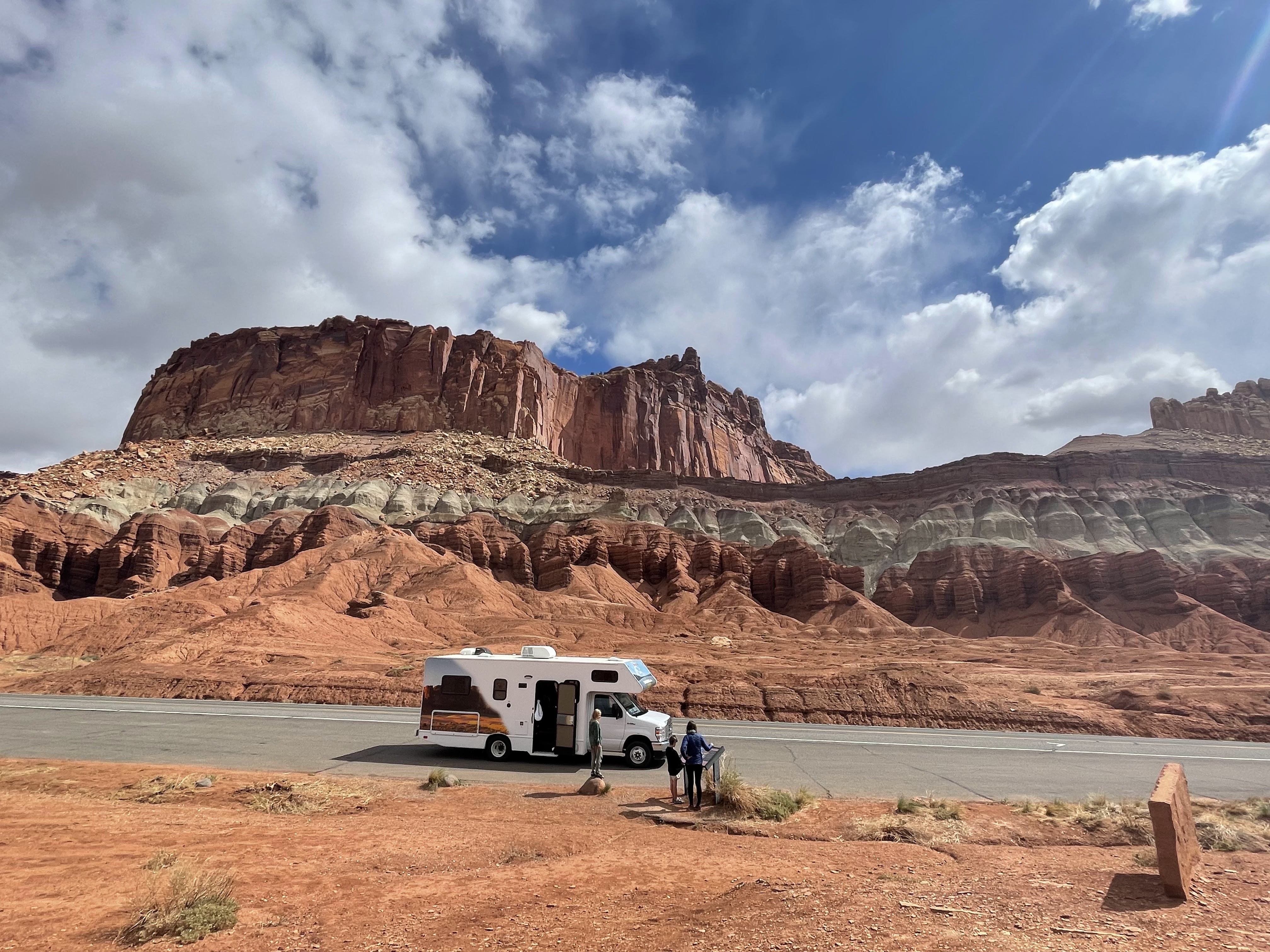
For three weeks, we traveled with our RV in every direction across Arizona and Utah. Along the way, we spent hours and hours dreaming as we watched the landscapes pass by. Straight roads disappearing into the horizon, with white clouds gathering above them and incredibly beautiful sceneries unfolding before our eyes.

“Are we going to see the rangers?” the kids ask first thing when we arrive at a park. They are fascinated by the rangers, the park wardens responsible for the preservation and protection of the park. We bombard the ranger with questions: What are the must-see spots? Which hikes are suitable for children? Are there any dangers we should be aware of? What are the most beautiful trails? Anna and Arthur are real hikers. They walk for miles on the trails, look for the stone “cairns” that point us in the right direction, and have fun on and between the rocks. Some parks are like a vast playground.
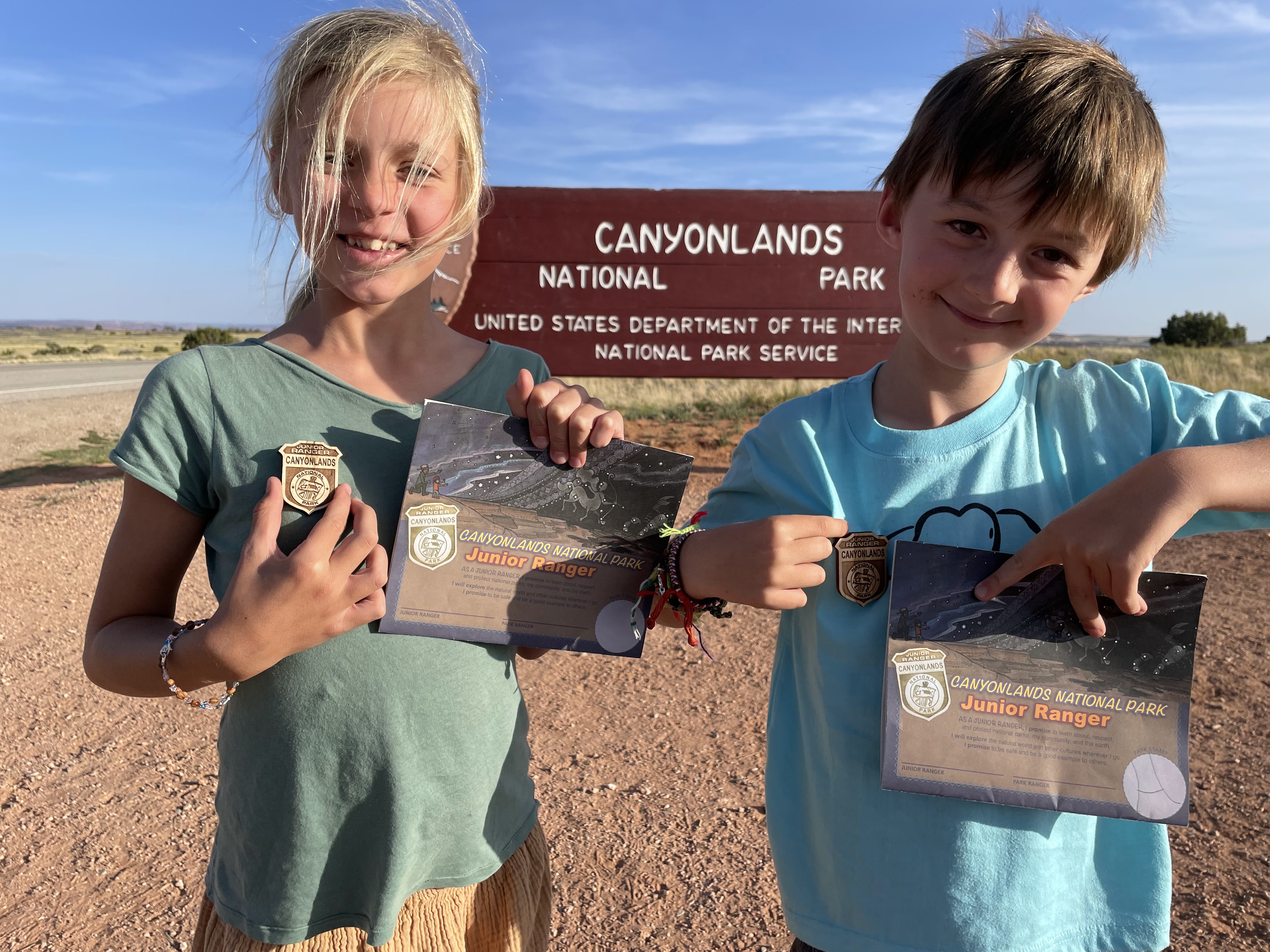
Anna and Arthur have even become Junior Rangers! They proudly wear their Junior Ranger badges, which they received at Canyonlands and Arches, and they even took an oath in front of the rangers to protect the national parks. Before we head out on a hike, they go through the checklist of things we must not forget in our backpacks. Water, at least one liter per person, sunglasses, a hat, sunscreen, an extra layer of clothing, a map, binoculars, a compass, and enough food, preferably fruits and salty snacks. We look for challenging half-day or sometimes full-day hikes. In American parks, you can easily choose your level of difficulty. Today, roads crisscross most parks, much to the delight of visitors who can enjoy the scenery by car or by stopping at the designated parking areas. Or there is a shuttle service that takes you there. Many people no longer bother to get out of their cars, let alone hit the trails.


Abbey would be rolling in his grave if he saw this. He was right; parks shouldn’t be visited by car. He would have wanted to preserve these places from the hordes of tourists and automobiles. He wanted the parks to remain domains free from cars. “Get out of your cars!” Abbey would have probably shouted at them.
Of course, not all Americans are like that. We also come across those wilderness enthusiasts who sleep under the stars, who descend into the canyons’ depths to touch the raw, wild nature that survives in the heart of the parks. Out of nowhere, we see a man lifting his 4-year-old daughter out of a crevice. “We made it!” he tells her. He explains that down below is Black Cave, and further ahead is Finn Canyon. He seems completely wild. Then we run into Keyvan again, whom we met two days earlier at Canyonlands, where he had pitched his tent on a promontory at the canyon’s edge, preparing his meal. Now at Arches, he had spent the night in a narrow canyon to stargaze.
Sleeping in a park isn’t easy. You need a permit to camp in the wild or a spot at the campground managed by the national parks. Usually, most campsites are booked months in advance, but tonight we got lucky and can sleep in the park, surrounded by nature. After roasting marshmallows around the campfire, we try to find the few constellations we know. But there are too many stars in the desert sky. We are lost.

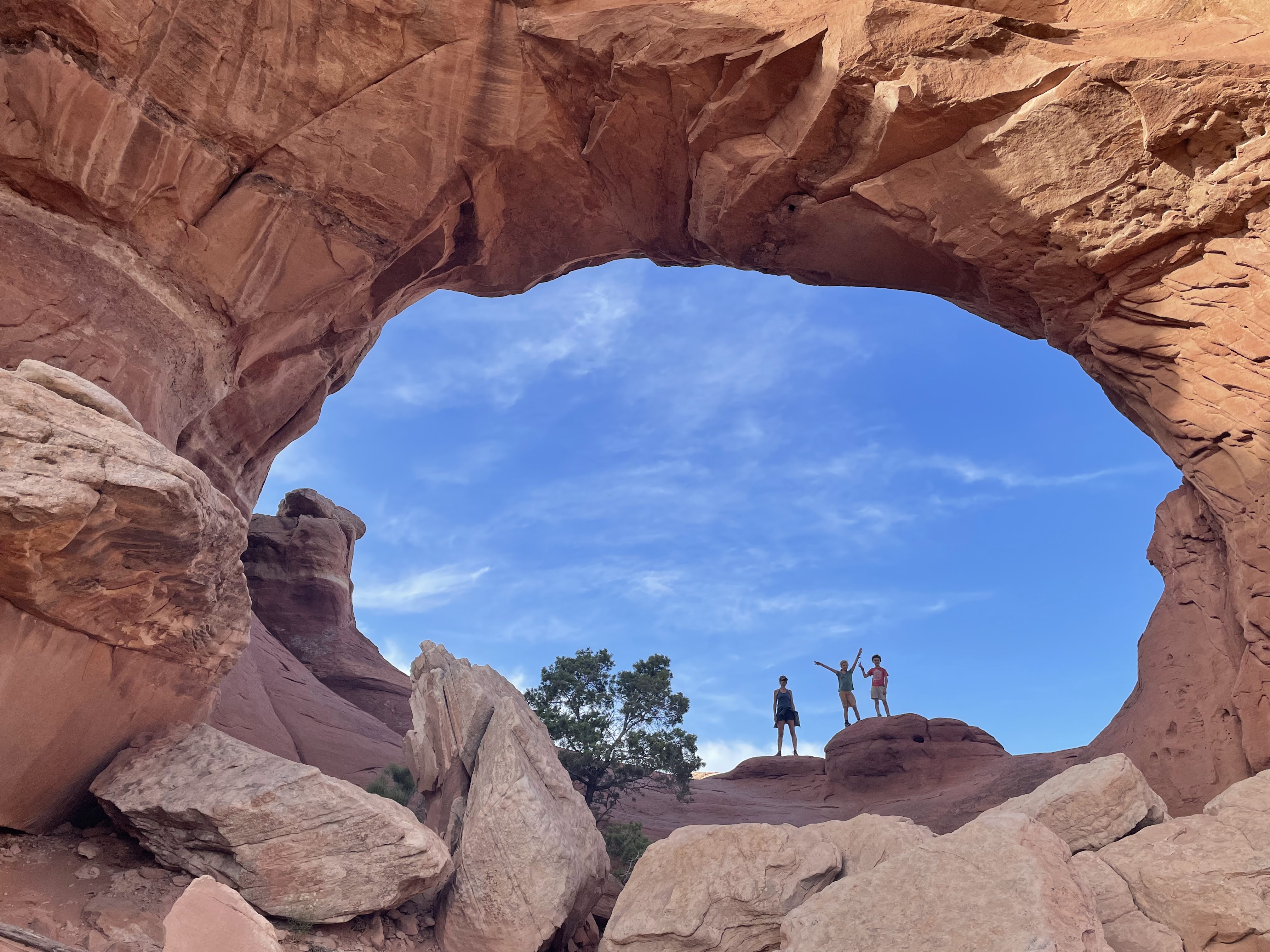
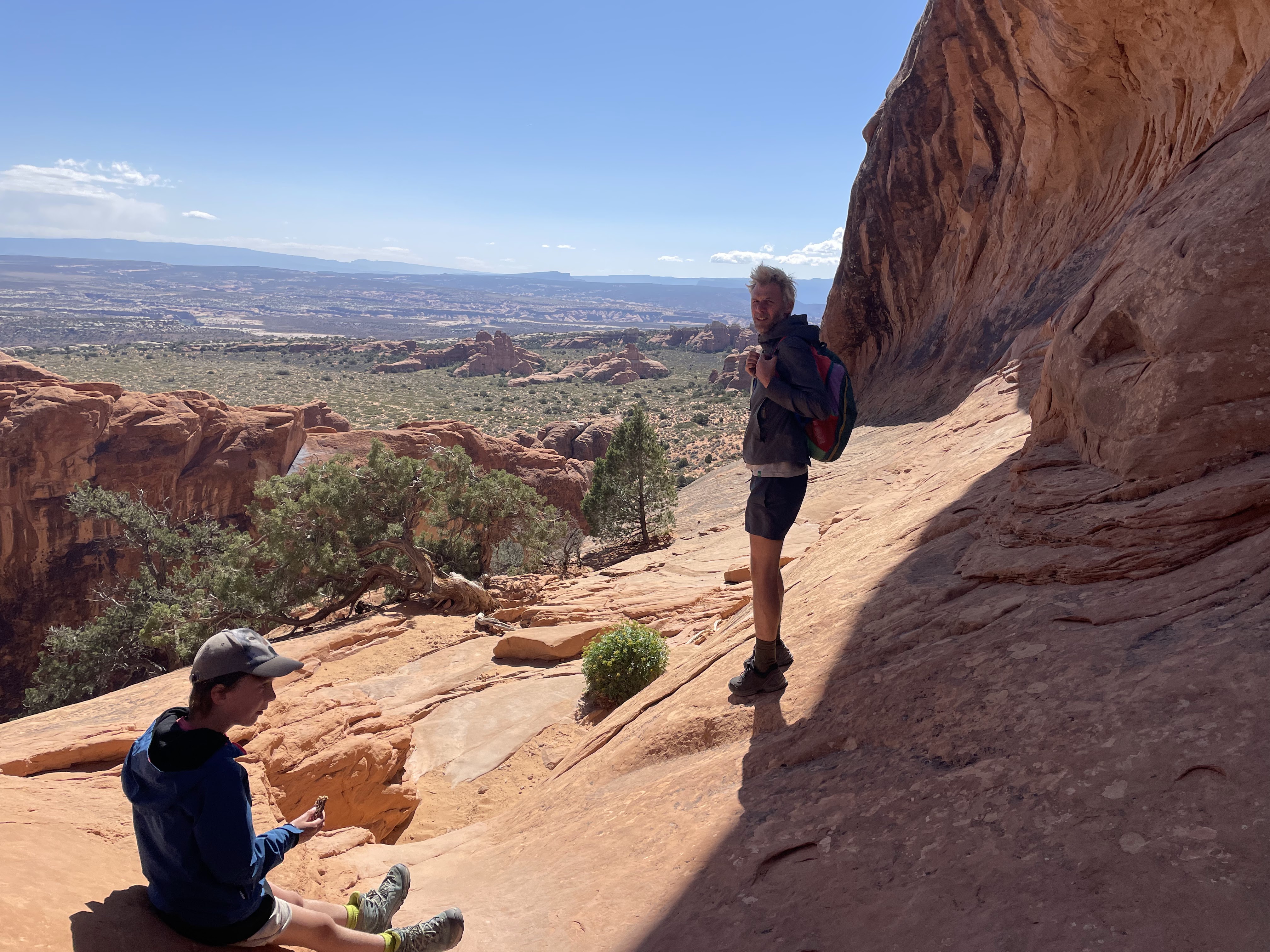
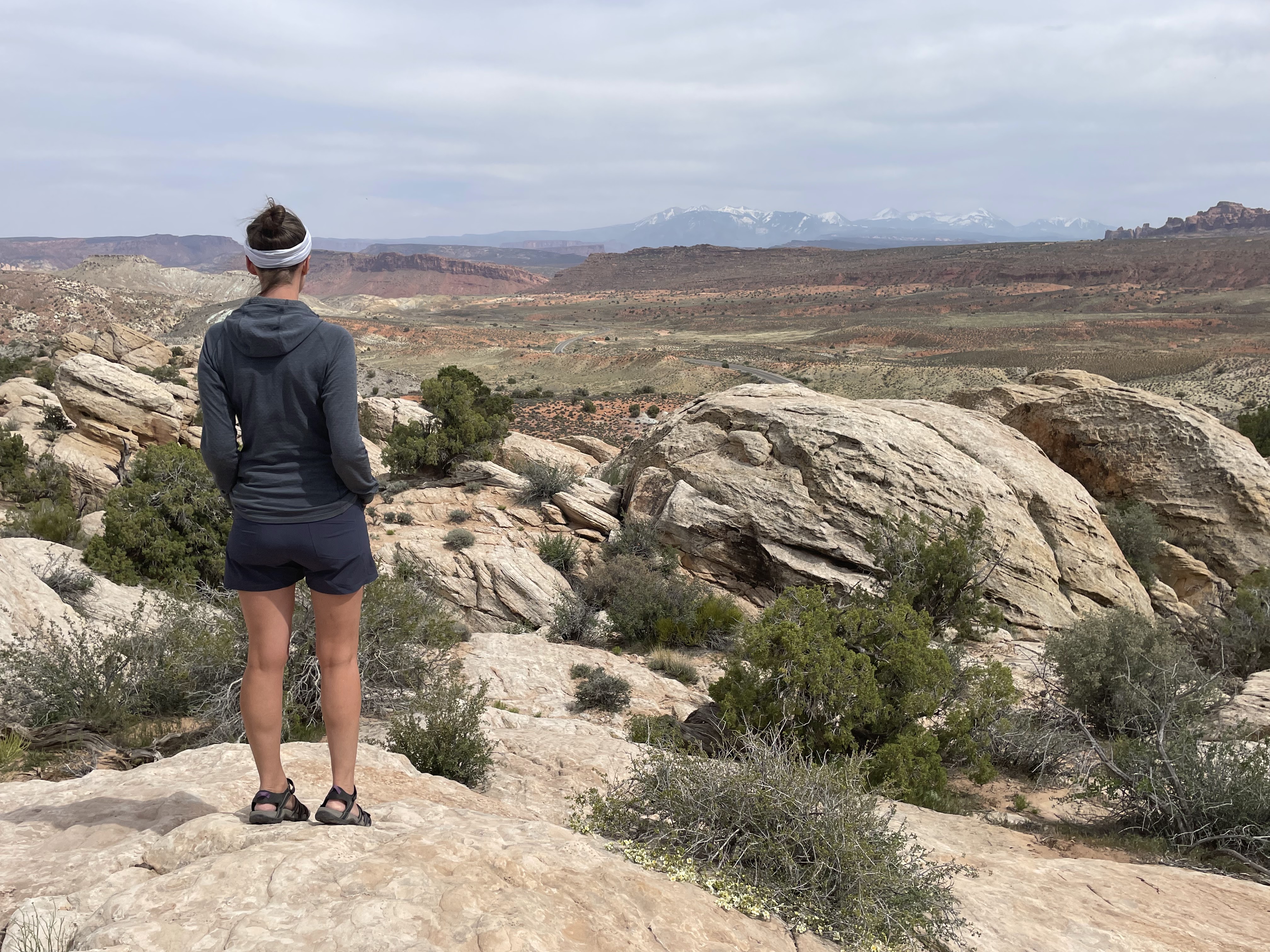
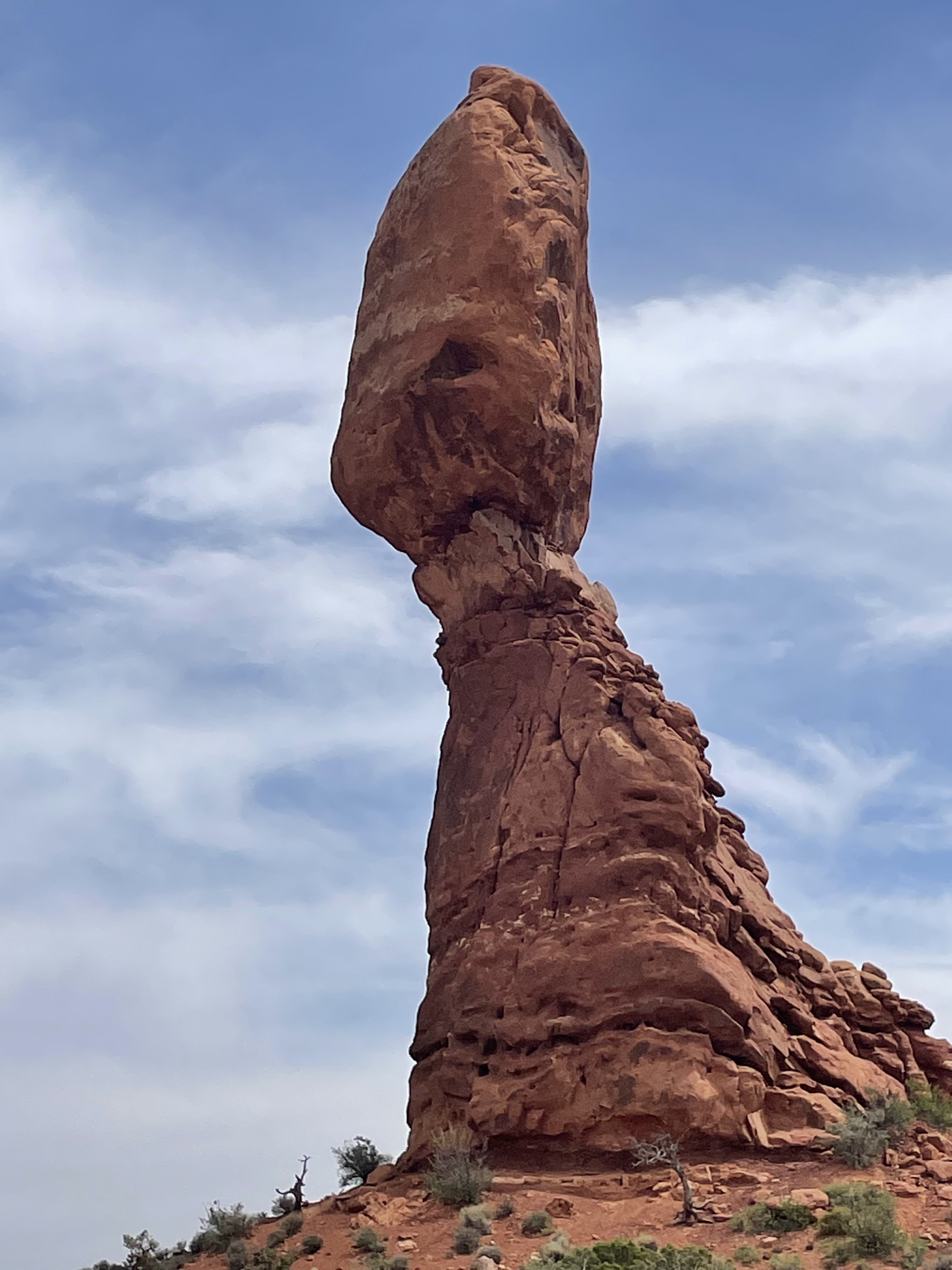
We are often stopped by curious people who hear us speaking this funny mix of French and Dutch, which we sarcastically call “Fruntch.” “Where are you from?” “Which parks have you visited?” We exchange tips and recommendations on which hikes to do. This often ends up lengthening the list of parks we visit: Grand Staircase-Escalante, Kodachrome, Canyonlands…
And yet, there are still so many parks we haven’t managed to visit. Too far away… “It’s all about choices,” we reply when asked whether we’ve done this or that hike. You can’t see everything. You can only catch a glimpse of the beauty in each park, like at Kodachrome, which we explored on horseback.
“What is your favorite park?” people often ask us. “Joshua Tree,” says Jurgen, “Bryce Canyon,” answers Arthur, and for Anna and me, it’s Grand Staircase-Escalante. Each of us has a favorite, one that represents a certain idea of the wild west, the desert, the beauty… In the end, I understand what Abbey wrote. It’s impossible to describe the desert, just as it’s impossible for a fisherman to pull the whole sea into his net. We’ve already seen so many parks, deserts, rocks, canyons. Our RV is filled with the red sand of the desert, a fine sand that gets everywhere. We haven’t encountered any rattlesnakes yet, but we know they’re not far off, just like the desert lions, whose tracks we spotted near our campsite at Arches.
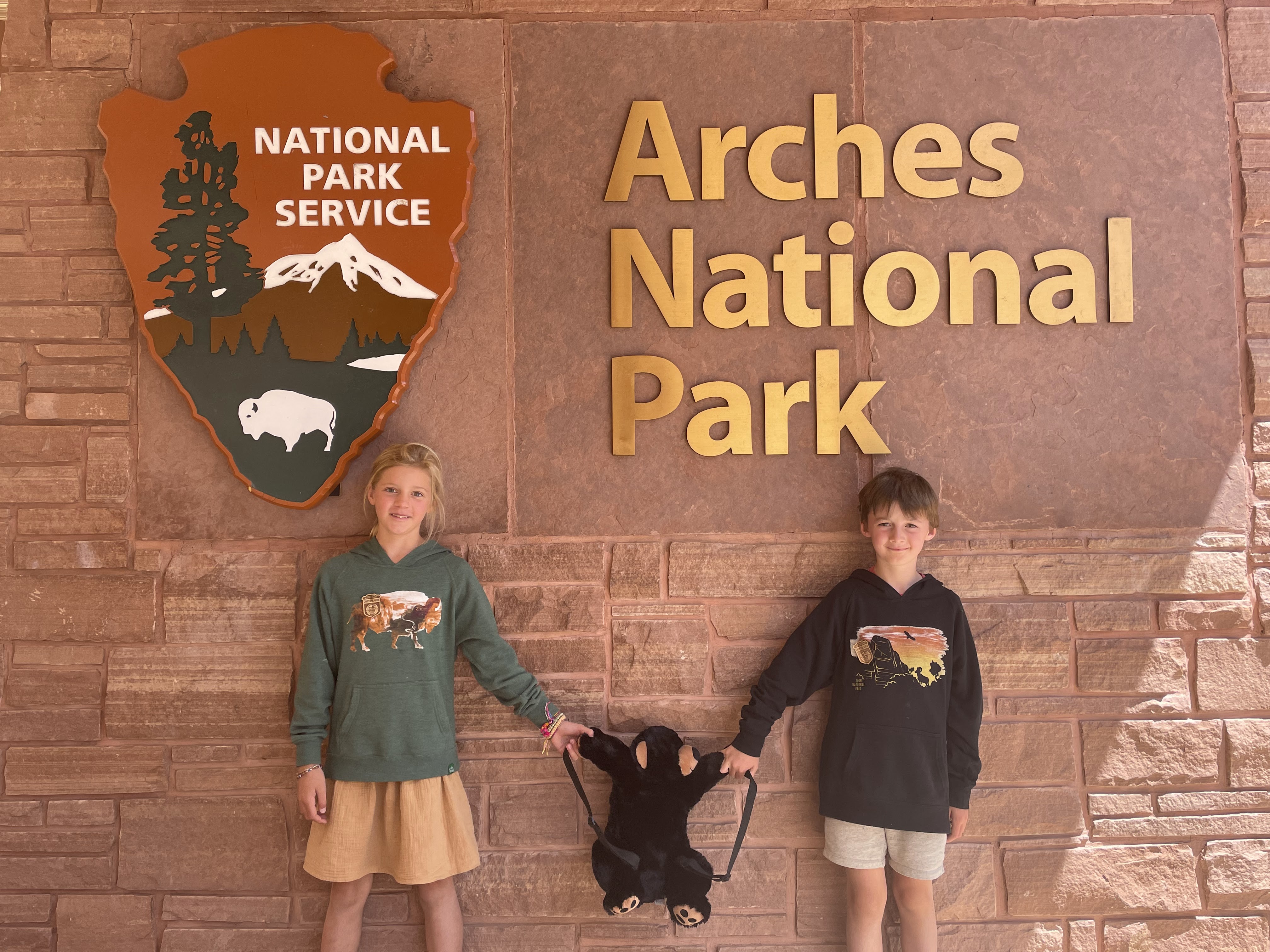
It’s time to head north and see other landscapes. Before leaving Arches, the kids choose a mascot for the rest of the trip: a black bear in the shape of a backpack. Like all our other stuffed animals, it needs a name. We’ll call it…
Abbey!
 Globetrotterdammers