

We Did It!
We’re back in Windhoek, settled in at the hotel while we wait for our flight home. The kids are jumping on the bed, playing with their stuffed animals, and later, they’ll be sprawled out watching cartoons on TV. The hotel room is cluttered with our stuff, and we’re wondering how we’ll manage to fit it all back into our bags. The good news is that Marie-Laure’s luggage has been found, and we’ll be able to pick it up when we arrive in Amsterdam. Tomorrow morning, we’ll return the rental car and get a ride to the airport for our flight to Johannesburg, and then on to Amsterdam.
It’s a surreal feeling for all of us, knowing the journey is coming to an end. It’s all we can think about now. The kids have been talking more and more about it over the past few weeks. They’re excited to see their classmates and friends again, and without realizing it, they’ve been counting down the days until we’re back home. For Marie-Laure and me, it’s a little different. We know what’s waiting for us back in the Netherlands, and deep down, we wish we could keep traveling. But that’s life; everything has to end at some point.
Our last week in Namibia was beautiful, but cold. Luckily, we anticipated the drop in temperatures. Even back in Etosha, we were warned about the freezing nights. But the forecast showed the temperatures dropping even more in the following week, down to -4 or -5 degrees at night. Despite all the precautions—extra thermal blankets, layers of clothing over our pajamas, and hot water bottles in the bed—it was still chilly. Marie-Laure and I ended up with nasty colds, and Anna has been complaining of headaches and stomach aches. Only Arthur seemed immune to the cold.
In these extreme conditions, we had to make a choice: spend the last week of our journey freezing in our tent, or find warmer accommodations. We chose comfort. When we arrived at the Waterberg Plateau, we asked to swap our campsite for two lodges. These lodges were simple, safari tents on a platform, but they had real beds and a bathroom. It was much more comfortable and warmer than our rooftop tent on the 4×4. The water for the showers was heated by a wood stove set outside under the water tank. Around 5 a.m., someone would wake up, probably shivering, to light the fire so we could have a hot shower in the morning. At night, the cold would seep in through the cracks in the floor and the canvas walls. We’d snuggle under the blankets up to our ears and quickly drift off into a deep sleep. In the morning, it was tough to get out of bed. The floor was icy, as were the bathroom tiles. We were grateful to the person who lit the fire; the warmth of the shower brought us back to life.
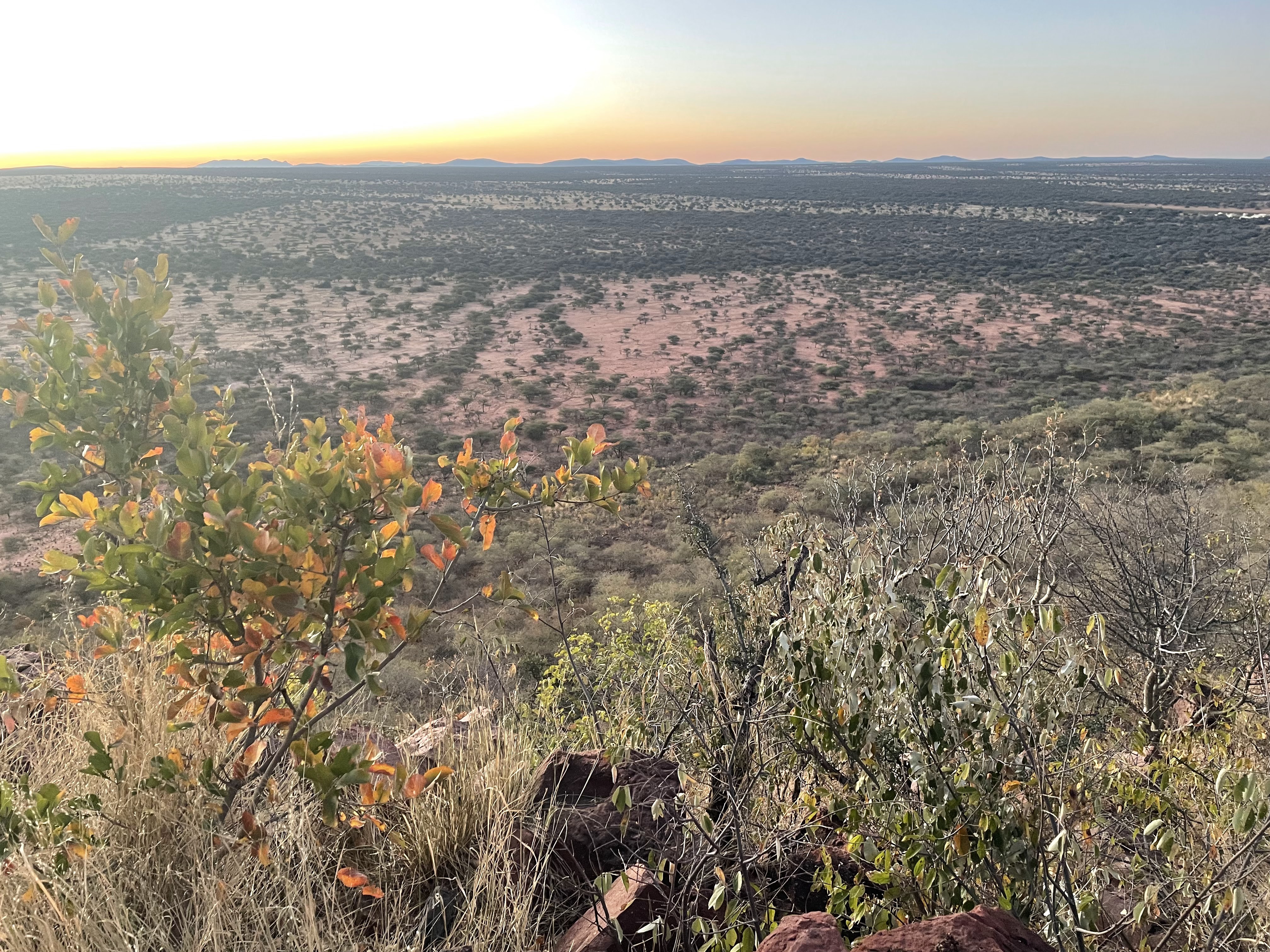
The breakfast room was completely open to the valley. The view was stunning, but the temperatures hadn’t risen much yet. The shadows were still too long for the sun to warm us up enough to enjoy the view. In the chilly early morning, we wished for a wall or a glass window to keep the wind from crashing our breakfast party. We huddled as close as possible to the fireplace in the middle of the room while the valley slowly emerged under the rising sun. The staff was also feeling the cold, all gathered around the stove trying to warm up. They told us it was the coldest week in Namibia in the past three years. As soon as the sun crested the mountains, the temperatures climbed back up to 25 degrees. Such extreme variations for this time of year.

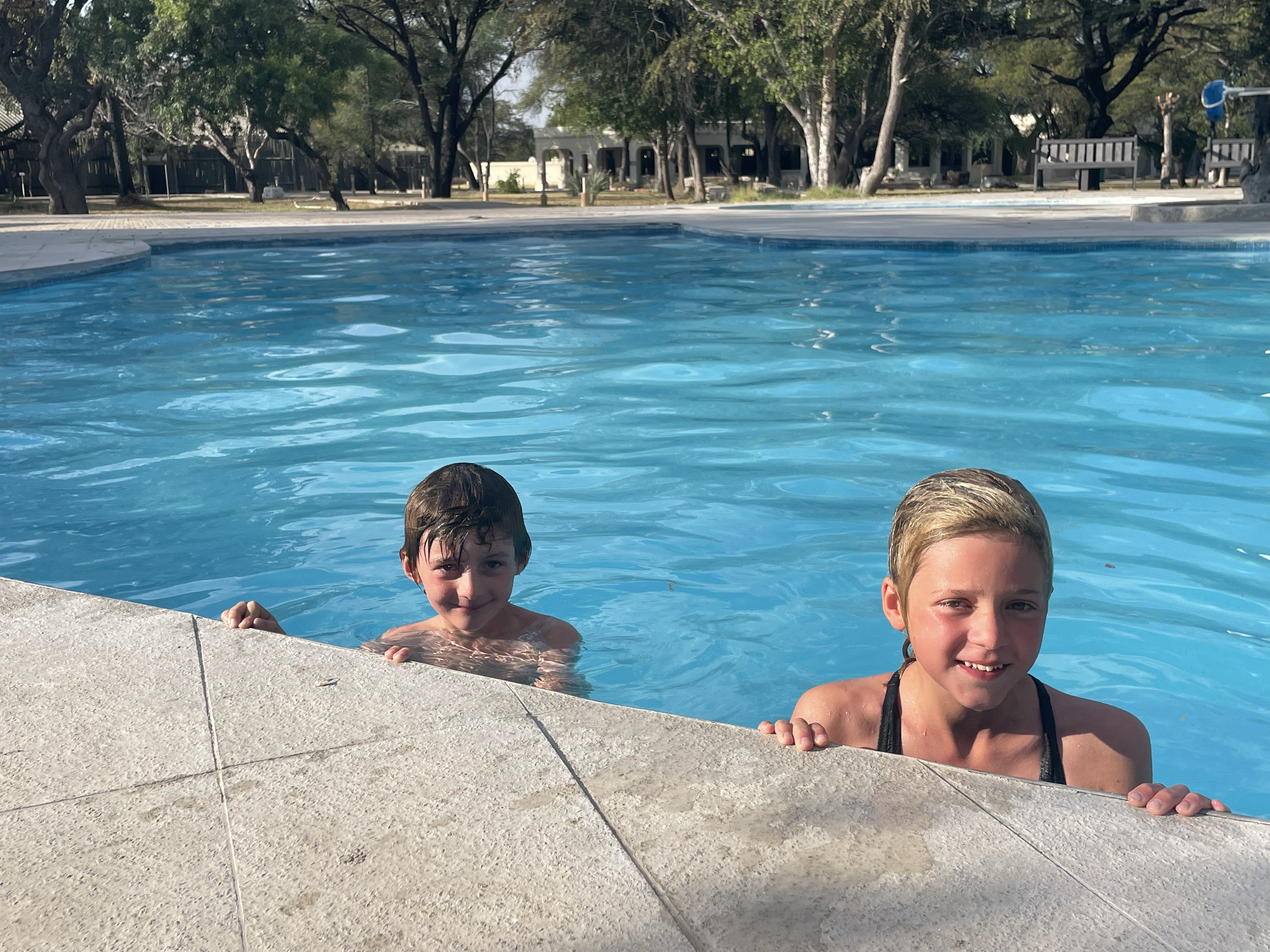
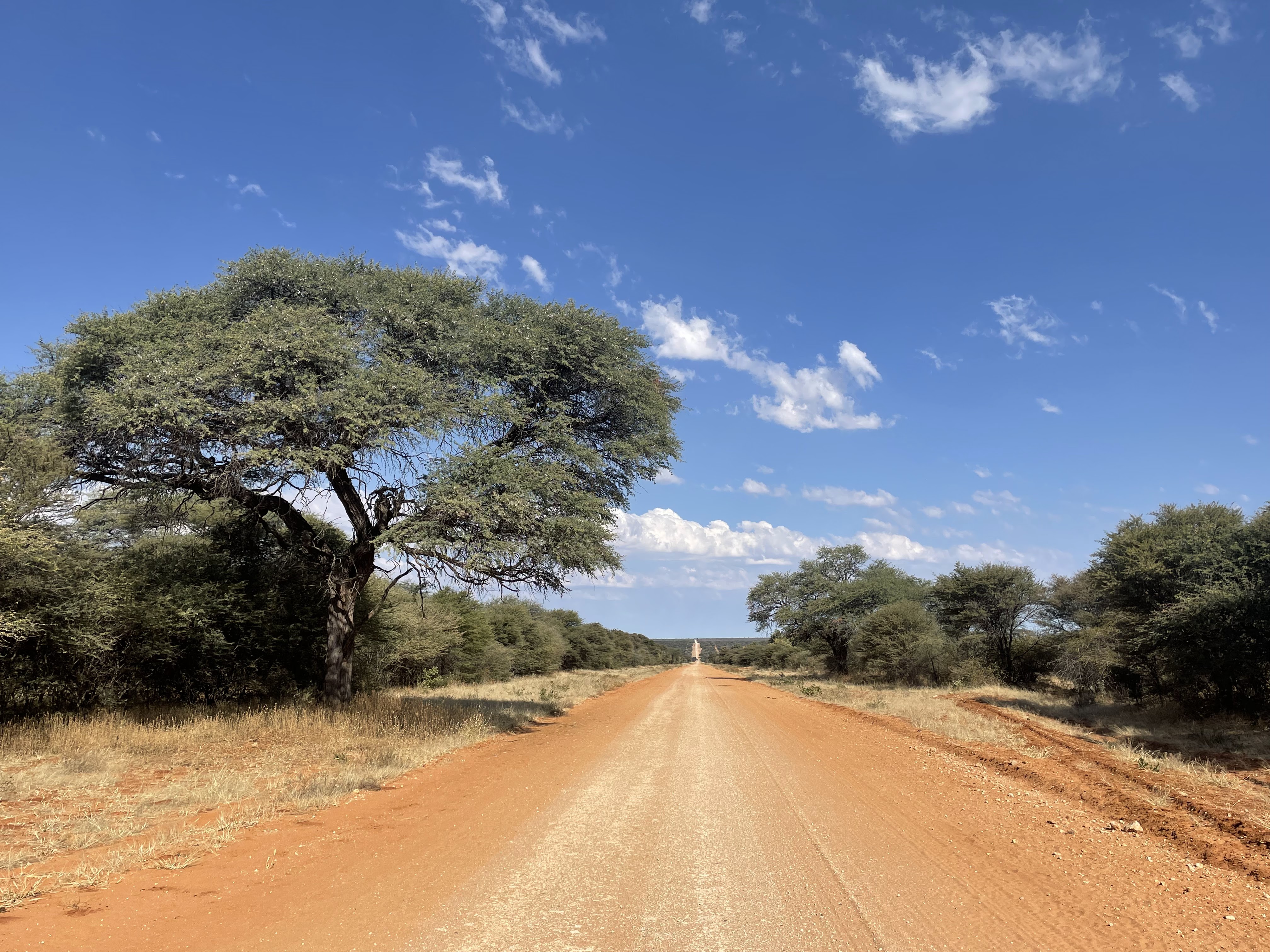
On our way to the next stop, we spotted a sign for “METEORITE” near Grootfontein. A quick glance at the map revealed that the largest meteorite ever found on Earth landed there about 80,000 years ago, and it was possible to visit it. “I want to see it! We really have to see the meteorite!” Arthur exclaimed. So, we turned around and took the exit. The kids have always been fascinated by stars, planets, and meteorites. When we arrived, we discovered that we didn’t have enough cash for the entrance fee, but this is Africa, and after a bit of quick negotiating, we got the chance to see the meteorite.
At the end of the path, we found the Hoba Meteorite, situated in the center of a small amphitheater. It’s a massive chunk of metal, made up of almost 90% iron, with the rest being nickel and cobalt. It weighs 60 tons, twice as much as other intact meteorites found in other parts of the world. The kids were fascinated. They ran their fingers over it, measured it, circled it. It was smooth, massive, and smelled of iron, a scent that lingered on their hands. The idea that this chunk of metal came from space and was so different from all the other rocks around here left a big impression on them.
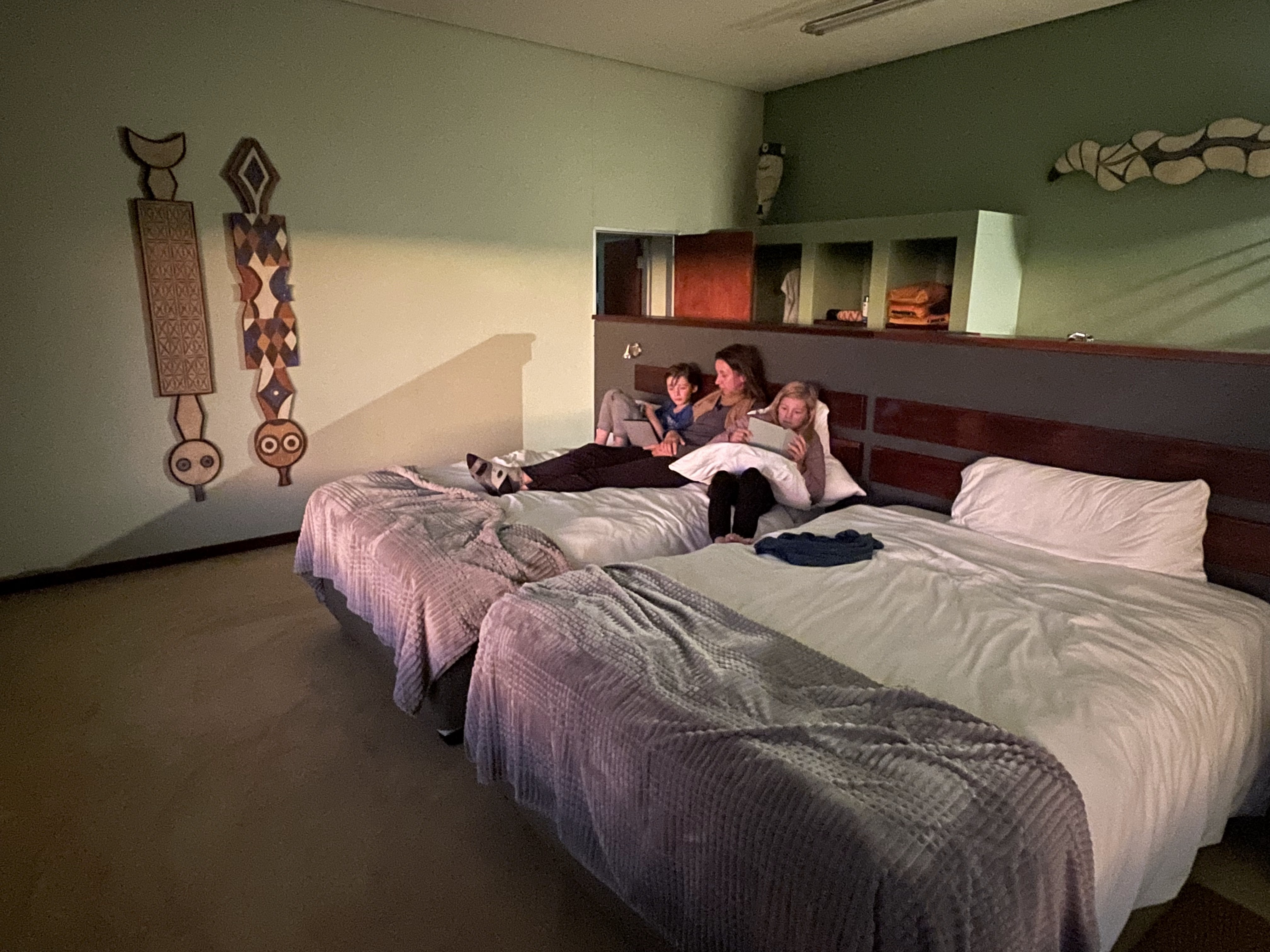
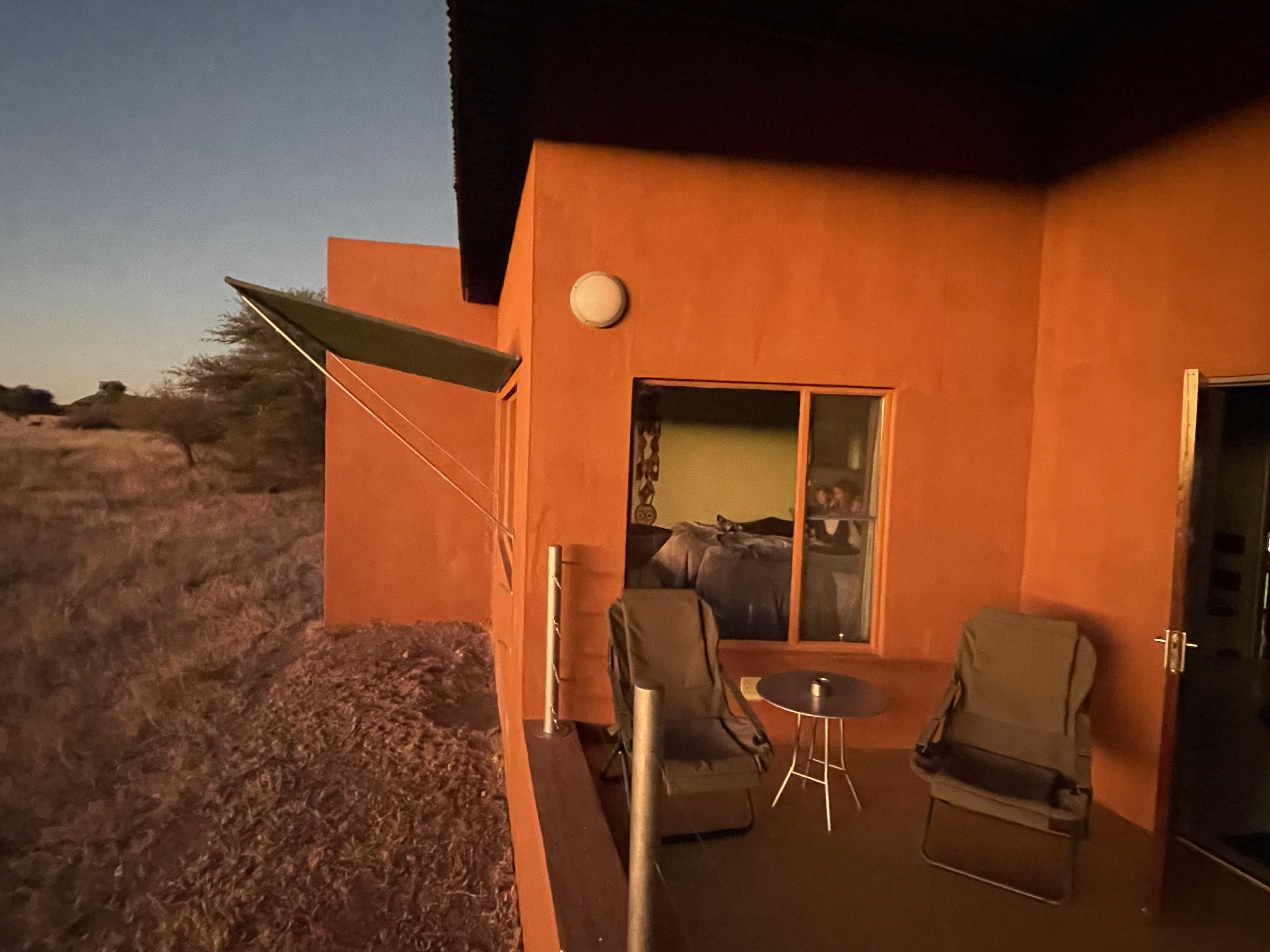
That evening, we arrived at the last wildlife reserve of our trip: the Okonjima Nature Reserve. This reserve spans 22,000 hectares and is managed by the Africat Foundation, which provides a safe haven for displaced big cats like leopards and cheetahs, preparing them for a return to the wild. Our lodge was ridiculously luxurious, with two spacious bedrooms, huge bathrooms, king-size beds, and two terraces. The kids jumped with joy when they entered: “Yessss! Look, we each get a double bed! And you can see animals from your bed!” I frowned a bit. This was yet another budget overrun, and our travel finances had been in the red for weeks, but we didn’t have much of a choice. We all had colds and were coughing, so sleeping outdoors wasn’t an option anymore. Besides, this reserve didn’t offer any other type of lodging.
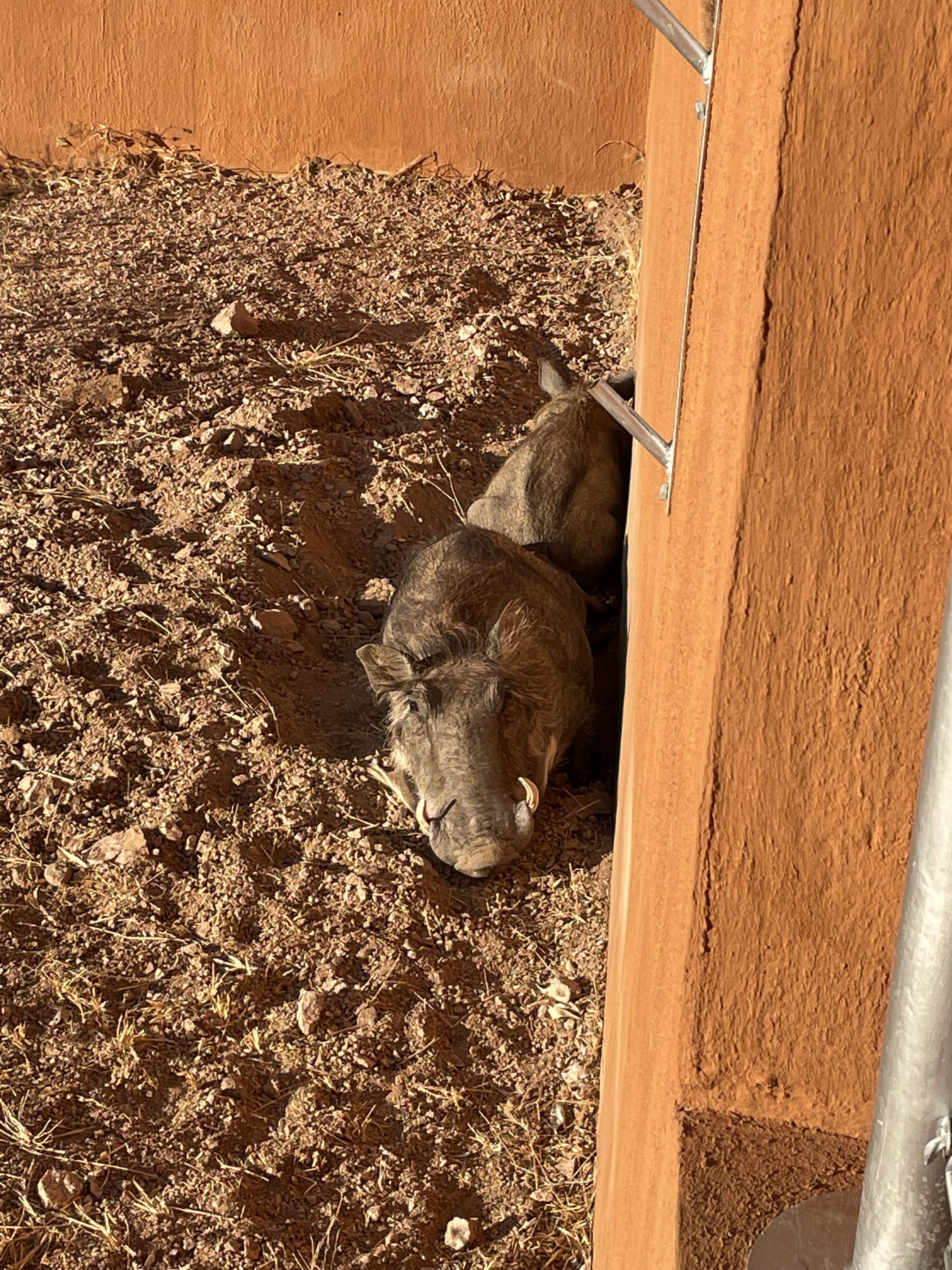
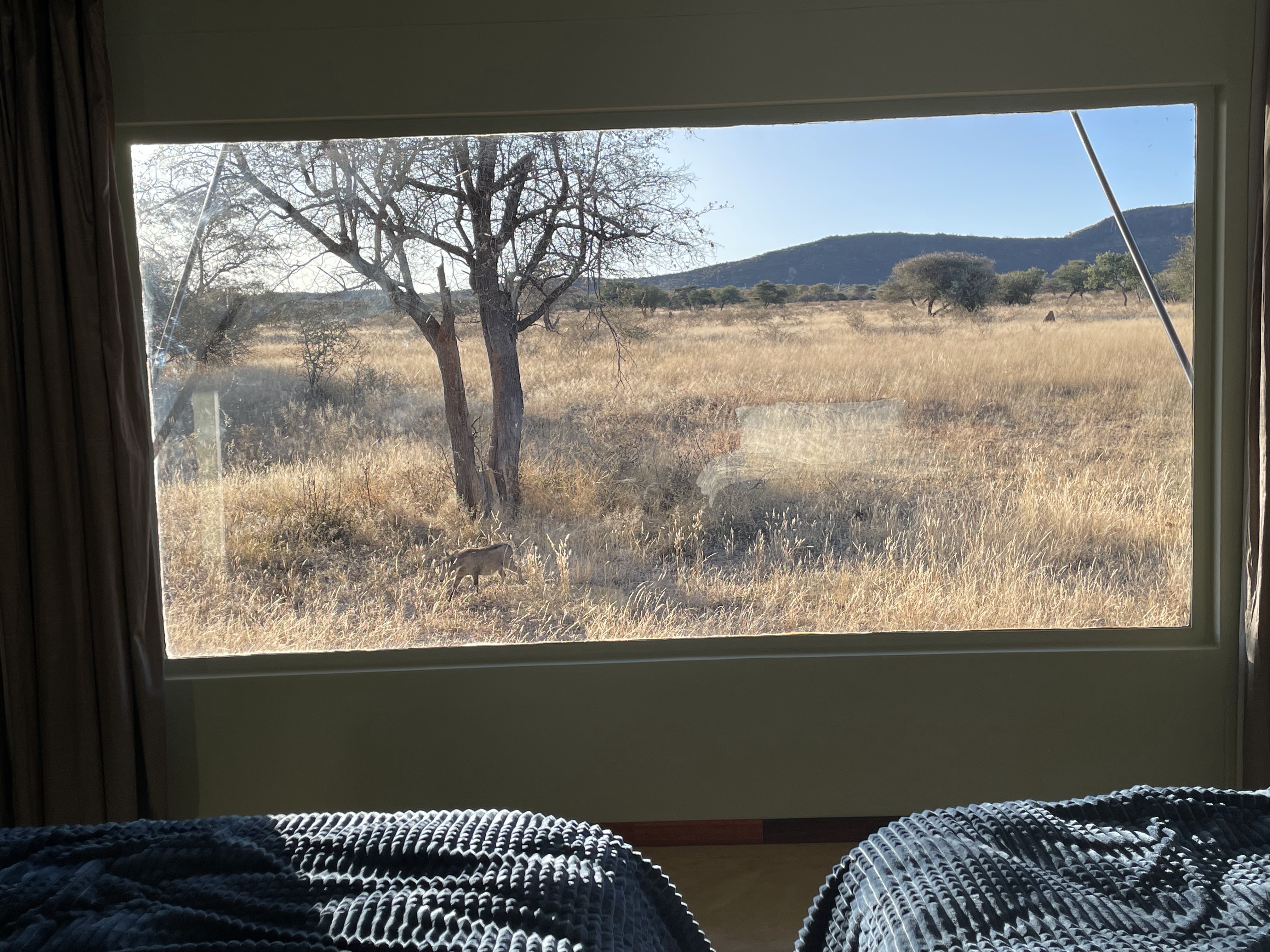
Two enormous bay windows overlooked the savanna, and we were regularly visited by wild animals passing by to graze. A warthog mother and her babies lay against the wall of our terrace, soaking in the warmth of the setting sun.
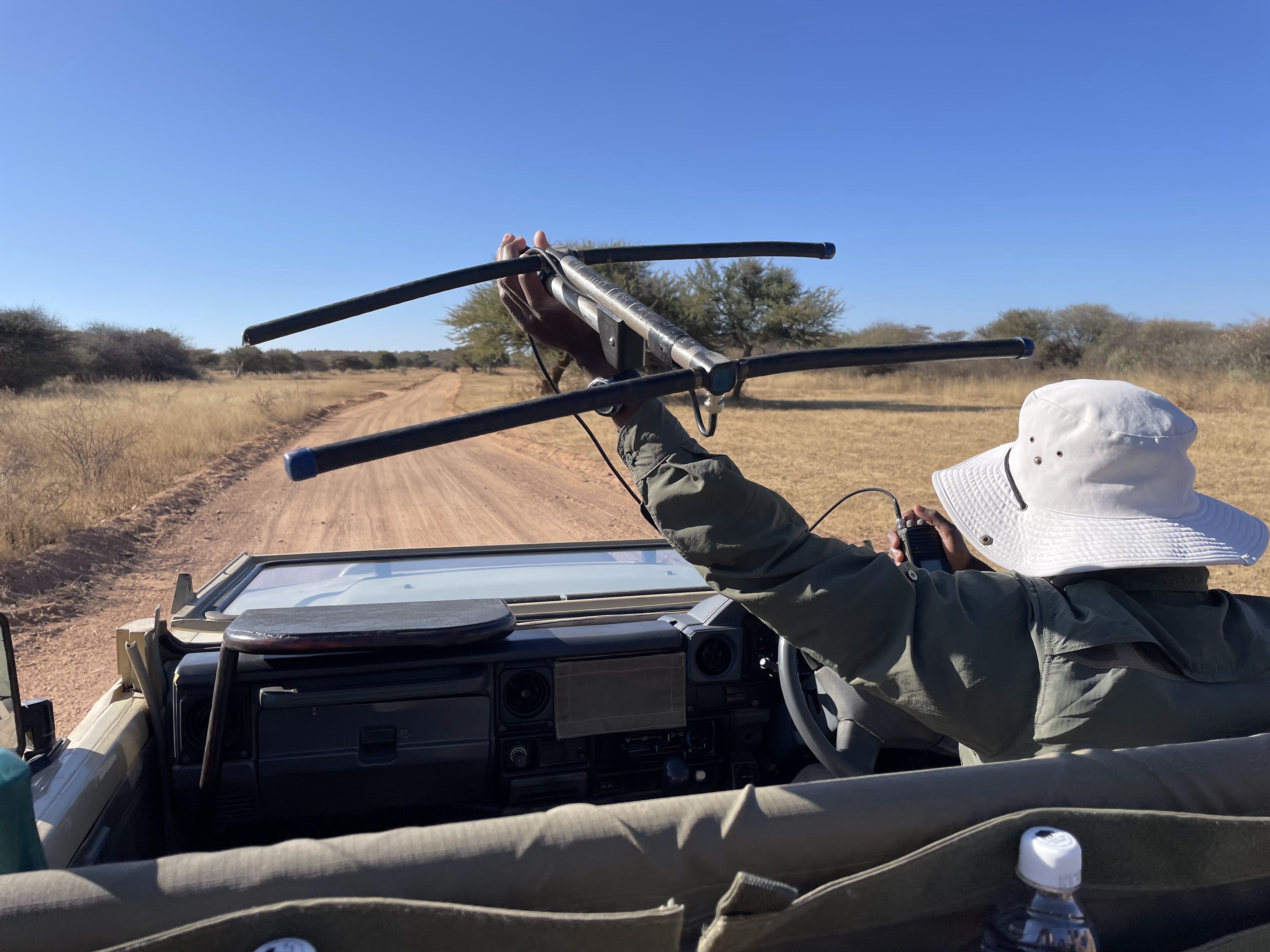
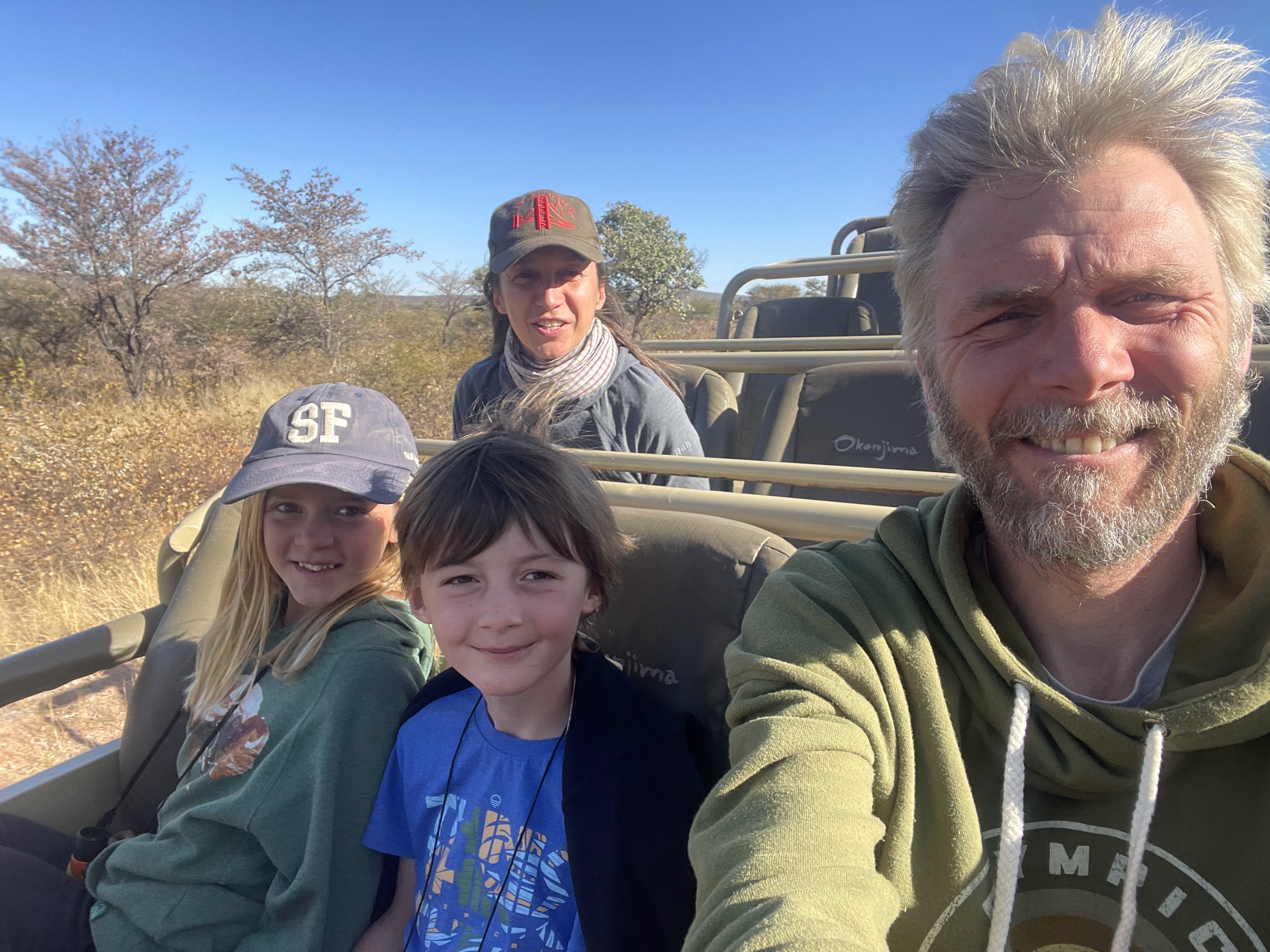
The next morning, we set out to find the elusive leopards we hadn’t yet seen. With our guide, Matthew, we climbed into the 4×4, hoping to finally catch a glimpse of one. There are about fifty leopards known to be in the fenced reserve. Around twenty are fitted with transmitters, and fourteen are regularly tracked and seen by the guides. Using his antenna, Matthew scanned for a signal. We had to drive to higher ground, move around, and it could take some time. He gave us instructions, the most important being to stay in the vehicle at all times. Even though it’s a reserve, these are real predators.
Ten minutes later, as we passed through the gate into the closed part of the park, Matthew got out to close it behind us. Arthur mischievously asked, “Who will drive if our guide gets eaten?” Later, Matthew explained that he had been working as a researcher in the park for years and knew almost all the animals.
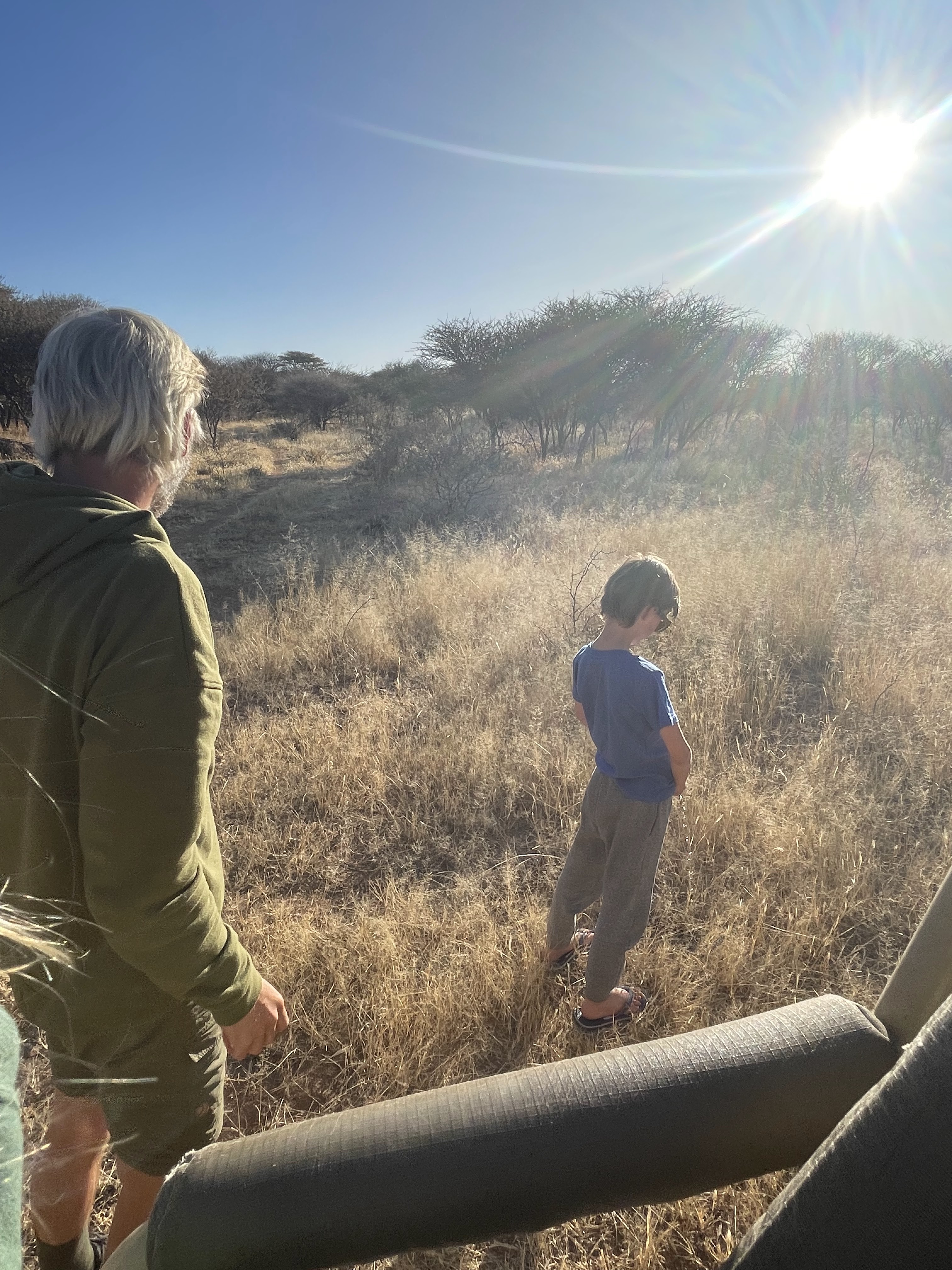
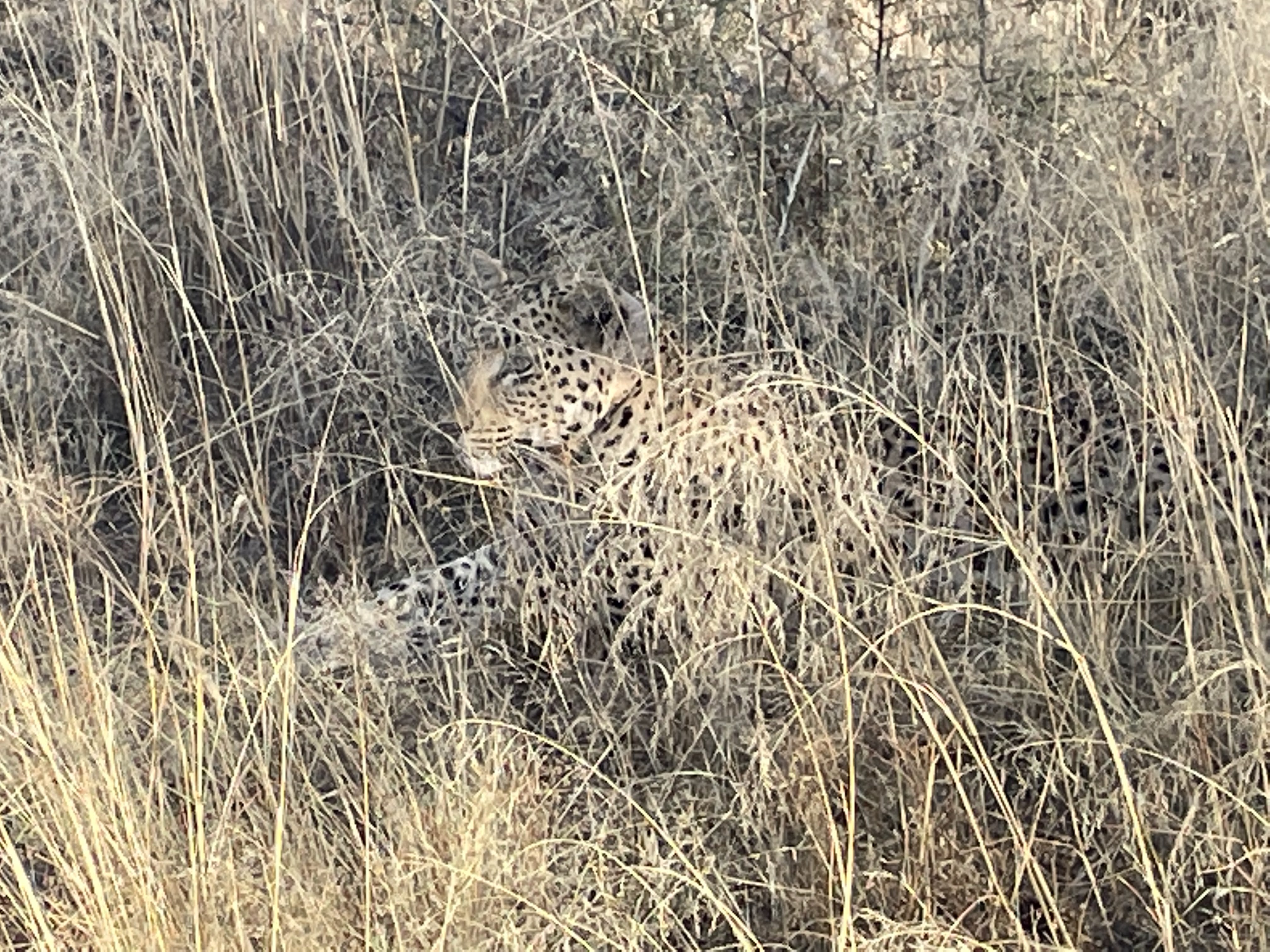
It took him about half an hour to pick up a strong enough signal, and another half hour to locate a leopard. It was a female, hunting. Unlike many other big cats, she didn’t sprint; she slinked low to the ground, stalking, crawling, and waiting in ambush for one of the springboks in the herd to get close enough for her to pounce. She was completely unfazed by our presence. Holding our breath, we watched the scene from a short distance in the vehicle. As the crucial moment approached, I noticed Arthur shifting slightly in his seat. He closed his eyes and slipped his hand into his pants. “I need to pee,” he whispered to me. “Now?” I asked, exasperated. “Yes, now. I think I drank too much tea.” He refused the bottle Marie-Laure offered him. Without missing a beat, Matthew slowly reversed about 50 meters, took the dry riverbed, and stopped on the other side of a thicket. After a quick glance in all directions, he opened the door so Arthur could step out and mark his territory. Matthew laughed, “Now you have a little piece of territory in Namibia.”
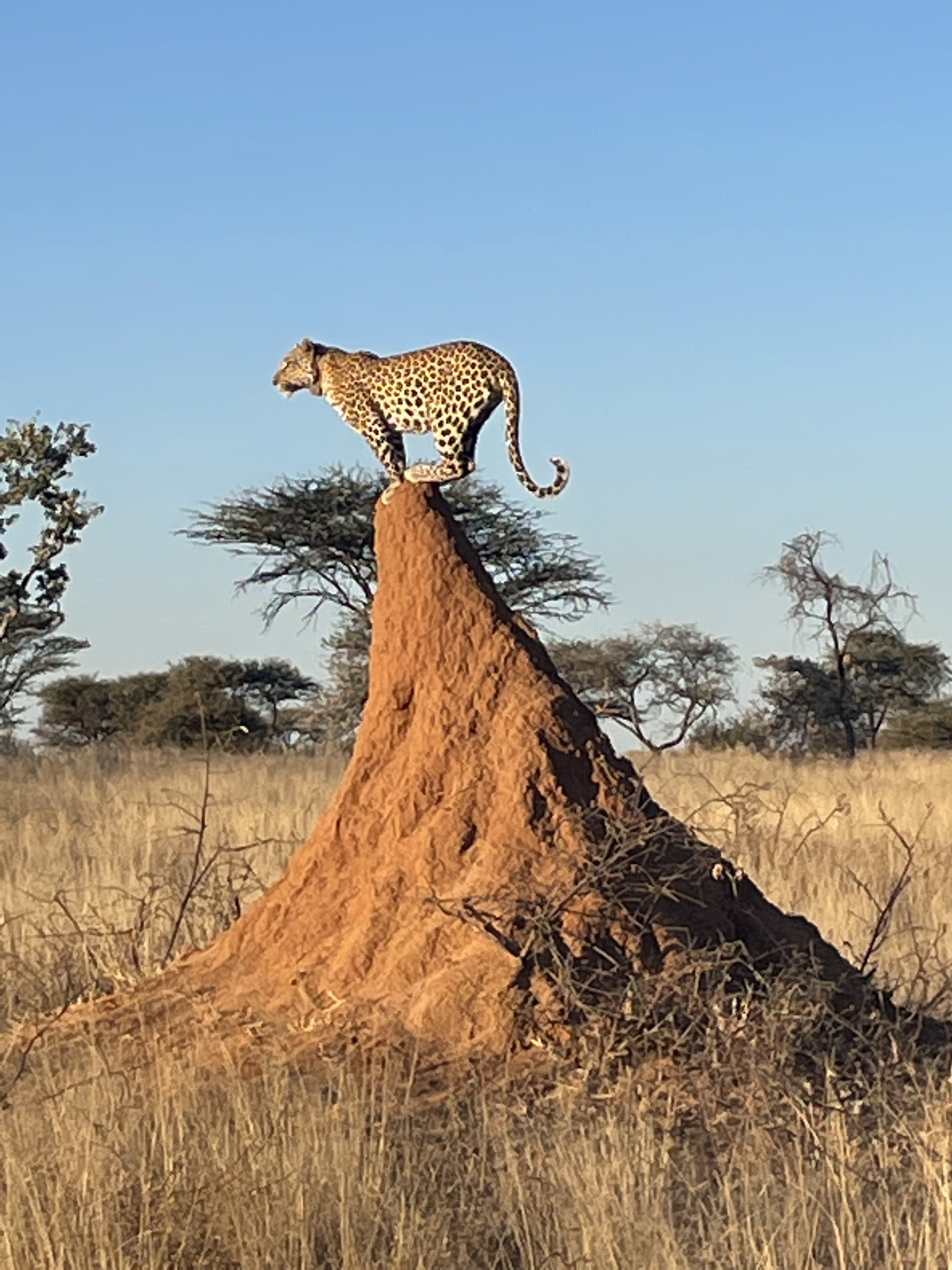
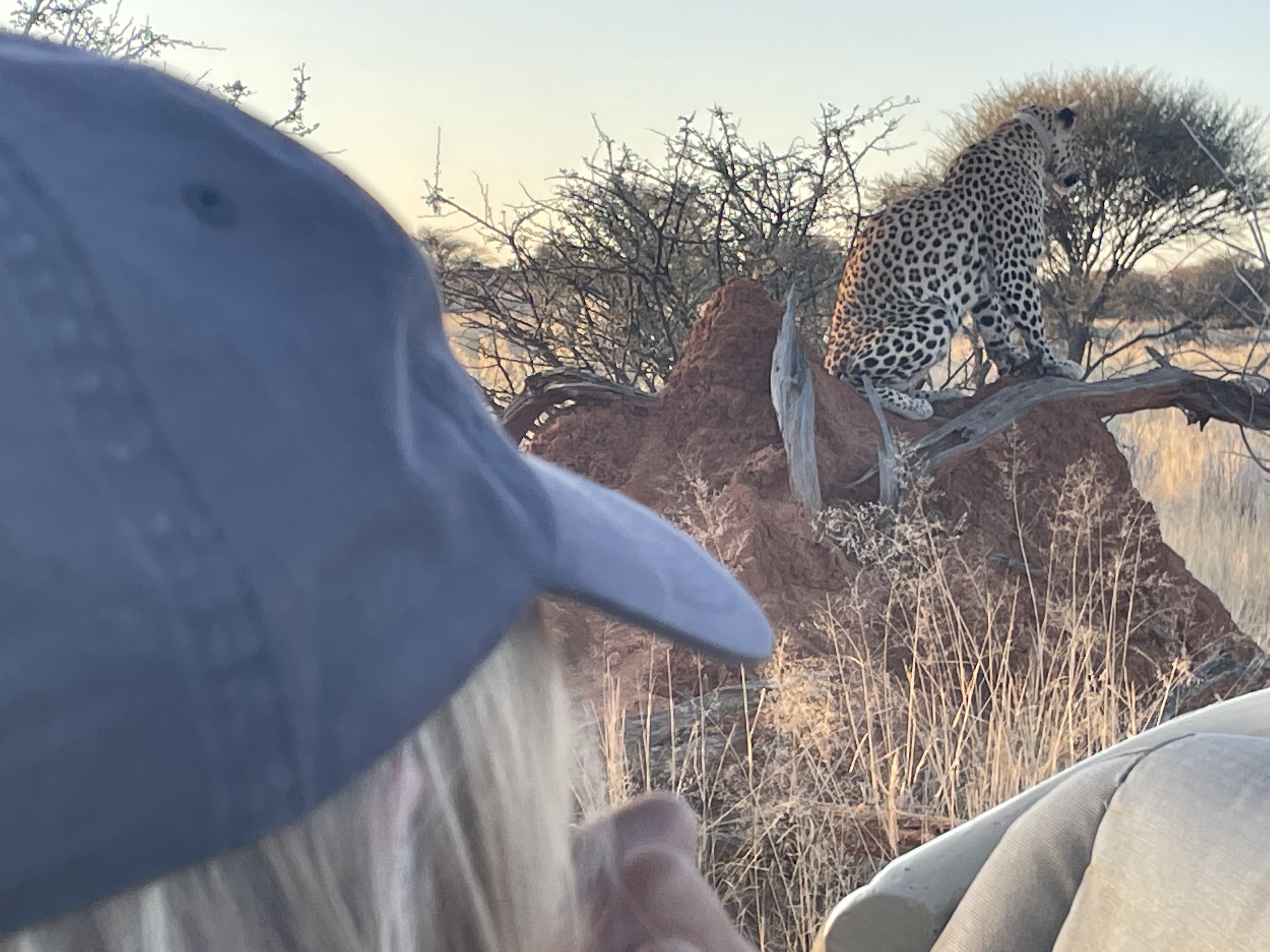
Fifteen minutes later, the leopard gave up on her prey and happened to pass by the very spot where an unknown creature had left its scent on the ground. We followed her for a while, until she climbed atop a termite mound and allowed us to get close enough to look straight into her eyes. The sun was slowly setting on the horizon, the yellow grass of the savanna swaying gently, and the silence was absolute. Another unforgettable moment. What a beautiful animal, and what a special way to end our safari in northern Namibia.

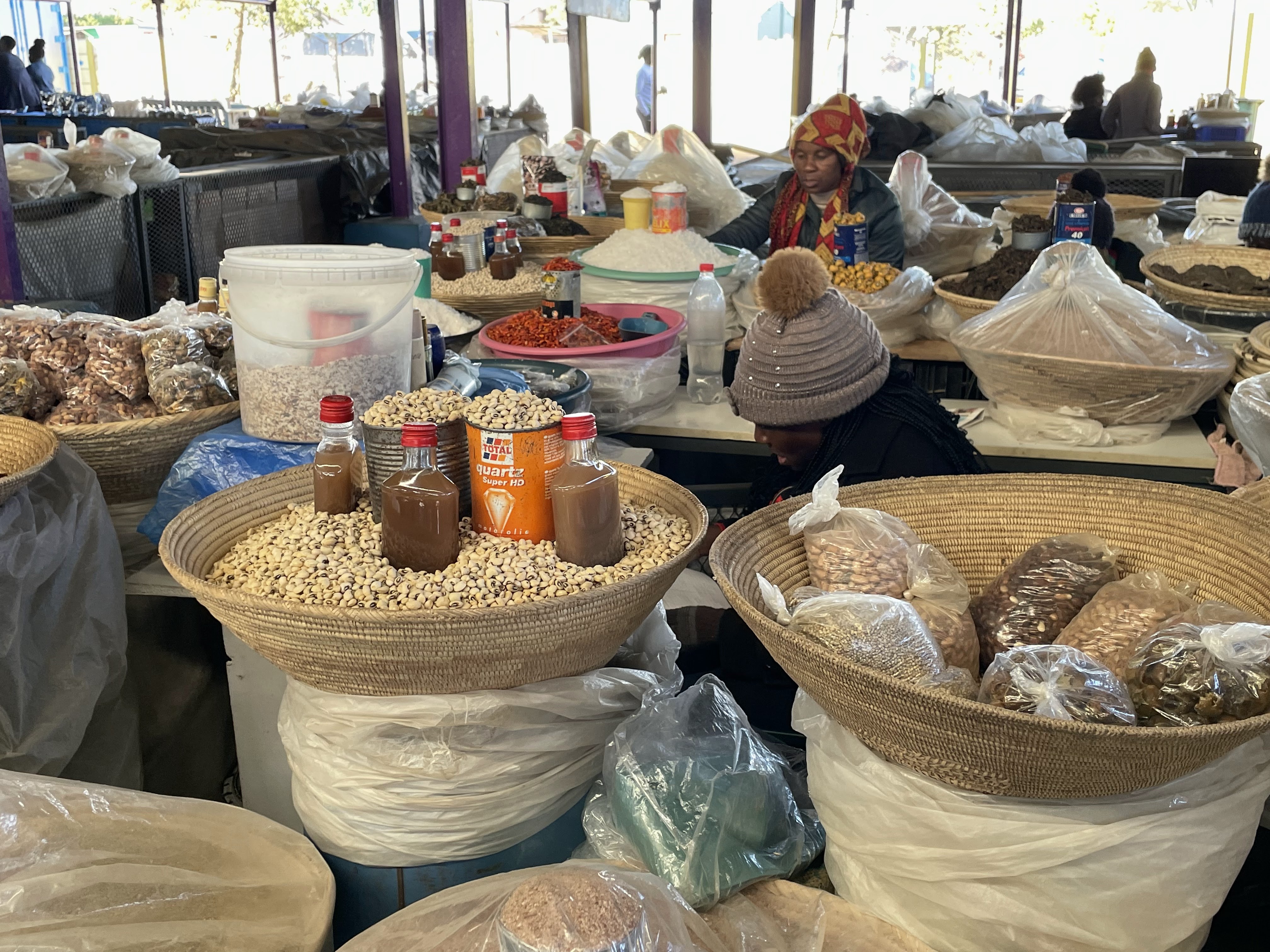
We’re back in Windhoek, which we didn’t have a chance to explore when we first arrived. After the mishaps on our way here, our local travel agency suggested a guided tour to give us a better understanding of the capital and the living conditions for much of the population. With Nathan as our guide, we visited Katutura, the township of Windhoek, essentially the city’s informal settlement. Nathan took us to a local market, where we sampled “kalpana” (small strips of grilled meat on a barbecue) with a “vetbol,” which we’d call a ball of fried dough, resembling an unsweetened donut.
We ended our journey in a “shabin,” a small local bar with loud music blasting from a makeshift jukebox, a pool table, and a bar where you can only order beer in one-liter bottles. The locals, who seemed a bit surprised to see a white European family walk in, soon came over to chat, and the kids exchanged high-fives and danced. They were happy we had come all the way here, to their shabin, far from the typical tourist spots. “Totsiens, byebye,” they said as we finally said our goodbyes.




Our journey has now come to an end. There are so many things I’d like to share with you, but the story is drawing to a close. These past six months have been a wonderful adventure—one that we are so glad we embarked on, even though, over the years, there were always a thousand reasons not to.
Our dream became a reality, and we cherished every day, every hour, every minute, and every second of it. Being able to do this with our family has been a privilege, a life experience that will remain etched in our memories forever.
And that’s it, it’s the end. Goodbye and see you soon, Africa!
 Globetrotterdammers