

“Uh, can we put toilet paper in the toilet here?” Arthur asks, sitting on the toilet in our hotel room in Los Angeles. It’s clear we need to get back into our usual habits. After traveling for three months in the Middle East and Asia, we’ve almost forgotten how things work in a Western country.
We’re in America! We arrived yesterday after an endless day. Never before, and certainly not the kids, have we had such a long day as yesterday. A day that lasted more than 35 hours and began at 5 a.m. in our hotel in Phnom Penh. Up, showered, and once our last belongings were packed, we got into a taxi to the airport at 6 a.m. Check-in, breakfast, and by 10:30, our first flight took off. Two hours later, we landed in Singapore. Our next flight to LAX didn’t depart until eight and a half hours later, at 8:30 p.m., and would last 15 hours. Since we were flying east, across the Pacific Ocean and multiple time zones, time seemed to stand still during our flight. When we landed in Los Angeles 15 hours later, it was 10 p.m., but it was still April 3rd. Apart from a few hours of sleep on the plane, we had been awake for over 30 hours. Our bodies were completely out of sync, and we didn’t get much rest on that first night. The classic jet lag.
“Hello! How can I help ya?” the waitress says with a big smile. We’re sitting on a terrace at the Santa Monica Pier after a short night in an LA motel. The kids are having fun on the rides at Pacific Park, the amusement park on the pier. We keep an eye on them while enjoying a cup of hot coffee that helps us cope with the jet lag. What a culture shock between the reserved smiles of Cambodians and the bright, toothy “Hey there!” of Californians.



The Cambodian smile was an enigma. Everywhere we went, a smile and a nod welcomed us. Everything was done to make us feel comfortable. The paradisiacal beaches, the extraordinary temples, the lush nature, and the constant kindness. It was easy to be content with this friendly face. But sometimes, during a conversation, we’d catch comments about the country’s history and the people’s concerns, about the influence of neighboring Asian countries and the fragility of the nation.
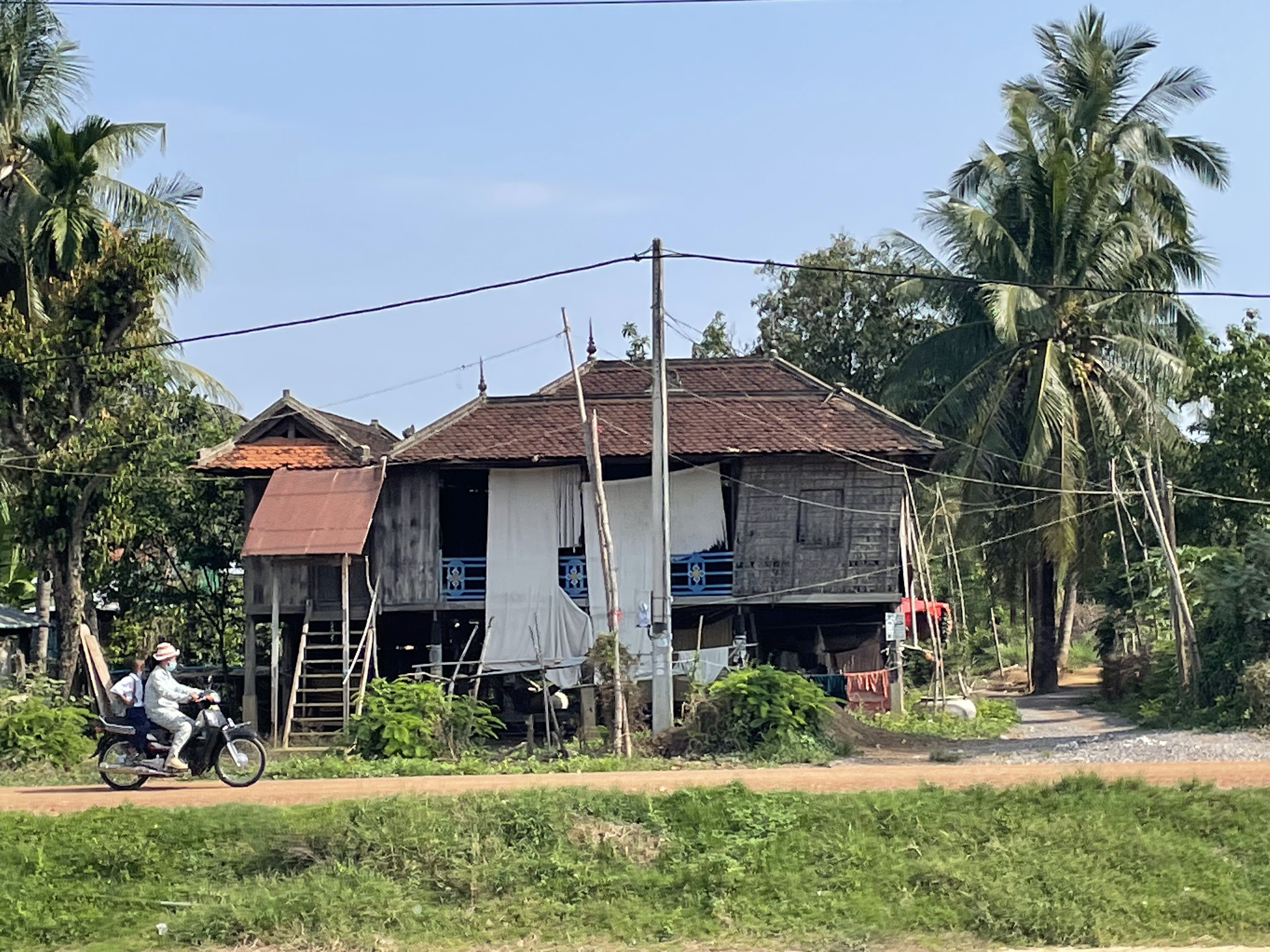
Our six-hour drive between Phnom Penh and Siem Reap revealed the first cracks. Our taxi driver opened up about the country and its struggles. He spoke good English, and we had time. With a touch of restraint, we understood that, on top of its difficult history, the country is now under pressure from its neighbors—Thailand, Vietnam, and of course China, which is buying up land and investing wherever it can. Upstream on the Mekong, China could easily turn off the water supply with the dam it has built. Fortunately, he told us, the country holds the largest freshwater lake in Southeast Asia. All the construction we saw along the road was Chinese: massive concrete complexes promising a modern, Western standard of living to Cambodians who can’t afford it. He pointed out the traditional wooden houses on stilts. “It’s too expensive now to build with wood. Concrete is cheaper. Cambodians can no longer buy wood to build their homes.” The forests have been overexploited and cleared by corrupt administrations, and international organizations and NGOs denouncing the corruption have been driven out. Independent press has disappeared, and radio stations that once spoke out, like Voice of America and Radio Free Asia, are no longer around. The ruling party, the Cambodian People’s Party, holds the country with a firm grip, and this doesn’t seem likely to change anytime soon. The last elections were held in 2013. The winning party was quickly dismantled, and its leader now lives in exile in France. There are no longer any opposition parties, and no intellectuals are left to oppose the government. All the intellectuals were systematically killed by the Khmer Rouge. A bleak picture. There’s a sense of weariness and resignation. We arrive at our destination, welcomed by the smiles of the hotel staff. Everything is done to satisfy our wishes and those of the children, but that conversation has sparked our curiosity. What lies behind those smiles?
Battambang, the second-largest city in the country after Phnom Penh, is our last stop in Cambodia. No extraordinary sites, no idyllic beaches. For us, Battambang is a chance to better understand and get a closer look at the lives of Cambodians. We didn’t want to leave without understanding more or having a chance to engage with the people here.
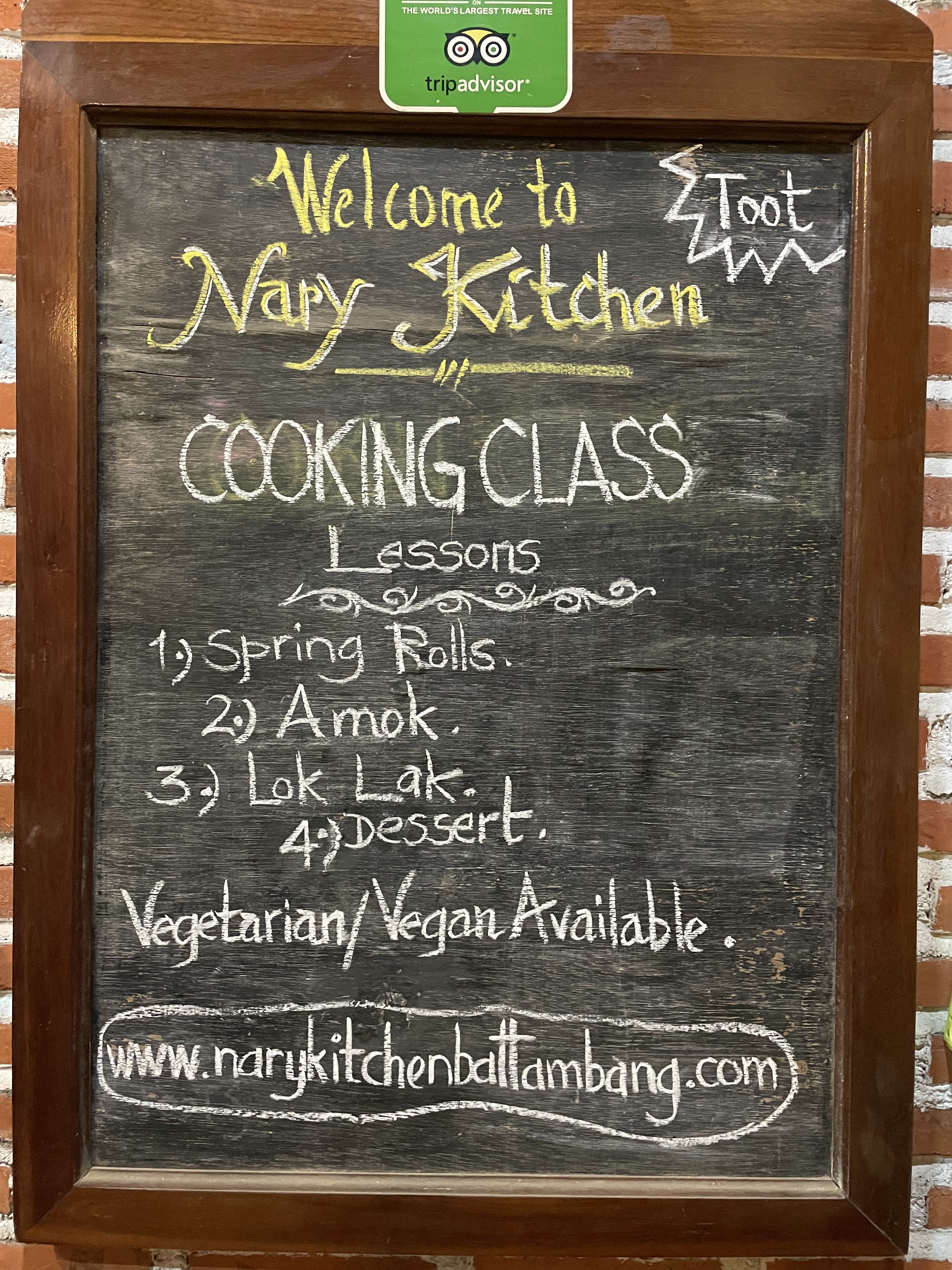
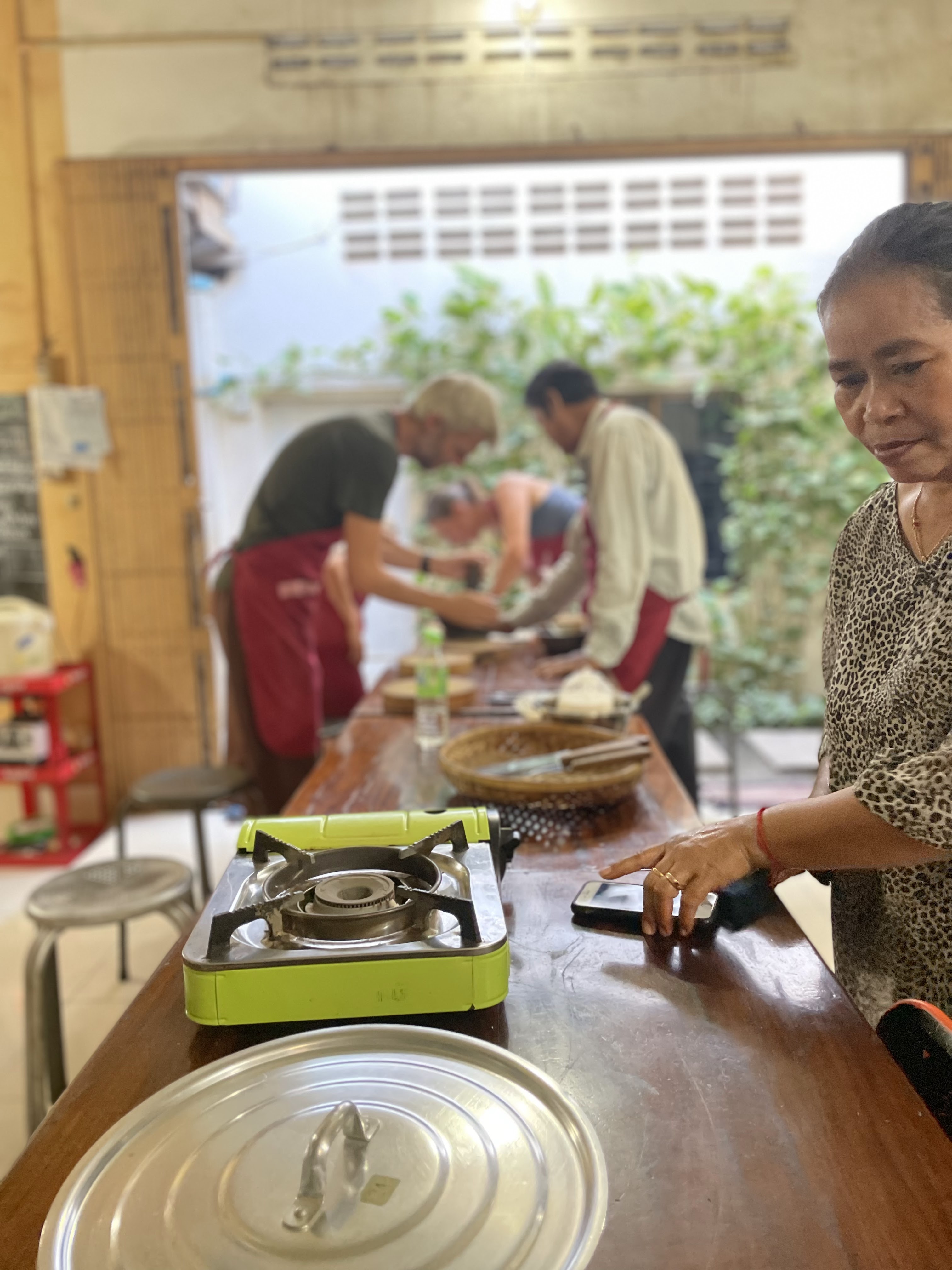
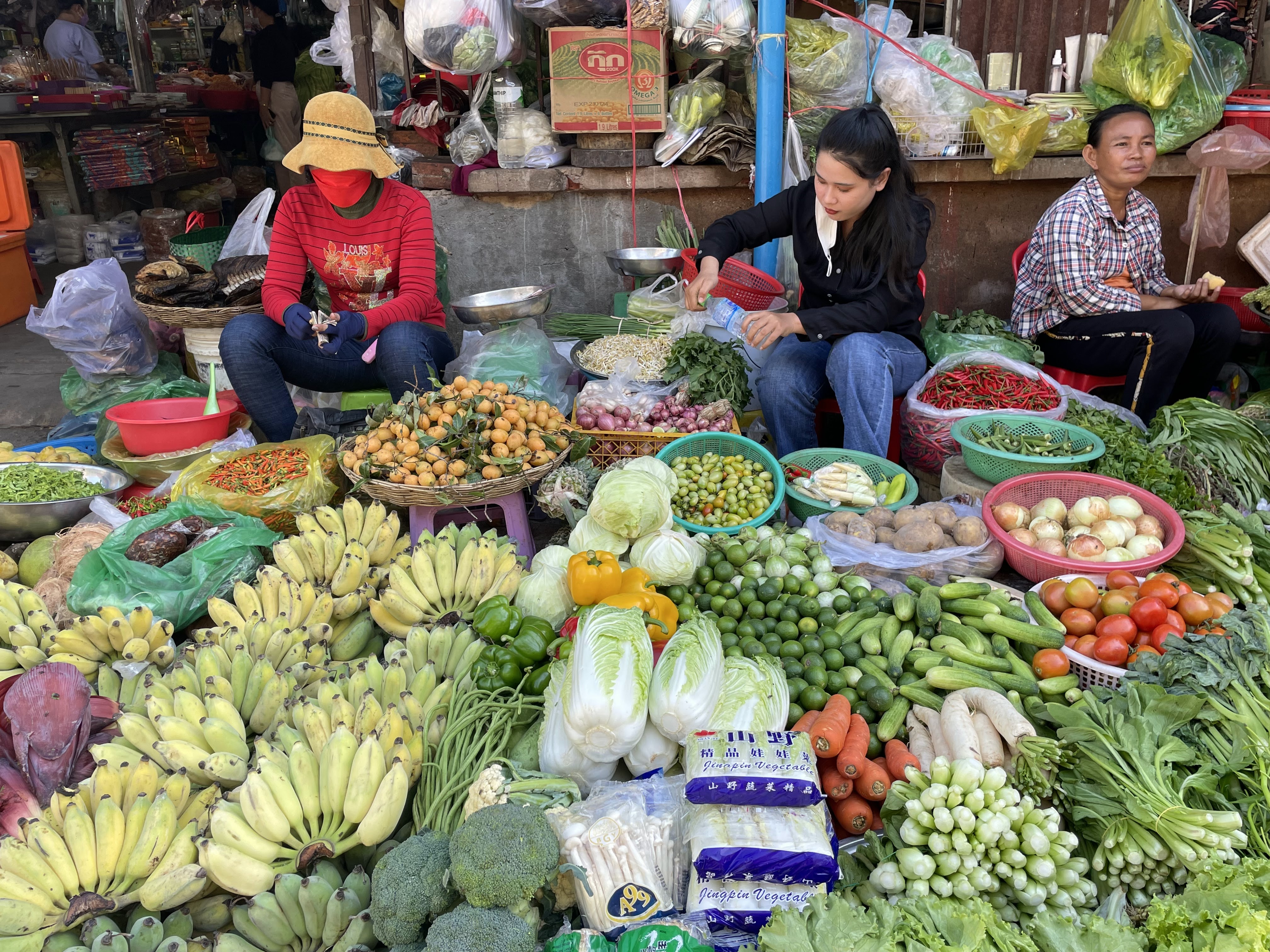
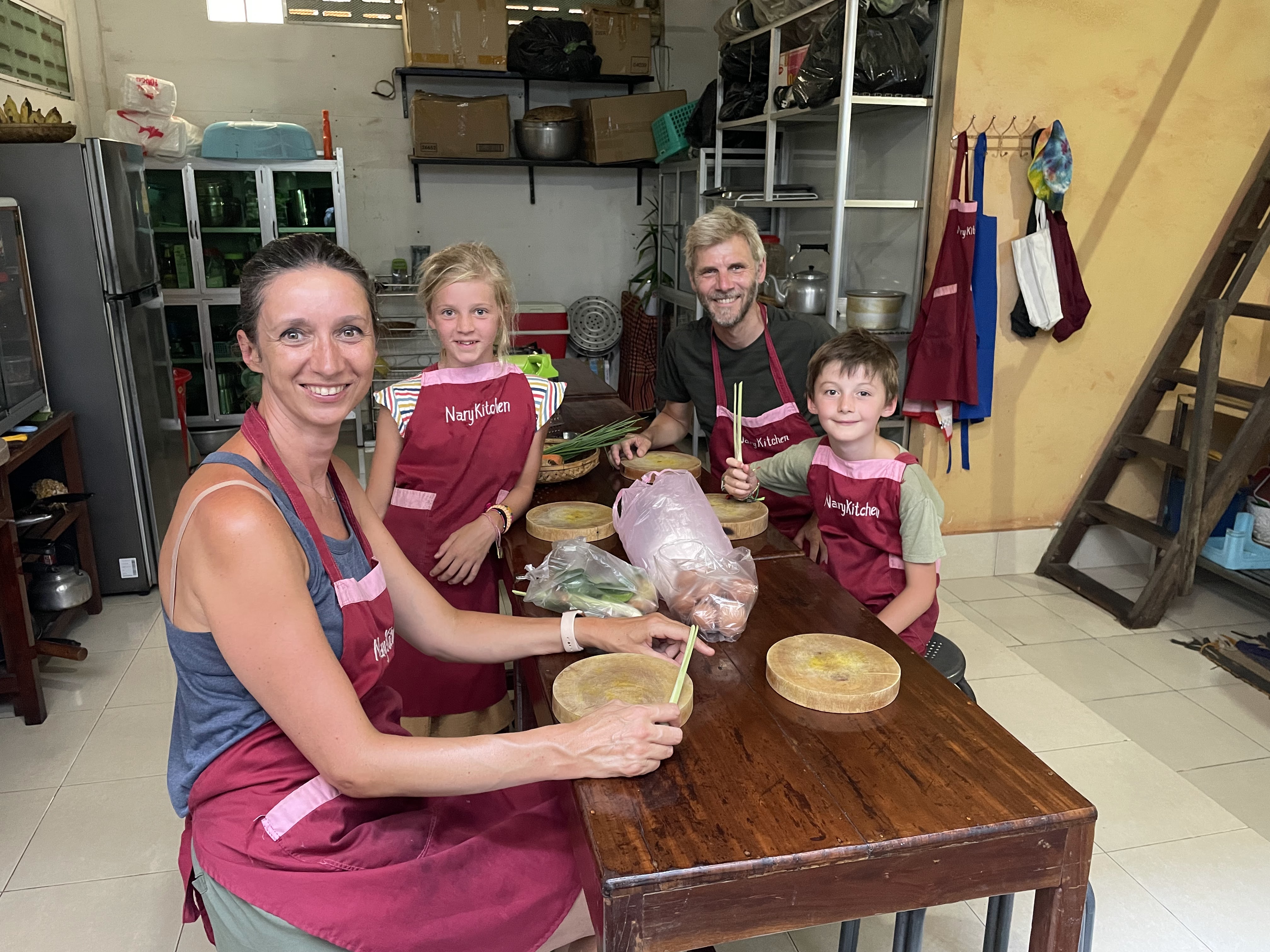
Our first discovery was Cambodian cuisine. We took a cooking class with Toot and his wife Nary, who taught us how to prepare traditional Cambodian dishes such as beef Lok Lak (stir-fried beef with Kampot pepper) and fish Amok (Cambodian fish curry). Anna and Arthur now make their own spring rolls. Toot is an excellent teacher and explained the basics of Khmer cuisine to us in rudimentary but effective French, with plenty of humor. His son took us to the market and introduced us to local products. The kids proudly savored each dish they prepared. It was delicious! Apart from our table, the restaurant was empty, and Toot sat at the table next to us with a beer. He told us about his life as a tour guide and how he reinvented himself after realizing tourists’ enthusiasm for local cuisine. He explained that he was the first to do this, and unfortunately, the people he hired ended up starting the same thing on their own. “I don’t want to talk about it because it makes me angry. You can’t trust the Khmers. Now I only work with family.” He smiled at us again, and when I messaged him later that evening to ask for the recipes, he responded with a lovely message saying he loves us! Toot has now found a place in our hearts, too.


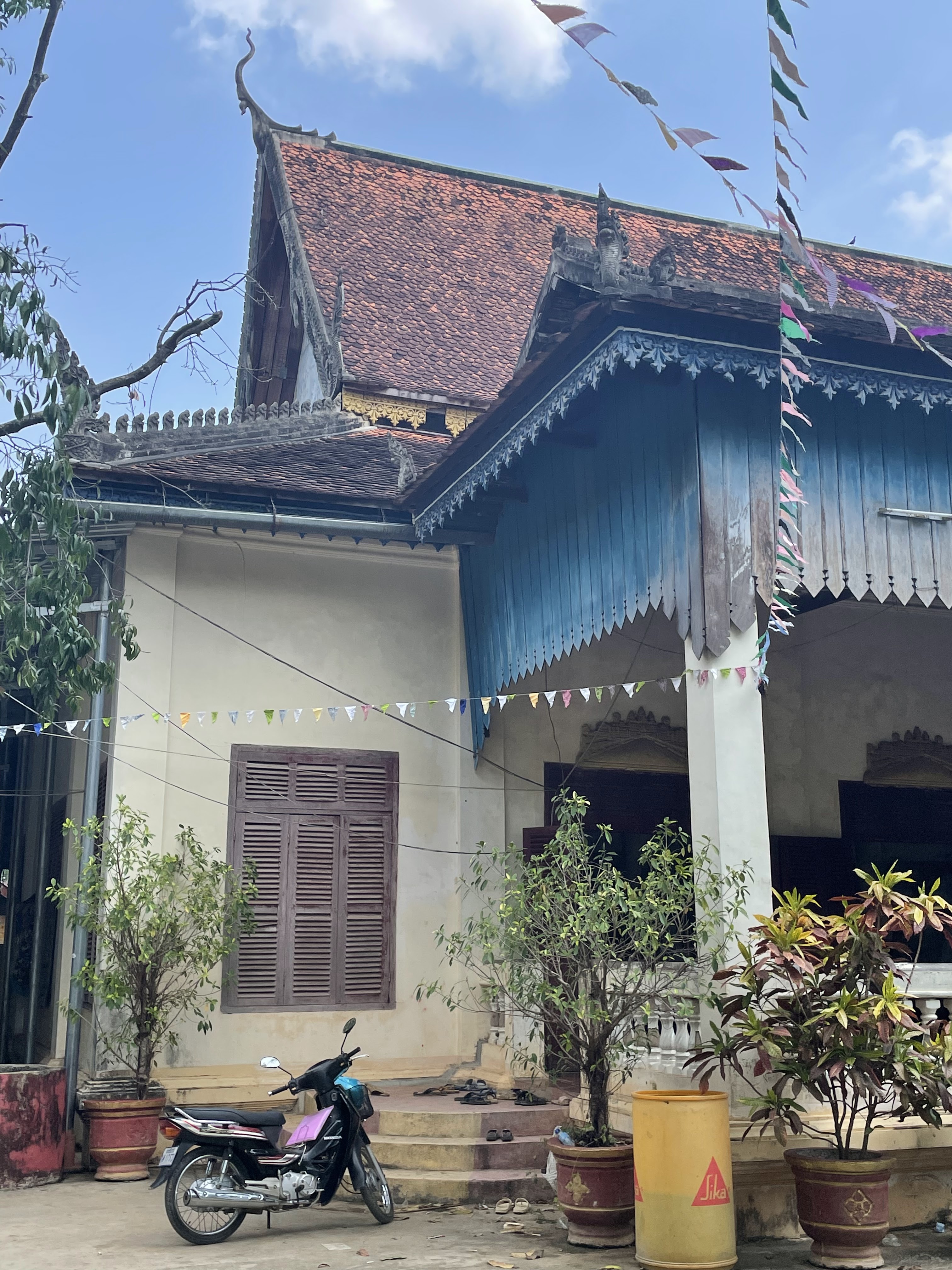
The second discovery was the traditional house of Madame Boeng Run. Unfortunately, this elderly lady, now over 80, is no longer able to give tours herself. Her nephew takes on the task. In impeccable French, he guides us through the old traditional house, explaining the different types of wood used, which Europeans often can’t tell apart. In Khmer, there are three names for each of these types of wood, whereas we only have one: teak. Sadly, teak is now quite rare in Cambodia, and it has become too expensive for Cambodians to build their homes the way their ancestors always did. These houses are designed to cope with the heat, with thin walls, wooden floors, and high ceilings. They are built on stilts to avoid flooding, and they are surrounded by beautiful, lush gardens providing fruits and vegetables to feed the family.
The family’s story is striking. The elderly lady saw her entire family killed by the Khmer Rouge because they were educated. She was one of only two survivors. Her nephew also points out the strategic placement of mirrors that allowed the family to see who was approaching without being seen. Battambang Province has often been occupied by Thailand. This Cambodian province became Thai territory in the 19th century, and again during World War II, until the French took it back in 1945. As a result, many residents of Battambang have Thai blood. The nephew tells us that his own grandfather was Thai, and he abandoned his Khmer wife and children in 1945 to return to Thailand when the province became Cambodian again. He becomes visibly agitated, struggling to contain the bitterness he feels. Then he pulls himself together and smiles again, saying, “The Cambodian smile hides many things. We smile to throw off our enemies. Today, no one wants Cambodia to exist anymore. No one is protecting Cambodia.”
We are unsettled by these words, which seem almost exaggerated. Why would anyone want Cambodia to disappear? Yet I recognize in his words certain notes of bitterness that our taxi driver had mentioned as well.

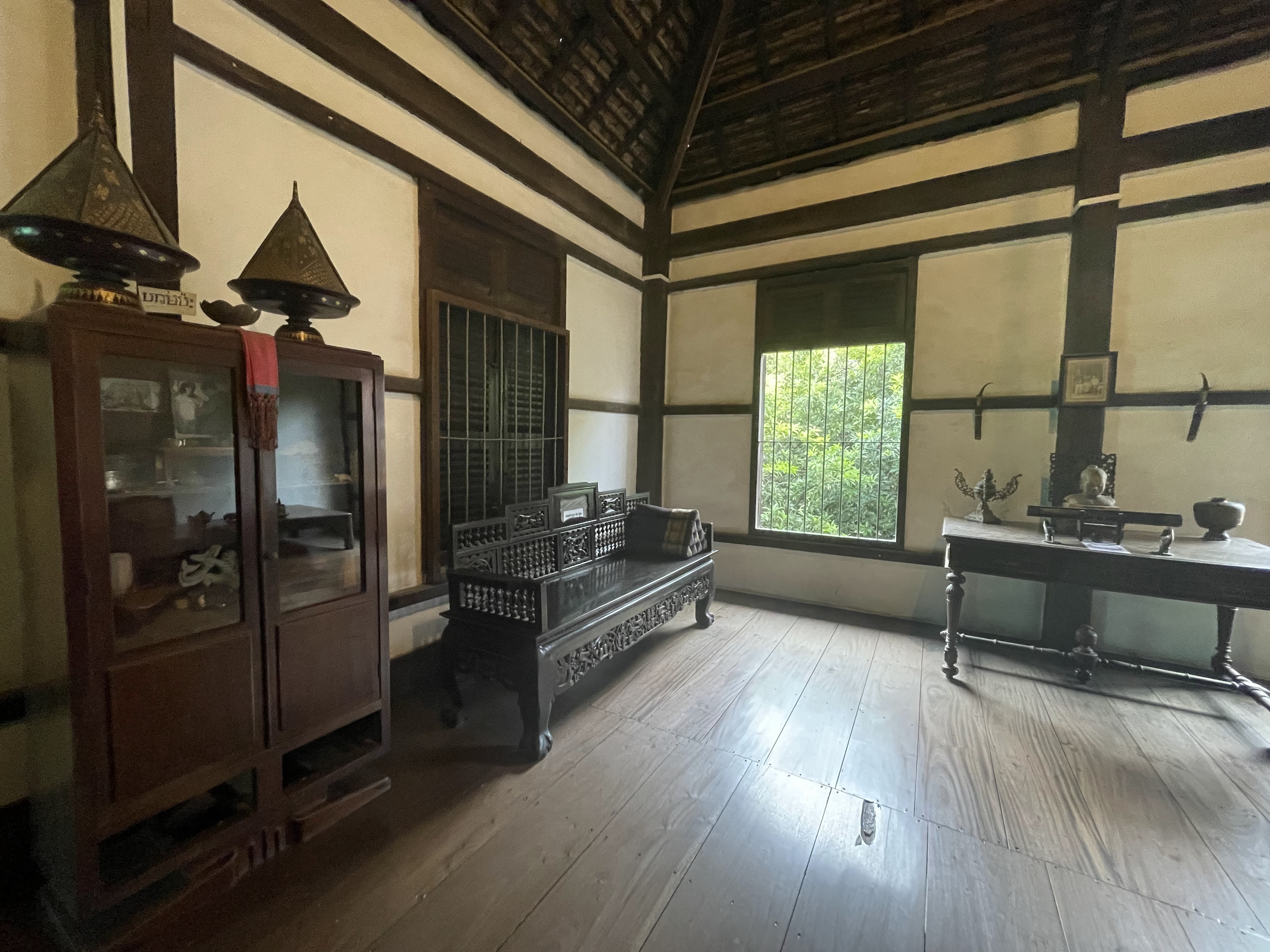
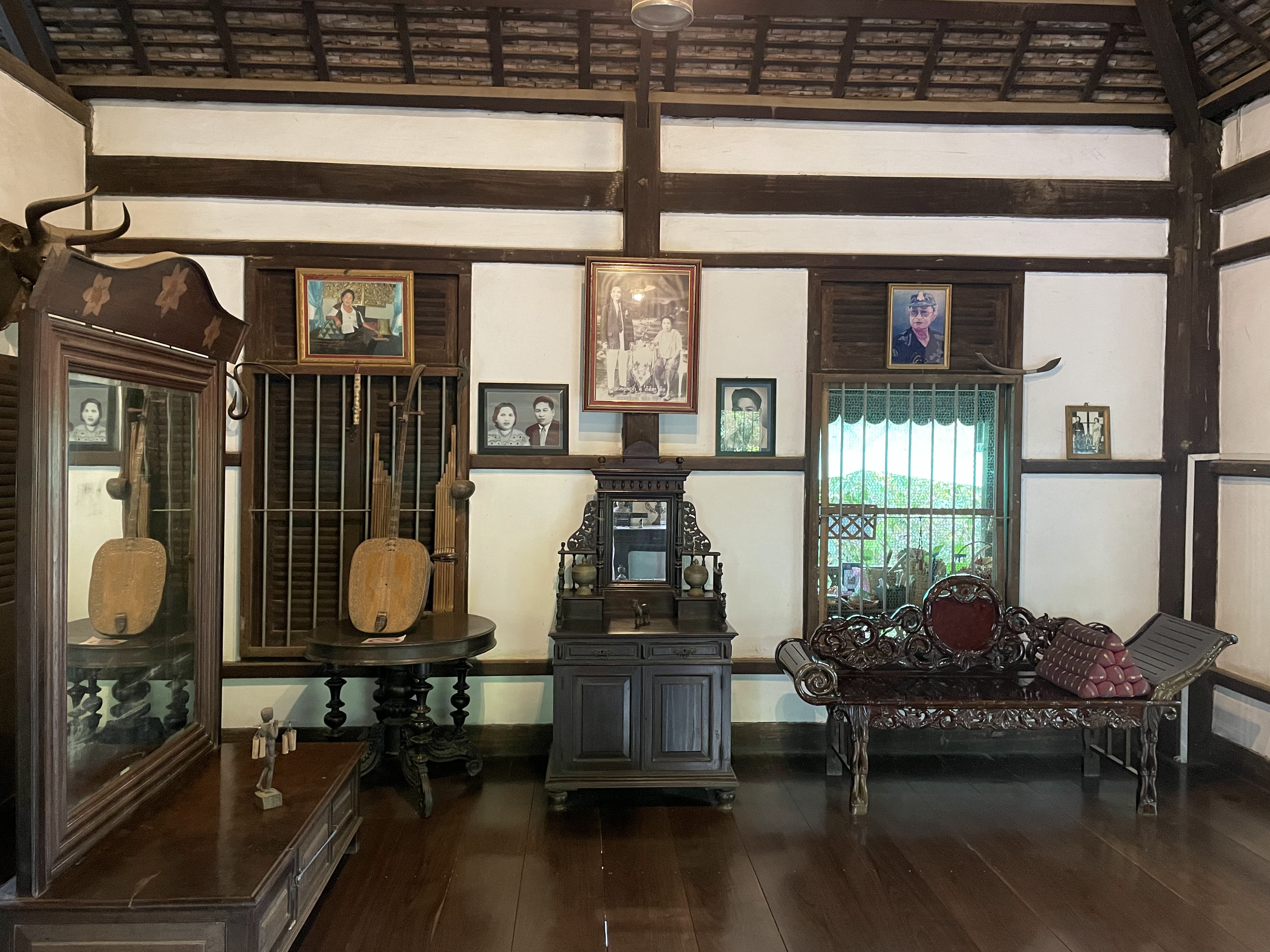
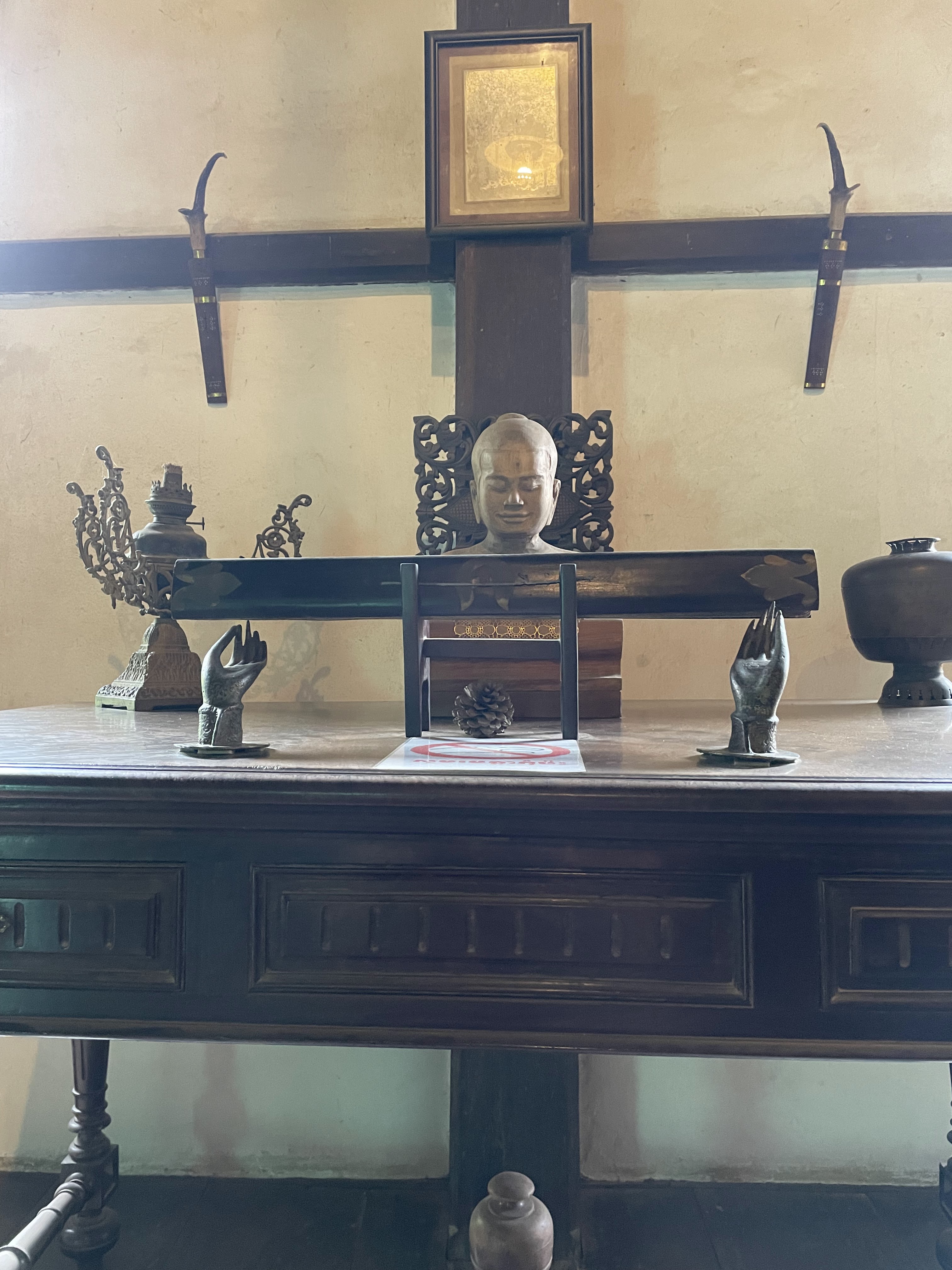
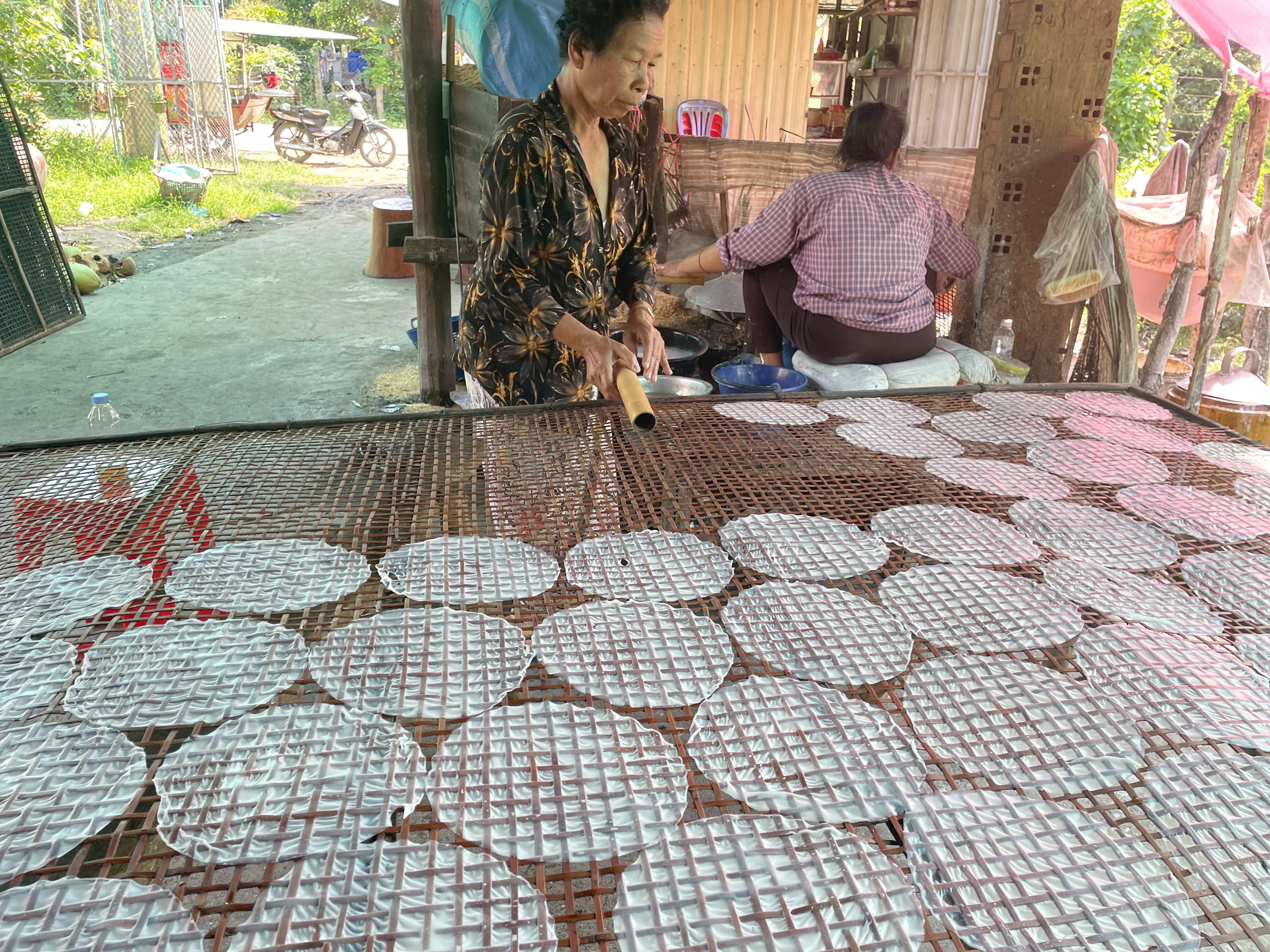
On the third day, we take a tuk-tuk to explore the surrounding countryside. Our tuk-tuk driver has decided on the itinerary, and we go along with it. After visiting an old temple, he takes us to see how rice cakes are made at a family’s home in the village. Two women are making the cakes. One spreads the liquid rice batter onto a hot sheet, using a spatula to form a crepe, which she then places onto a bamboo cylinder. The other woman takes the cylinder and lays the crepe out on a bamboo grid to dry. They will do this all day under the shade of their stilt house. We taste the spring rolls and move on.
Next, we stop to sample banana and mango chips, and then to buy and see the preparation of the famous bamboo sticky rice. Each time, we leave a little money or buy something to support these families. The decor is simple, and their lives are very modest. The old, precious wooden furniture is raised off the ground. A painting of a Cambodian rural landscape hangs under the house, the only decoration. It is covered in dust and worn by time.
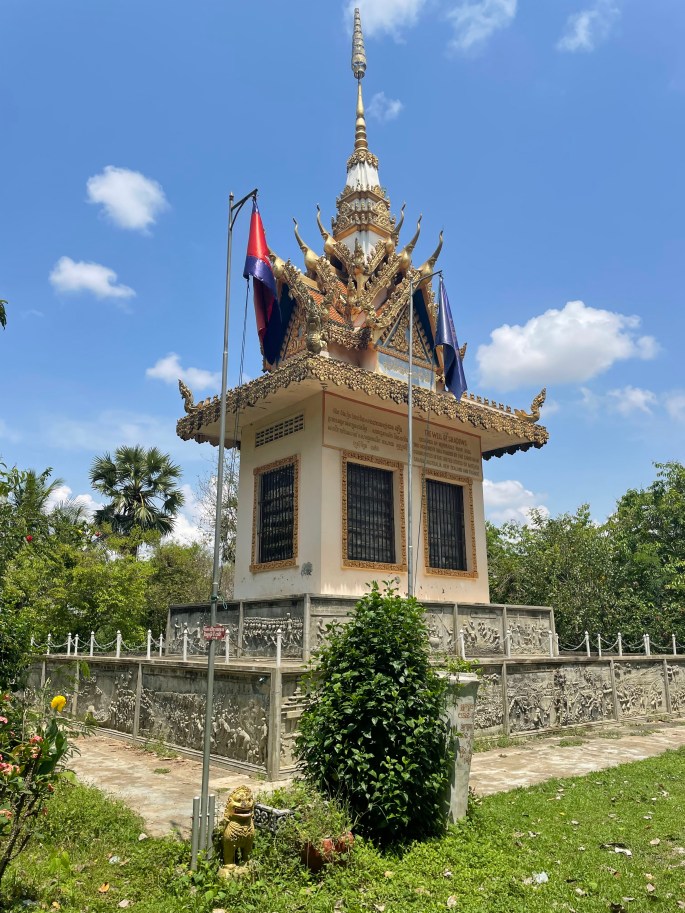
Finally, our driver takes us to the Killing Fields. We hadn’t planned on visiting this place with the kids—too harsh, too complicated to explain. But now we’re here, and there’s no turning back. The children are curious and want to know who this “bad guy” Pol Pot was. As we try to explain the history as accurately as possible, while carefully leaving out many details, they stand still in front of the memorial. It leaves a strong impression. The illustrations on the monument leave no room for doubt. The skeletons of victims are piled up behind the windows of the monument. An old, stooped man is walking around the monument with a group of young European men. The contrast is striking between this old man, thin and bent, carrying the weight of the history he is telling, and these young men, tall and strong but still naive, who look at him with a sad expression as they learn about these atrocities.
We follow the group around the monument. While listening to the old man, we continue to explain the history to the children as faithfully as we can, again omitting many details. A little later, we confess to our tuk-tuk driver that the history is hard to explain to the children. The kids don’t understand this story. “They need to know; it’s important to understand this history,” he replies. Then I hear the old man make a surprising remark: “No one wants Cambodia to exist. My country is not what it used to be. We are under threat. And no one will help us.” Once again, the bitterness behind the smile.
We are nearing the end of our journey in Cambodia. We managed to slightly lift the veil and see behind the smiles, glimpsing some of the realities of the Cambodian people. These experiences and conversations have allowed us to appreciate even more the smiles and kindness of the Cambodians. Four weeks filled with experiences are packed into our bags. And everything that didn’t fit has been sent home by mail. It was simply wonderful!
Yesterday, we picked up our RV—our new home for the next two months. A new chapter begins. For two months, we will be traveling through the wild West of America. We are excited to explore the national parks, the wilderness, the campgrounds, the snow-capped peaks, and the silence.
No more tuk-tuks. And no more fried rice or noodles. We are looking forward to grocery shopping and cooking for ourselves again. Lighting up a barbecue or starting a campfire. In short, back to nature… All that’s left is to get over the effects of jet lag.
 Globetrotterdammers