

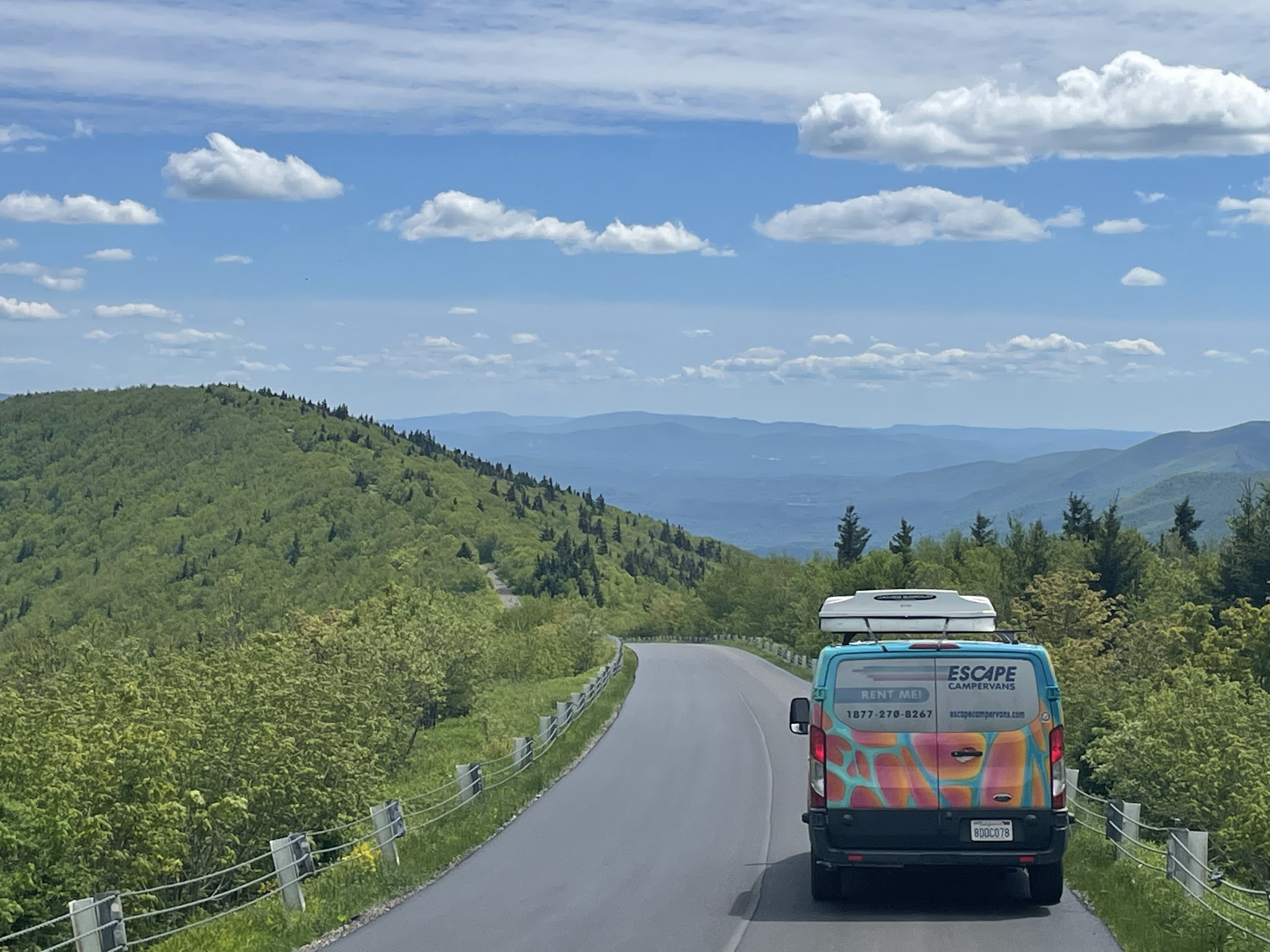
The kids were thrilled when they saw our camper for the first time. “Wow, it’s so cool! The colors are amazing!” Our rental agency (Escape) paints each van with a unique and colorful design. We had already seen them on the West Coast and decided to book one for our two weeks on the East Coast. It’s much smaller than the RV we had out west, but much easier to handle—especially in New York. The kids sleep in a roof sleeper, a bed on the roof that they climb up to each night using a ladder. The van draws attention everywhere we go, and several times a day, we get compliments from passersby: “Cool van, I love it! Bye!” And we respond with a thumbs-up, “Thanks, but it’s not ours. It’s a rental.”
After much thought, we decided to skip Canada. The trip from Seattle to Montreal was complicated in terms of logistics and expensive. Especially since we would have to return to New York to catch our flight to South Africa. That would mean crossing the border twice, with all the required PCR tests, procedures, and forms. We opted to spend more time in America instead.
The northeastern U.S., New England, has plenty to offer as well. Over a week and a half, we traveled from New York up the coast to Boston, passing through Connecticut, Rhode Island, and Massachusetts. From Boston, we headed northwest through New Hampshire to Vermont




We’re in the cradle of modern America. In 1620, the first pilgrims from Europe landed here before spreading across the country over the following centuries. The first American states were established here before the Declaration of Independence was signed in 1776. And when European migration truly took off in the late 19th century, New York became the gateway to the new continent, with steamships docking at the Manhattan piers.
We visited Ellis Island and, with just a few clicks, found records of ancestors who arrived here over 100 years ago, seeking a new future from places like Brest or Northern Europe. However, not everyone was admitted. Those who couldn’t prove they had family members or sufficient financial resources, or those who were physically or mentally unable to support themselves—and thus would rely on public assistance—were sent back. You can already see the foundational principles of modern American society in this: the conservative idea that individuals are responsible for their own future.
The symbol of this new life is the Statue of Liberty, which we visited as soon as we arrived in New York, at the kids’ very insistent request. Even at 7 and 10 years old, they recognized it as a symbol, impressive on its island off the coast of Manhattan. Representing freedom, equality, and friendship, it was a gift from the French people to the American people, who had just abolished slavery. “The Statue of Liberty Enlightening the World.” The French architect Auguste Bartholdi took 15 years to design and build it. The copper panels were transported by ship from Paris to America, where they were assembled. The internal structure, designed to support the statue, was developed by Gustave Eiffel. In 1886, it was placed in New York Harbor, on its island, looking east towards its smaller sister. They face each other across the Atlantic. The kids collected another ranger badge, as the island is also a national park, and we were joined by many school groups on our visit. We also spoke with Americans who had gotten up at dawn to visit this symbol of their history.
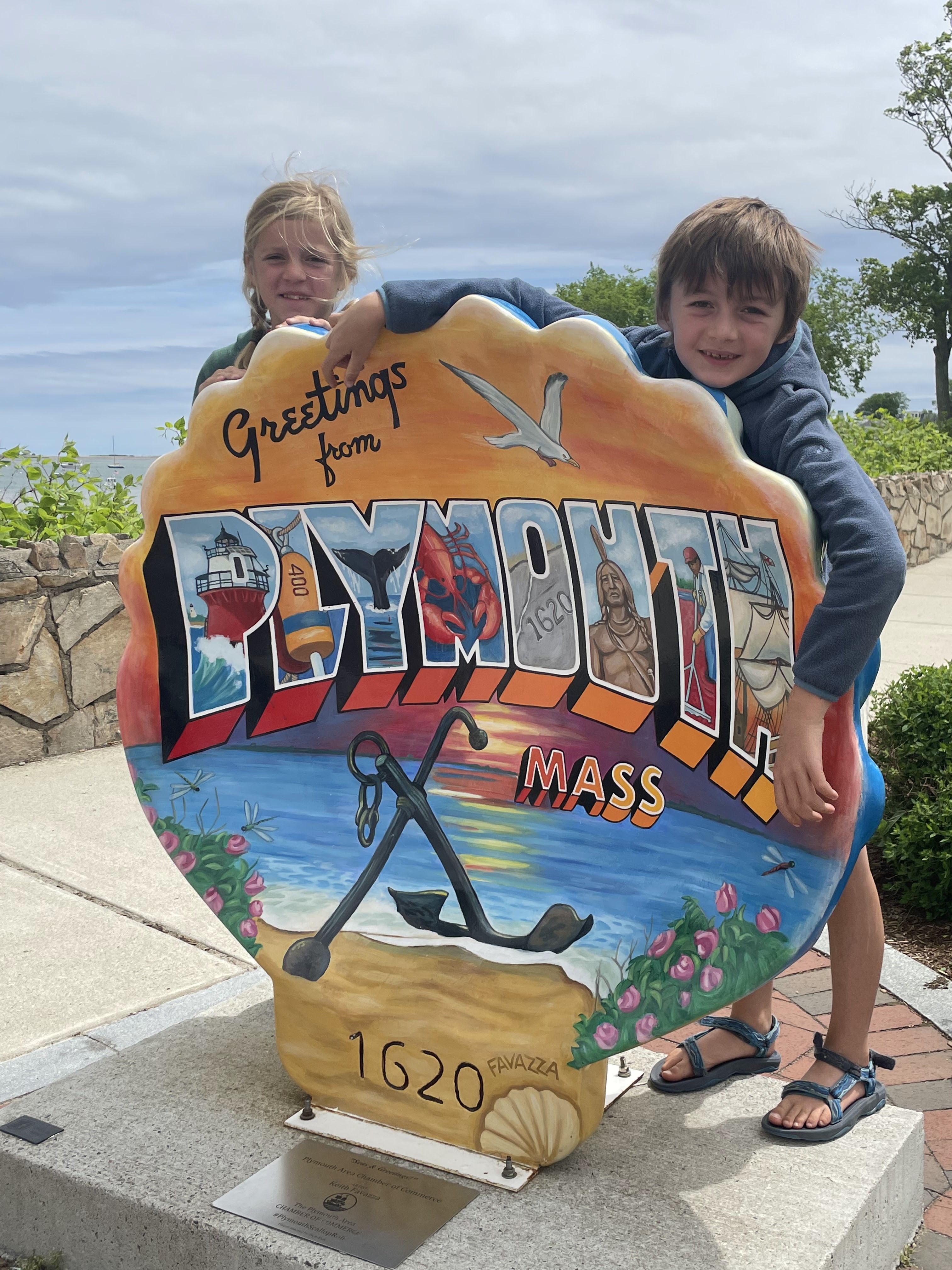
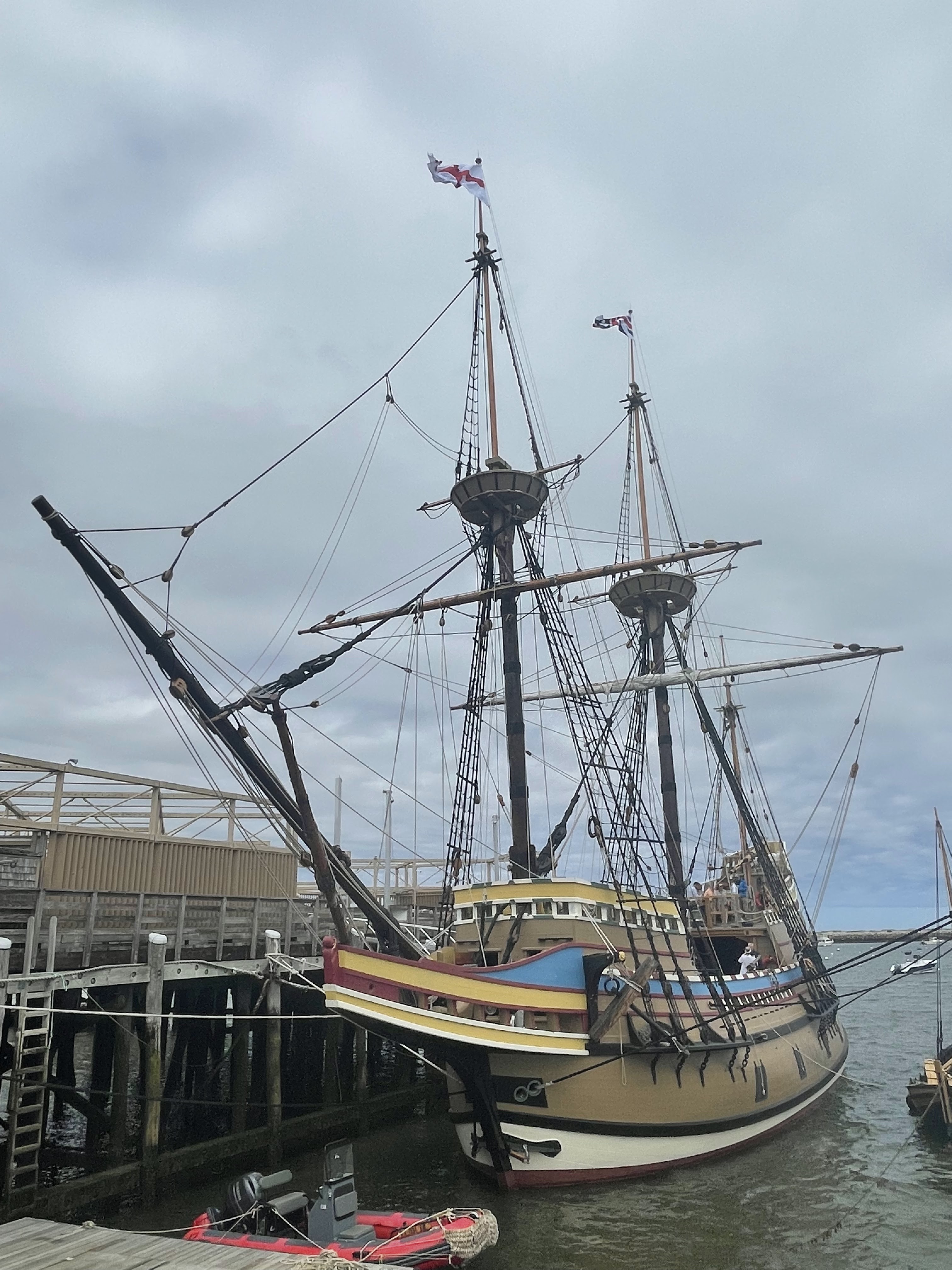
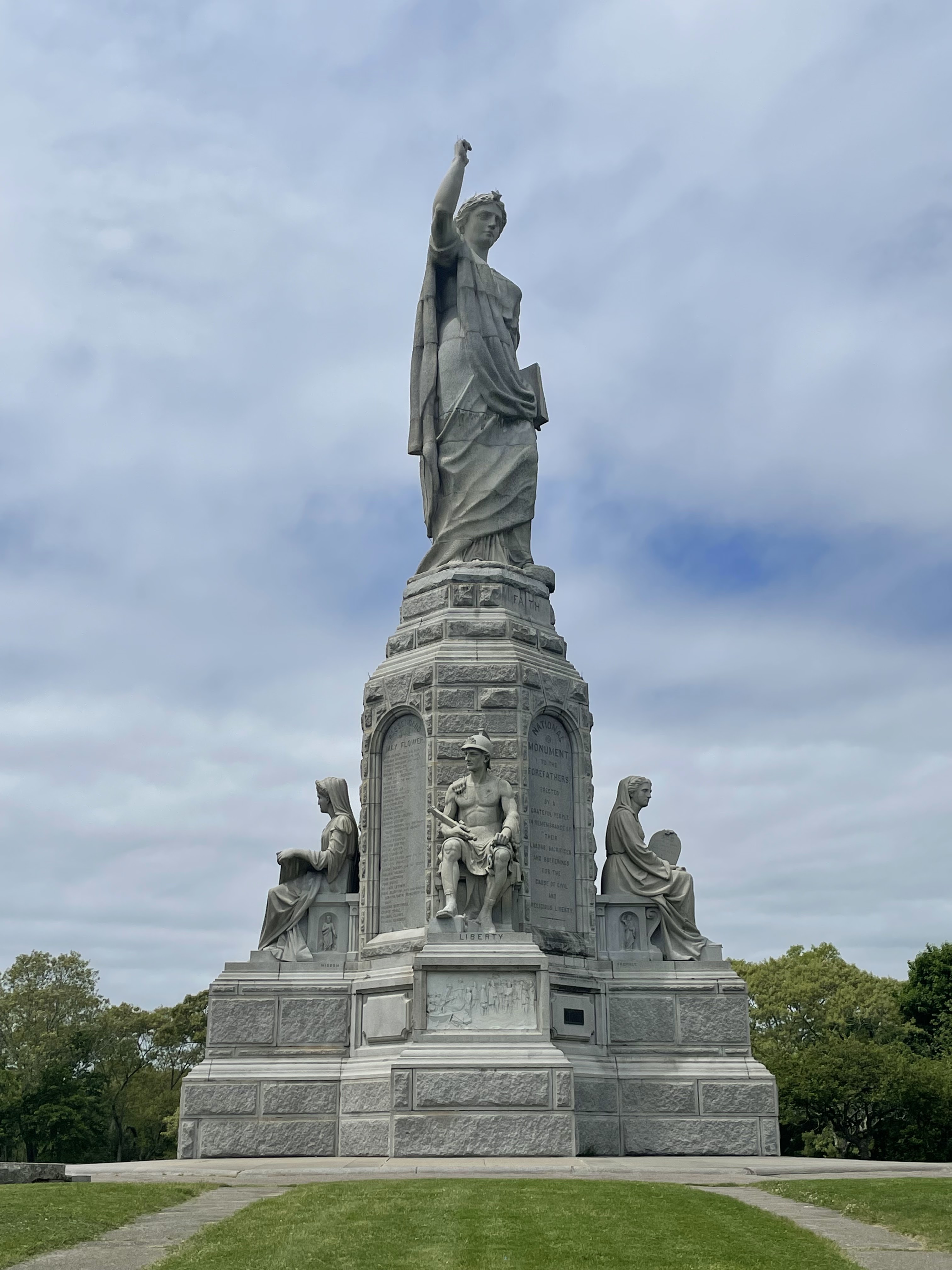
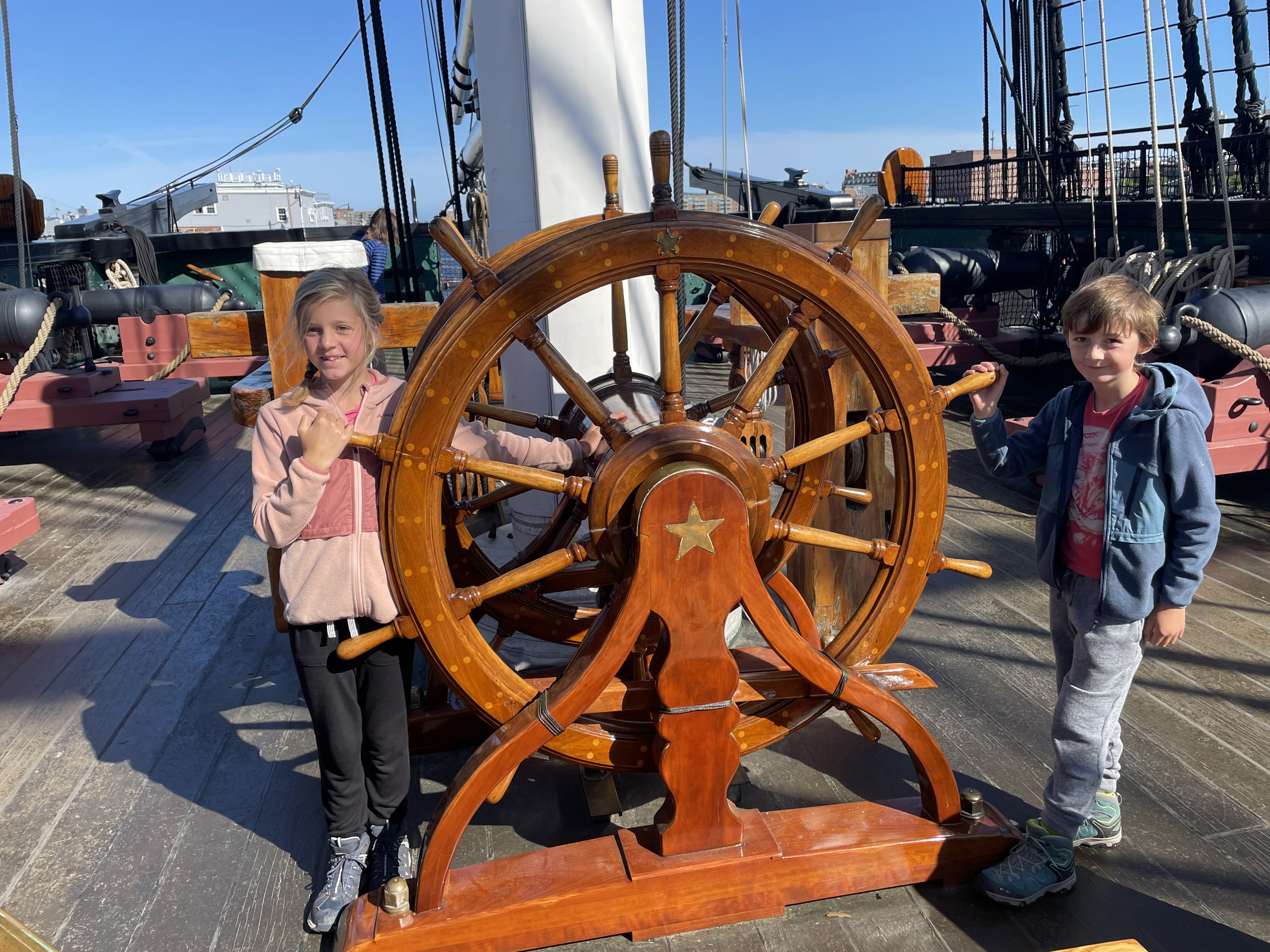
In the days that followed, traveling along the coast to the north, it was hard not to notice the place names that testify to the direct connection these states have with Europe. Greenwich, Essex, New London. In Plymouth, the pilgrims arrived from Europe, knowing they would likely never see their hometowns again. They brought these names, perhaps as a tribute to the new life they were building and the people they missed. In Plymouth, we walked the Pilgrim Trail and boarded the Mayflower II, a replica of the ship that crossed the ocean from England in 1620 and first anchored on this coast. These pilgrims were the first ancestors of many Americans. During our walk, we met our camping neighbors, a retired couple from Michigan. She shared that she discovered she was a direct descendant of one of the Mayflower pilgrims. The family’s father died during the first winter, as did half of the pilgrims, but his son survived. The pilgrims decided to establish their first colonies here because of the favorable climate and the abundance of natural resources. However, life in those early years was difficult, and building a new existence was fraught with dangers. Nevertheless, they managed with the limited means they brought ashore. And the seed they planted in Plymouth would grow into the United States of America.
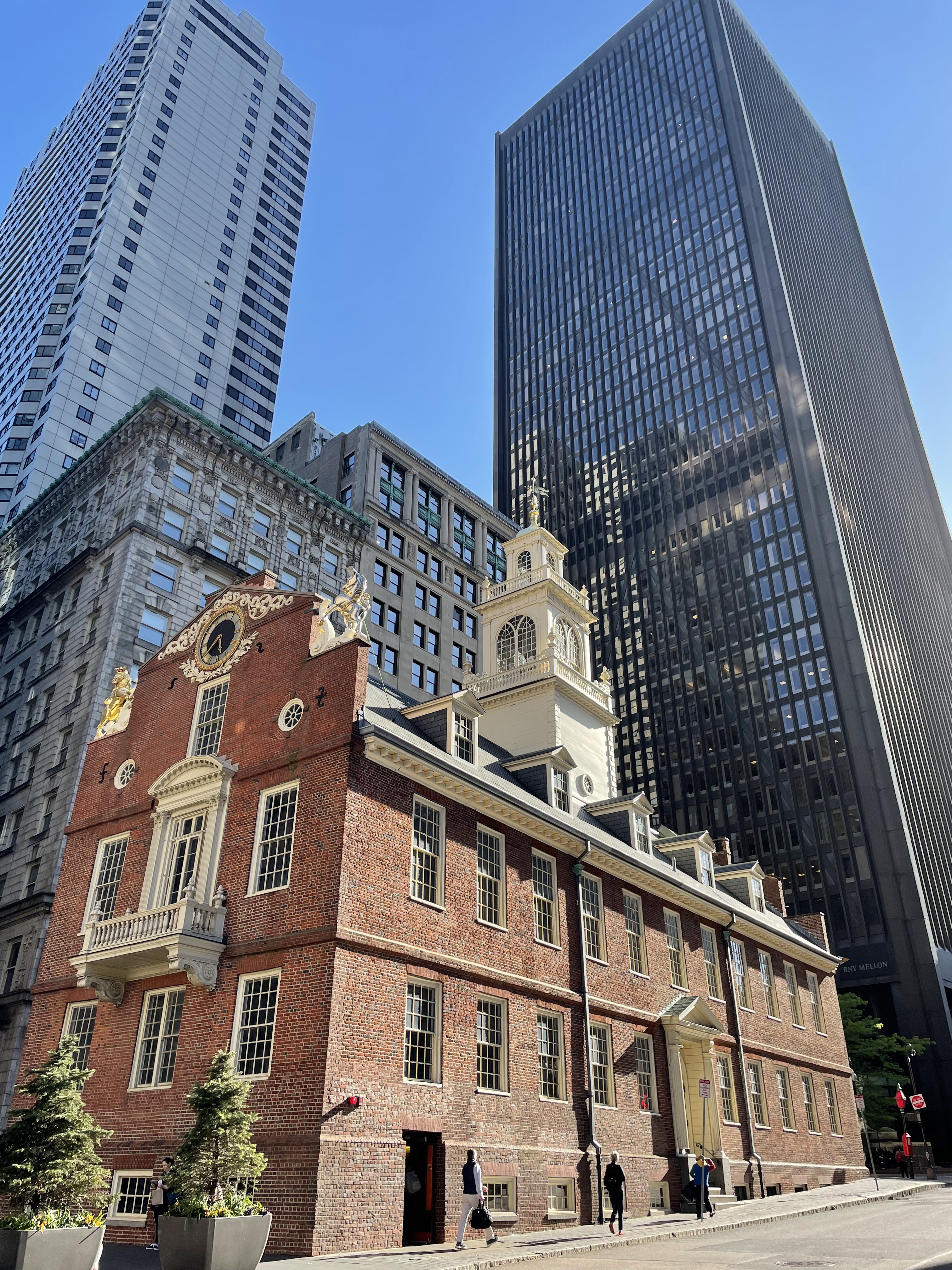
Not far from Plymouth, Boston became a symbol of freedom nearly 200 years later. It was here that the spark ignited, leading to the fire of the American War of Independence. The uprising of the Bostonians against the British began in 1773 when the British decided to tax all goods entering the colonies. The state coffers were empty, and they wanted to generate additional revenue. But the opposite happened—exports of English tea plummeted as the colonies began importing tea from other countries. In an attempt to reclaim the market, the British lifted the tax on English tea. Many American tea importers went bankrupt. The British then sent ships loaded with tea to Boston. Disguised as Native Americans, the Bostonians attacked the English ships in the harbor and dumped all the tea overboard. The Boston Tea Party was born, marking the beginning of America’s fight for independence.
We followed the Freedom Trail through Boston, walking through the North End, the city’s oldest neighborhood—today known as Little Italy—full of historic landmarks and striking buildings from that era. We eventually arrived in the Charlestown neighborhood, where a massive stone obelisk over 100 meters tall stood before us. The Bunker Hill Monument commemorates the battle on the hill of the same name, where the Bostonian patriots inflicted significant losses on the British for the first time. Although they were ultimately defeated, the tone was set, and the fight for independence had truly begun.



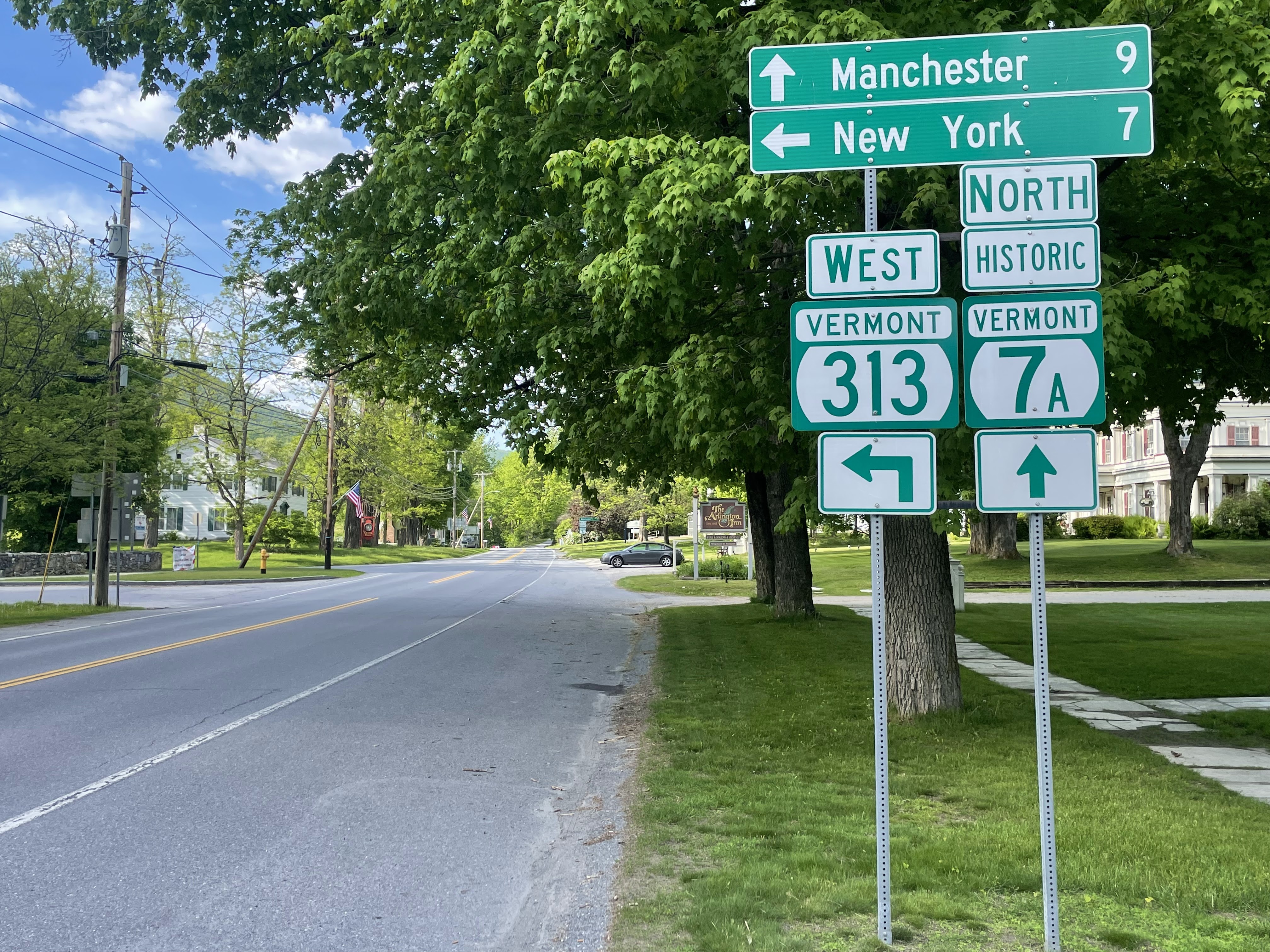
Two days later, we found ourselves in Manchester, Vermont, at the foot of the Green Mountain National Forest. Vermont is also known as the “Green Mountain State.” The entire state is made up of mountains and hills covered in forests, wide valleys with fast-flowing rivers, and traditional wooden houses painted in dark blue, burgundy, and white. The air is pure and clear, and in the evening, you can smell the scent of wood-burning fireplaces.
In Bennington, near Manchester, we came across another massive obelisk. This silent witness to the Battle of Bennington stands where the British were defeated in 1777 by the Green Mountain Boys, the rebel militia of Vermont. The British army suffered heavy losses. The tide was turning. In Europe, particularly in France, support for the Americans was openly expressed. The British would not recover from this battle. Two months later, after another British defeat at Saratoga, the war was over. America was independent.


On our own front, it’s Arthur’s birthday! Our little boy has grown so much over the past few months (and lost so many teeth along the way!). In Mystic, a charming coastal town in Connecticut made famous by the film Mystic Pizza featuring a very young Julia Roberts, we decorated our trendy camper van with homemade garlands while the kids were asleep. Arthur opened his presents, and we indulged in a massive birthday cake.
Arthur: “Can I pick my own cake? Can I have the carrot cake?”
Us: “Isn’t that a bit big?”
Arthur: “No, we’ll just eat it all week!”
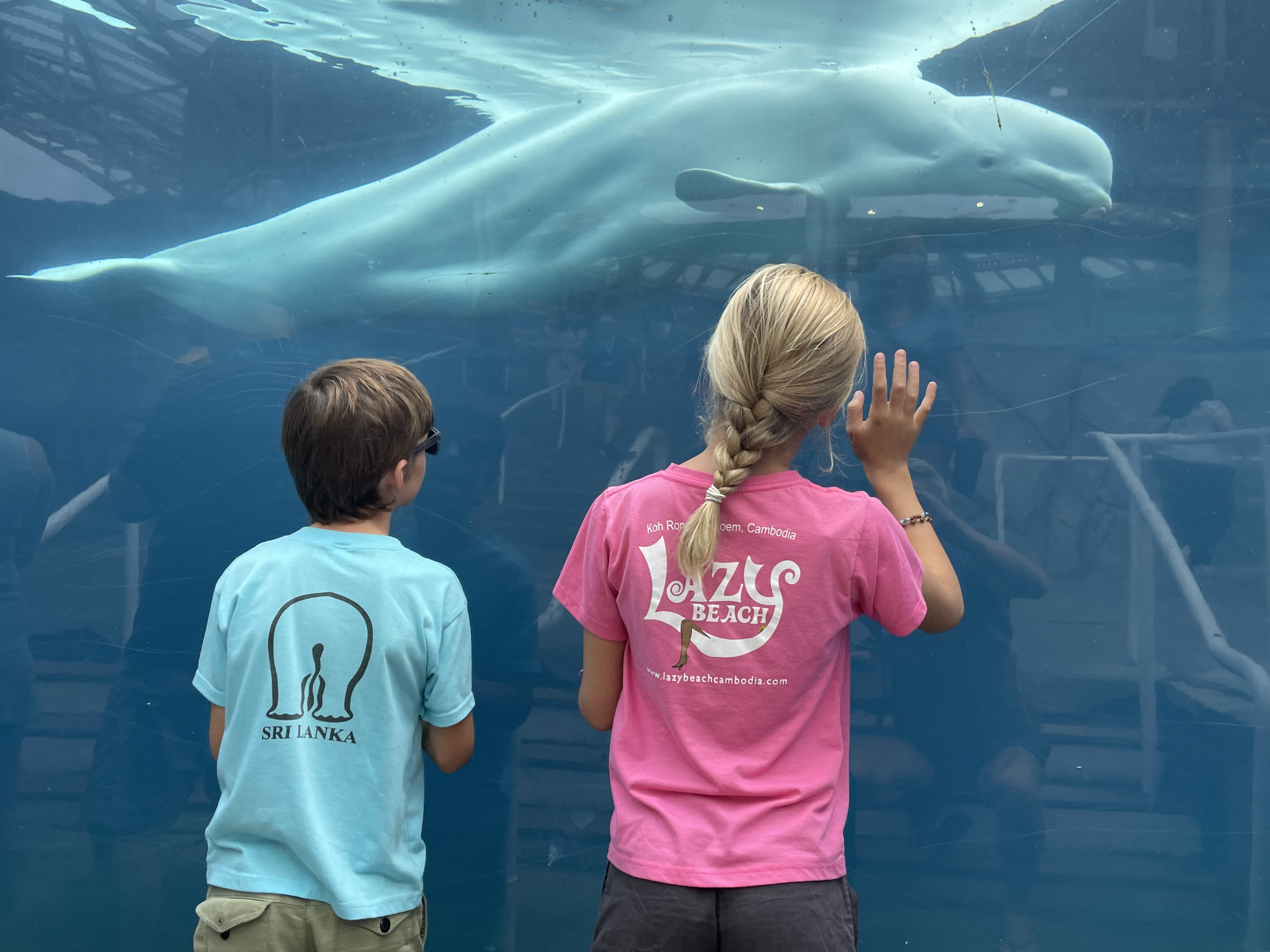
We spent the afternoon at the Mystic Aquarium, where we saw belugas for the first time, and the kids were dazzled by the sea lion show. In the evening, we kept with tradition by roasting marshmallows over our campfire. Arthur had a wonderful birthday, falling asleep proud to be 8 years old.
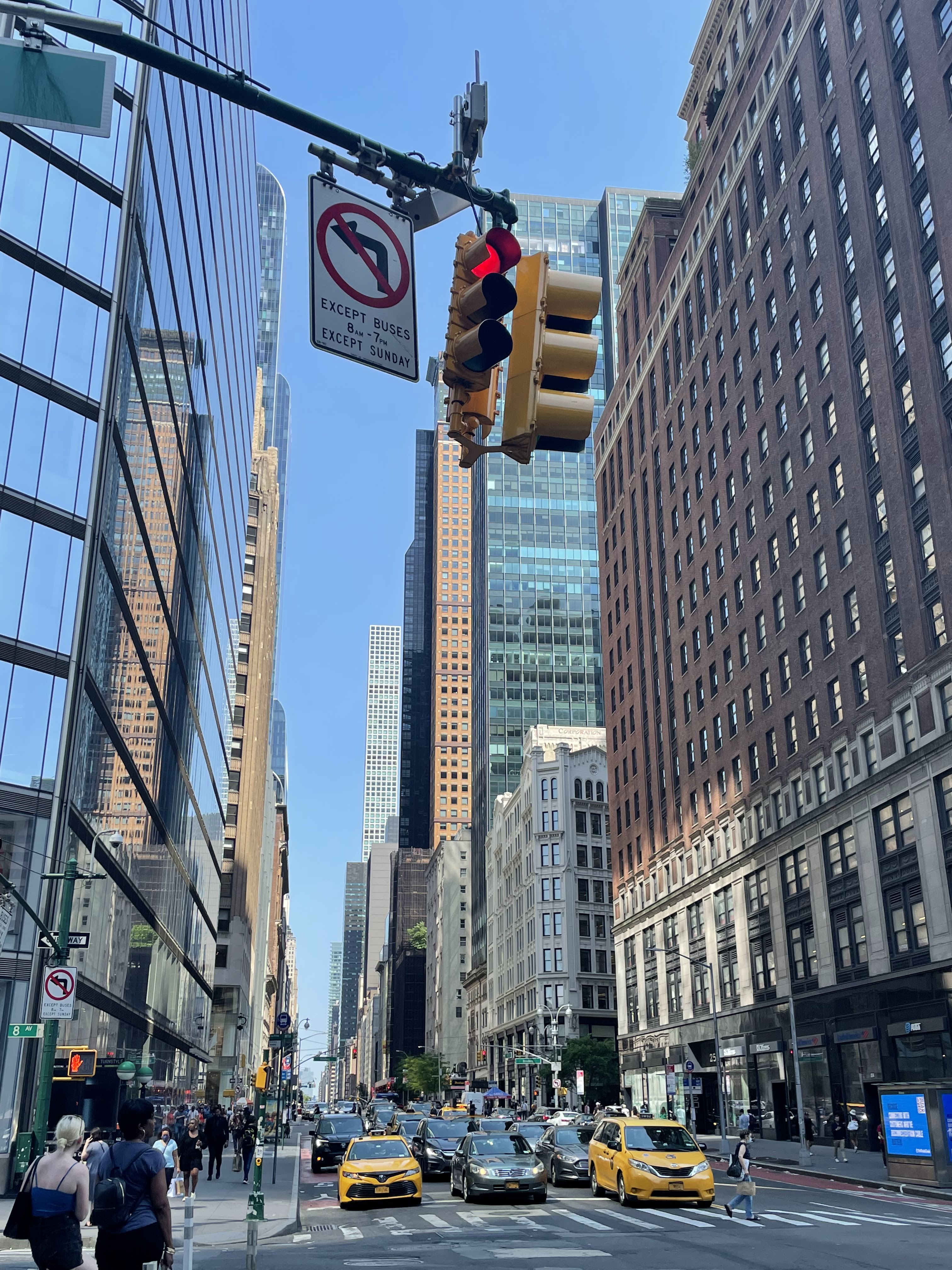
We stayed in Vermont for a few more days before heading back to New York, where we celebrated Anna’s birthday. We cycled through Central Park, imagined ourselves as master spies at SPYSCAPE, the spy museum, and ended the day on a high note at Ellen’s Stardust Diner on Broadway, where the singing waitstaff performed hit songs from musicals. Anna was thrilled. The atmosphere was fantastic, and we sang along at the top of our lungs to Grease, West Side Story, The Lion King, and Moulin Rouge. Anna was beaming from ear to ear. It was an unforgettable day.


Our time in America is almost over. We’ve had two fantastic, experience-filled months here. And honestly, it wasn’t a bad choice for celebrating a birthday!
8 and 11 years old! Hip-hip-hooray for our two little globetrotterdammers!
 Globetrotterdammers