

We’ve settled into an improbable hotel. Built on a rocky slope, the hotel was the creation of a man who refined his work over time. A series of concrete floors, added over the years, are connected by irregular stairs and hallways, all leading to terraces, balconies, and galleries overlooking the mountain, with a dizzying view of the distant southern plains. The wall frescoes, brightly colored rooms, aquariums filled with carp, lights, and furniture are all of a strange and mismatched style. Yet, the hotel is pleasant and spacious, and the view is enough to keep you captivated for hours with a good book and a fresh pineapple, lime, or mango juice. Below, the road winds down from the village, hugging the ravines until it reaches the valley. Buses and trucks crawl slowly up the narrow road towards Ella.
We had planned to stay for five days, thinking we could explore the area before heading back down south. But the mountain roads are too time-consuming and make Arthur feel sick. As for me, I’m terrified at every bend, despite Benny’s experience and caution as our driver. So, here we are, isolated in the Sri Lankan mountains, out of time, in our own bubble.
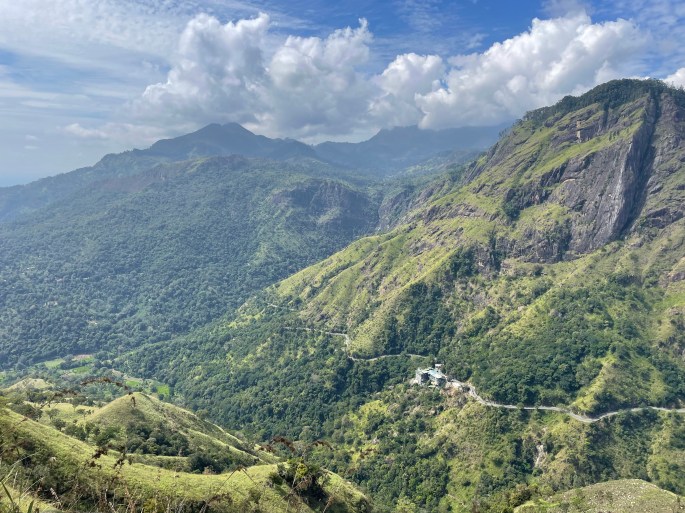
We go out during the day, have lunch in the village, and return to the hotel for dinner before night falls. The hotel staff is attentive, and our dedicated waiter doesn’t know what more he can do to please the kids. Fries for breakfast, ice cream for dessert—not exactly balanced, but how can we refuse such kindness? Everything could be perfect, but tension is rising between Ukraine and Russia. Here we are, on the mountainside, listening to squirrels and enjoying the gentle evening, while Russia is attacking Ukraine.
Sri Lanka is a favorite destination for Russians. We see many of them, and it feels quite strange given the circumstances. The moment they hear Russian spoken, Westerners’ eyes immediately turn toward them. Coexistence is becoming difficult between them and the rest of the world. The Russians here don’t seem to be troubled by the situation, but as the days pass, things begin to change. After the mountains and the Udawalawe National Park, where we were surrounded by nothing but nature, we head to the southern coast.
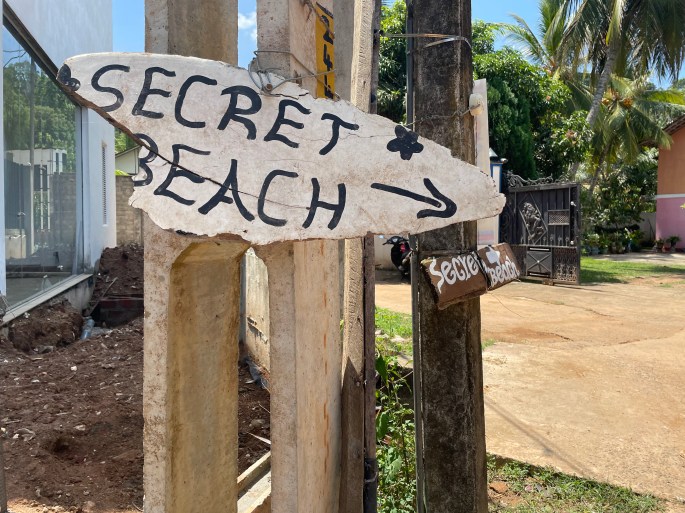
I read a graffiti on a wall: “Stop the war, stop Russia,” as we walk down the path leading to a small beach called Secret Beach. It’s a little slice of paradise, fringed with coconut trees and protected by rocks where waves crash before reaching the shore. With the few tourists that make it there, Secret Beach has miraculously retained its charm. Sri Lankans, Americans, Europeans, and Russians all enjoy the turquoise waters of this idyllic beach. Yet, the unease is palpable even here.
And then there is Galle, a city in the south of Sri Lanka with strong Dutch, Portuguese, and English influences. We wander through the old colonial houses of the fortified town, taking the opportunity to buy a few souvenirs from this beautiful country. Exhausted by the heat, Jurgen and the kids take refuge in the shade of a jewelry store. The owner stands outside and explains that, at the moment, 90% of the tourists are Russian. Sri Lankans rely on tourism, and the loss of Russian tourists is a serious concern. Indeed, as we sit down by the sea at a café for lunch, a Russian couple with two children starts arguing. The ATM isn’t dispensing cash. Russian banks are in trouble. Current events have caught up with us.
We have been away for two months now, traveling in a kind of temporal, touristic, and familial bubble. We don’t always have access to the internet or the news, and slowly, we find ourselves less interested in keeping up with what’s happening in Europe and around the world. We’re living our own adventure. The people we meet and the experiences we have are just as informative, giving us a different perspective on the world. We’re discovering other realities that affect the people here.
On the road to Galle, we stop to visit a sea turtle sanctuary. The turtles here are victims of plastic bags, which they mistake for jellyfish, nylon fishing nets, or chemicals that damage their shells. We were aware of this, but seeing turtles harmed by our pollution and by humans is a different matter. Anna decides to make a video for her class to talk to them about turtles and the dangers of plastic. The sanctuary rescues and treats injured or sick turtles. Eggs are collected from the beach to give the baby turtles a better chance of survival. Depending on the species, only 5 to 15% of the eggs hatch, and only 5% of the hatchlings will survive. The turtles need a bit of help. They are fed and cared for over three weeks, and once they are strong enough, they are released back into the ocean. Anna and Arthur can’t resist holding the tiny turtles, squirming in their hands, eager to return to the water.
In another tank, a turtle around five years old floats like a bath toy. She can’t join the other turtles at the bottom of the tank. She had eaten a plastic bag, mistaking it for a jellyfish. The plastic bag is like COVID for turtles. Her lungs are damaged, and she doesn’t have enough strength to dive. If she stays on the surface, her shell dries out, and she eventually dies.

Later, on the way to our hotel in Kalutara, south of Colombo, Benny points out the increasingly long lines of cars and vans at the gas stations. This isn’t new. We first started seeing lines of cars at the pumps as early as Ella, due to the diesel shortage the country is facing. The lack of foreign currency and the slowdown in tourism are drying up the country and the economy. No tourism means no dollars being injected into the economy, which means no fuel. But now the lines are endless. On white A4 sheets taped to the pumps, there are handwritten signs: NO DIESEL. Still, people queue, hoping to get a few liters of fuel at the next delivery. They spend the night in their cars or vans in front of the pumps. Many people depend on their vehicles for their income. The buses and the few tourist minibuses don’t need this trouble. Luckily, the taxis, known as “three-wheelers” or “tuk-tuks,” aren’t affected. They run on gasoline, and there’s still some available. But Benny is worried, too, as the fuel gauge slowly but surely creeps closer to empty.
Fortunately, Benny managed to find some gasoline and drive us to our final destination in Sri Lanka, Kalutara, 50 kilometers south of Colombo. We are now at the end of our journey in Sri Lanka. We’re “bubbling” by the pool, preparing for the next destination, Cambodia. We’re flying out in two days, and it’s time to get ready. “Of all the countries, Sri Lanka is my favorite,” Anna tells me. “It’s so beautiful here.”
This country has suffered a lot in recent years, from the tsunami to terrorism, avian flu, and now COVID. But this beautiful island off the coast of India, in the warm waters of the Indian Ocean, which has always been visited by whales, dolphins, and turtles, has so much to offer. It’s just a matter of time, and the tourists will return.
Current events have caught up with us, and the kids are now glued to the children’s news journal to read updates on Ukraine. “It’s completely stupid to destroy everything in Ukraine,” says Arthur. “Putin is being dumb. He’ll just have to rebuild it all afterward.”
 Globetrotterdammers