

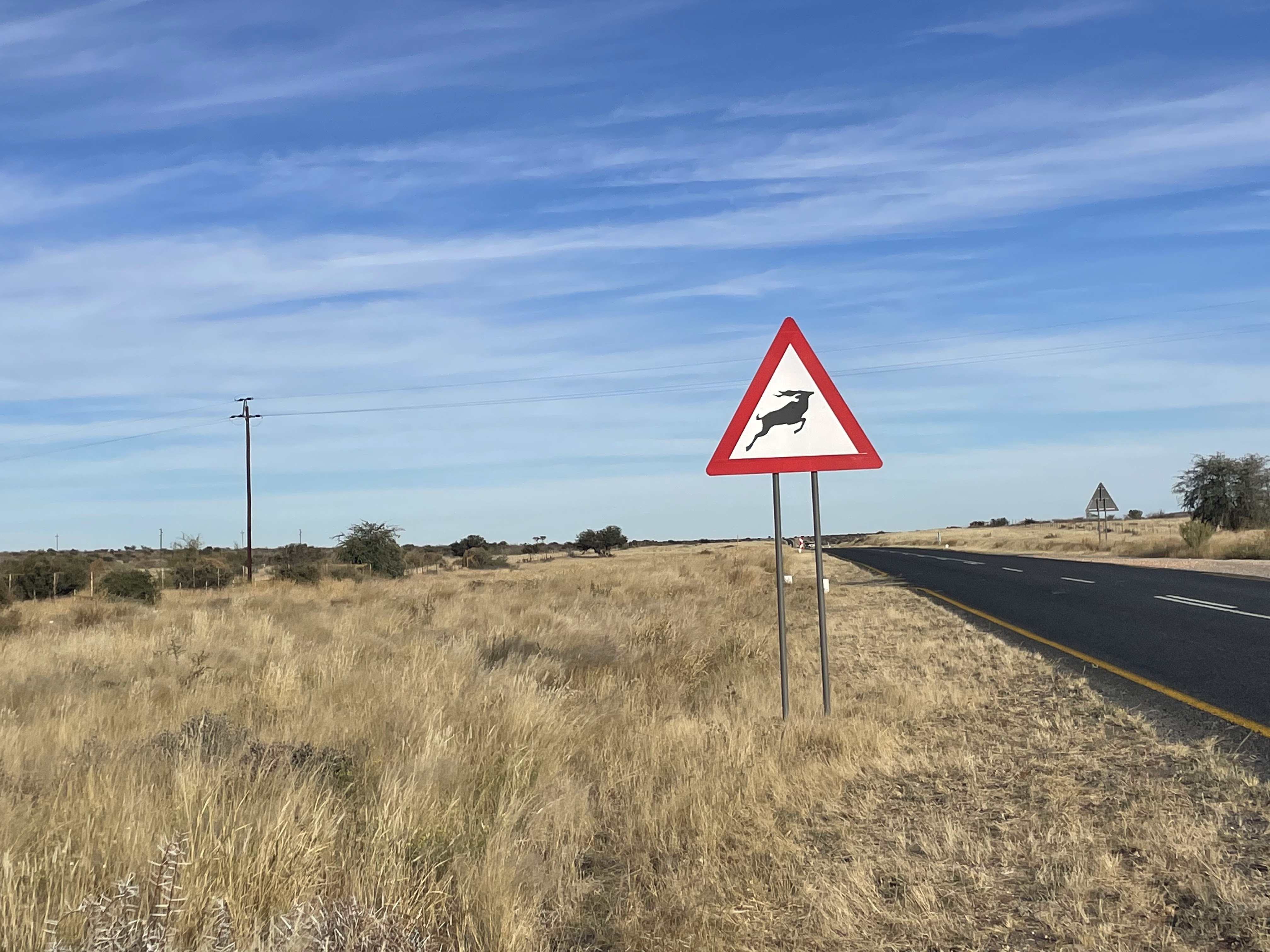
We’re sitting at a table in the restaurant of the Game Ranch, savoring a delicious menu of local game: pumpkin soup, springbok carpaccio, oryx frikadelle, and roasted Kalahari lamb leg. It’s all paired with a delightful bottle of Tokara Red Cabernet Sauvignon. Anna and Arthur are sipping apple juice from wine glasses, tasting everything and nodding in approval. Only the oryx dish gives Anna pause: “I’ve decided to become an Oryxarian. They’re just way too cute.” It’s Sunday evening, and we’re in the Kalahari Desert, in southern Namibia. Outside, it’s dark. We’re in the Southern Hemisphere, and night falls early here.
Today, our African adventure has finally begun. We arrived in Namibia yesterday, a day late, physically and mentally exhausted. We had slept far too little over the past few days, but after a glass of wine, we could finally feel the stress begin to melt away.


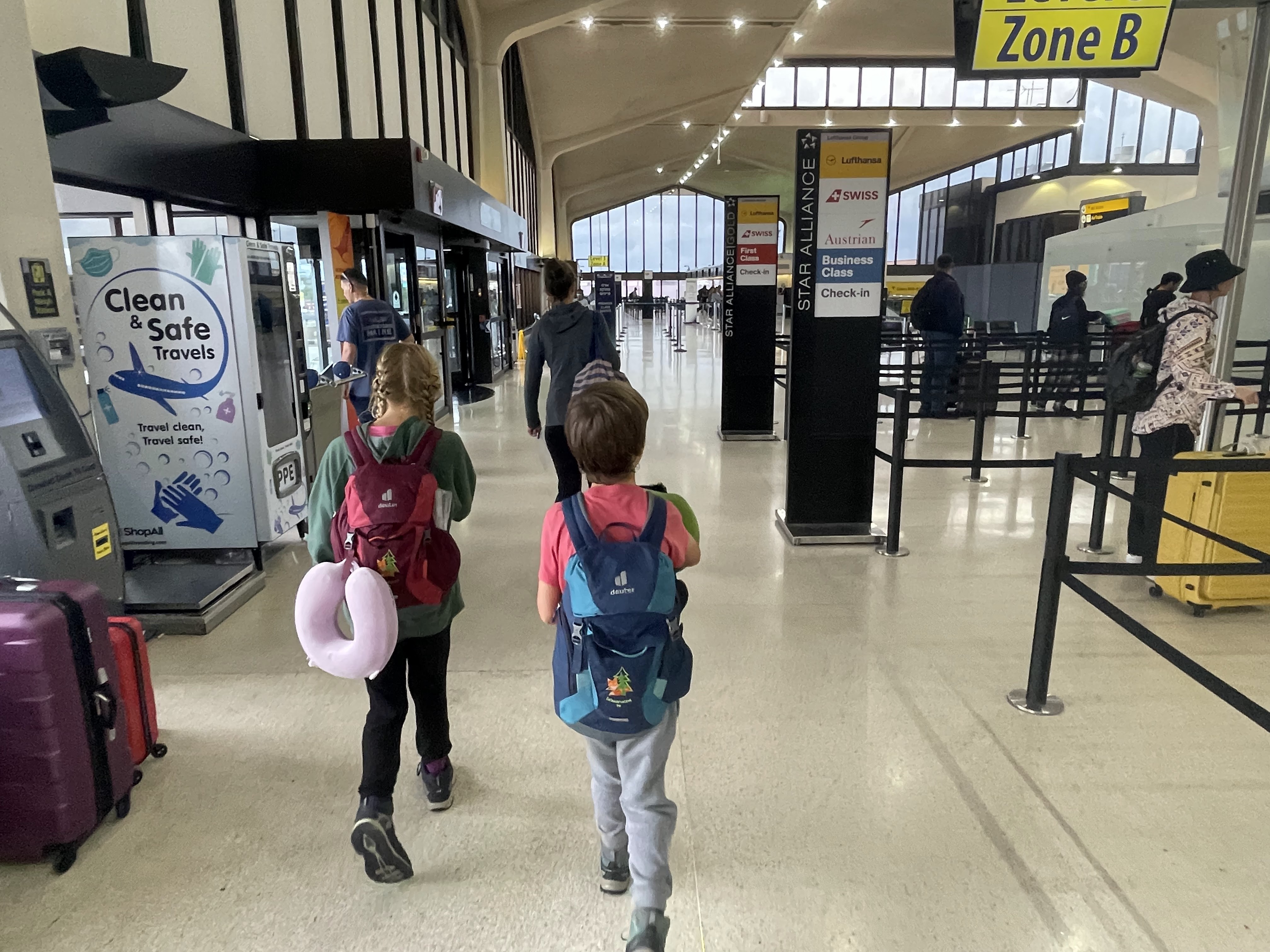
Last Wednesday, it became official: United Airlines Flight UA 188 to Johannesburg was canceled. It was 11 p.m., and we were waiting with a few hundred other passengers at the gate of Newark Liberty Airport in New York. Our flight, originally scheduled for 9 p.m., had already been delayed three times due to a storm over the airport. Now, it was completely canceled.
I had a premonition that afternoon. We’d been warned about the approaching storm, but our flight was supposed to leave just in time. “What will we do if we get delayed and miss our connection to Windhoek? Or worse, what if our luggage gets stranded in Johannesburg?” I had asked Marie-Laure, feeling a sense of unease. Following the advice of the gate staff, we hurried to the customer service counter, anxious about what this would mean for our journey.
Up to this point, we hadn’t faced many major disruptions during our travels. Once, our hotel in Sri Lanka was overbooked because Ukrainian travelers, unable to fly home after the war began, had nowhere to go. And of course, we’ve occasionally lost things: a toothbrush left charging in a campsite bathroom (“You packed it, right? What do you mean, no?”). Not just toothbrushes, but also a pair of Tevas, some clothes, charging cables, and more. Not that we’re particularly disorganized, but these things just happen, especially when you’re traveling for six months.
But this situation was different. The flight from New York to Johannesburg usually takes 15 hours, and the next one wasn’t for two days. We had a tight itinerary planned for Namibia, with bookings already made, a connecting flight between Johannesburg and Windhoek, a paid hotel night in Johannesburg, and PCR tests valid only for 72 hours. The stress was mounting, and we realized everything would need to be rearranged. But first, we needed a flight.
We found ourselves in a long line at a counter where not much seemed to be happening. An employee led us to another office one floor down. When we arrived, there were already many people waiting, but we remained hopeful, trying to assess what changes would be necessary and informing the organization that had helped arrange our trip to Namibia. We waited, and waited, and waited some more while the office staff attempted to rebook flights for those ahead of us. The day had already been long, with queues for check-in, security, and passport control. Our legs ached from standing, but we were not alone in our frustration.
Around 2 a.m., it was finally our turn. We were still able to smile, but that changed quickly. We tried to explain that we were traveling with children and some options weren’t feasible (like Newark-Paris-Addis Ababa-Johannesburg), and that our final destination was Windhoek, not Johannesburg; that their partner airline, Lufthansa, flies daily from Frankfurt to Windhoek. But the response was, “It’s not our responsibility; our responsibility is to get you to Johannesburg, so that’s where we’ll book you.” The process dragged on, and we tried to stay positive and constructive, but the staff were clearly tired, and the lack of empathy was obvious. They barely looked at us, speaking about us in the third person as if we weren’t there.
A supervisor was called in, then a second manager to try to find a solution. One of the employees tried to point out that we were traveling with two children, while the initial attendant quietly moved away, avoiding our desperate gaze. None of it made any sense. “You can check with Lufthansa tomorrow to see if you can change to the flight to Windhoek.” Eventually, they found four extra seats for the following evening on a Lufthansa flight to Johannesburg, and when we asked what we should do about our PCR tests, which would no longer be valid upon arrival, they suggested we pick up vouchers for new tests at Desk H. “And the luggage? It will be sent automatically to the final destination, so you won’t have to pick it up.”
With only our carry-ons, we left the airport around 3 a.m., exhausted but with a semblance of a solution. It wasn’t ideal—we would need to book a new Johannesburg-Windhoek flight the next day if Lufthansa couldn’t change our Frankfurt-Johannesburg leg to Frankfurt-Windhoek. But that could wait. For now, it was time to find a hotel. United Airlines wasn’t helping with that either. “And what about tonight, it’s 3 a.m. and our two kids are asleep on a luggage cart?” “Take the shuttle to the parking area. There are hotels with shuttles there, you can see if they have rooms, but it’s not our responsibility.”
Pushing a sleeping Arthur in a wheelchair ahead of me, we headed back to the hotel where we had stayed the previous nights. Fortunately, they had a room available, and by 3:30 a.m., we collapsed onto our beds and fell asleep almost instantly.
After a very short night, we were up early the next morning. We grabbed breakfast and returned to the airport, heading to Desk H for the promised new PCR tests. Desk H turned out to be none other than the Customer Care office we’d been in the night before. It was absurd. Why hadn’t they given us the vouchers then? Once again, we queued up. After two more hours of standing in line, the next issue arose. The person behind the counter, without even looking at us, informed us that they didn’t provide vouchers for such tests and that it wasn’t possible. “We don’t do that at all.” She couldn’t understand who might have told us otherwise. Of course, we didn’t have a name to give her.
Our flight was in three hours, and without a valid PCR test, we couldn’t enter Namibia or Johannesburg. It was too much. The tests cost $250 per person. After a while, Marie-Laure’s patience wore thin. The combination of lack of sleep, stress, and frustration with the ridiculous responses she was getting pushed her to tears in front of the attendant behind the counter. It needed to come out, and it worked. A few phone calls later, everything was sorted. The airport clinic confirmed that they often provide vouchers for free tests after flight cancellations. We no longer had time to be angry. We had to rush through testing, check-in, security, and customs. All of this takes forever with the new COVID restrictions, and there was no room for error.
Before boarding, as the steward at check-in had advised, we double-checked that our luggage was on the plane. It was. What a relief!
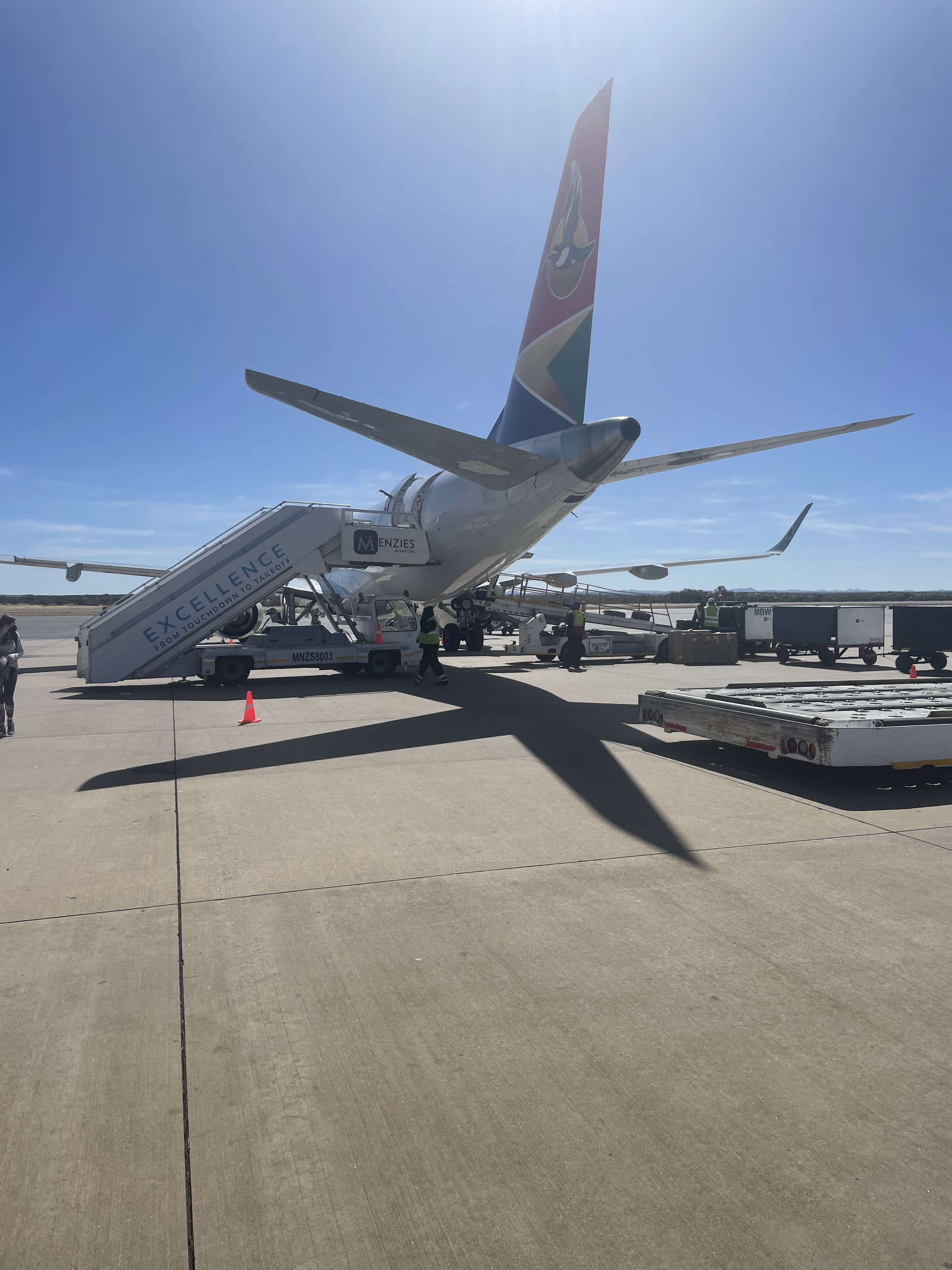
The flight to Frankfurt wasn’t exactly pleasant. We barely got headphones for the in-flight screens—we had to ask for them, and they were handed to us discreetly. The flight attendants didn’t seem very cheerful. Just seven hours to get through, and we’d be in Frankfurt. We’d have officially made it around the world, and only lost a day! Let’s stay positive. We landed in Frankfurt at 7 a.m., and our next flight wasn’t until 9 p.m. We were exhausted. After two nearly sleepless nights, the kids needed a place to rest, but there wasn’t really anywhere suitable for that.
Given the circumstances, we asked if we could access the lounge, normally reserved for business class passengers or loyalty program members. “No, that’s not possible. The cancellation of your flight isn’t our responsibility; it’s United’s. Only business class passengers can use the lounge,” Lufthansa responded. Thanks and goodbye, Lufthansa, you were as cold as your partner, United. We didn’t try to argue or explain further; we booked a mini-room at the airport hotel, a compact room rented by the hour for those who no longer know which time zone they’re in. Those few hours of sleep, even with all four of us crammed into a bed that was far too small, did us a world of good.
That evening, feeling rested and refreshed, we were more relaxed. We took out a deck of cards for a game. But there was another surprise waiting for us. Apparently, our luggage—the two backpacks we’d been living out of for five months—had never left Newark, contrary to what we had been told. What now? “Submit a claim for your baggage on the platform.” No, we wanted to speak to someone. We weren’t in any state to be filling out a form online, providing a multitude of details with no guarantee of a response. “Impossible, there’s no one who can help you. Everything goes through the platform.” We had 10 minutes left before boarding. We took out our phones, entered the required information, and filed the claim. But as everything had been going wrong for two days, Marie-Laure’s claim didn’t match. The bag tag number was different from the one we received at check-in. We had two options: select the number suggested by the platform, which didn’t match the bag in question, or not file a claim at all. Absurd. So, we specified that the number was incorrect and provided the correct tag number.
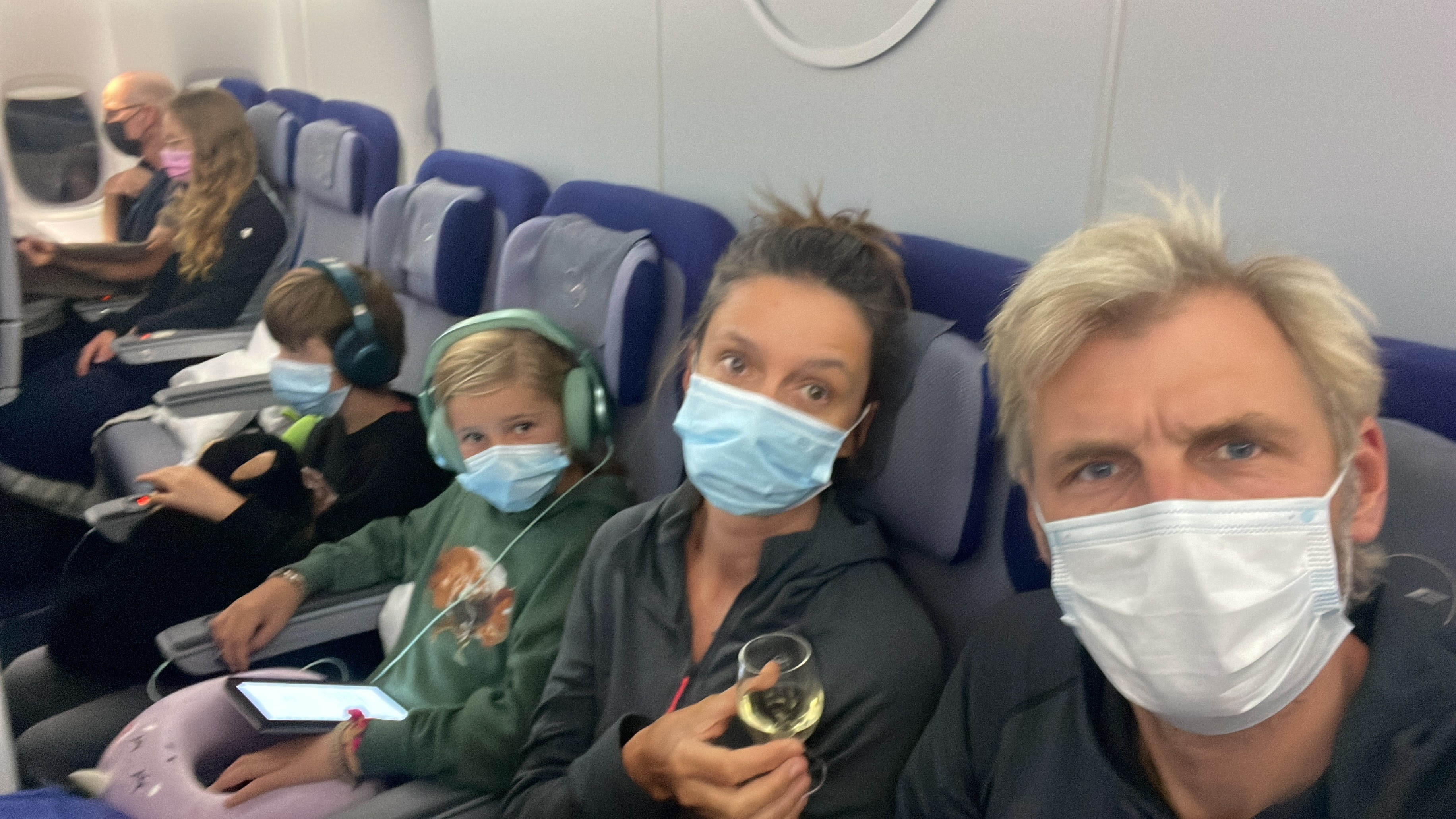
The phone rang. As we handed over our tickets for boarding, a woman with a German accent told me that we had no reason to file a claim. “You haven’t arrived in Johannesburg yet, so your bags aren’t lost. File the claim when you reach Johannesburg.” Marie-Laure lost her patience and started explaining our situation. We had only a two-hour layover in Johannesburg, and we didn’t have time to file a claim there. Our luggage was definitely still in Newark, and our final destination was Windhoek, where we’d begin a 4×4 journey. The conversation got heated, and everyone started looking at Marie-Laure as she raised her voice, explaining to the person on the phone that she was wrong about the baggage number. Two South Africans who were also boarding seemed to enjoy the way Marie-Laure was putting the Lufthansa rep in her place. In the end, we had to hang up as we boarded, put on our masks, and calm down. Marie-Laure ended up with a glass of champagne as a way to soothe her nerves, but she was boiling with rage at the ridiculousness of the situation we had been caught in for days. Nothing made sense anymore.
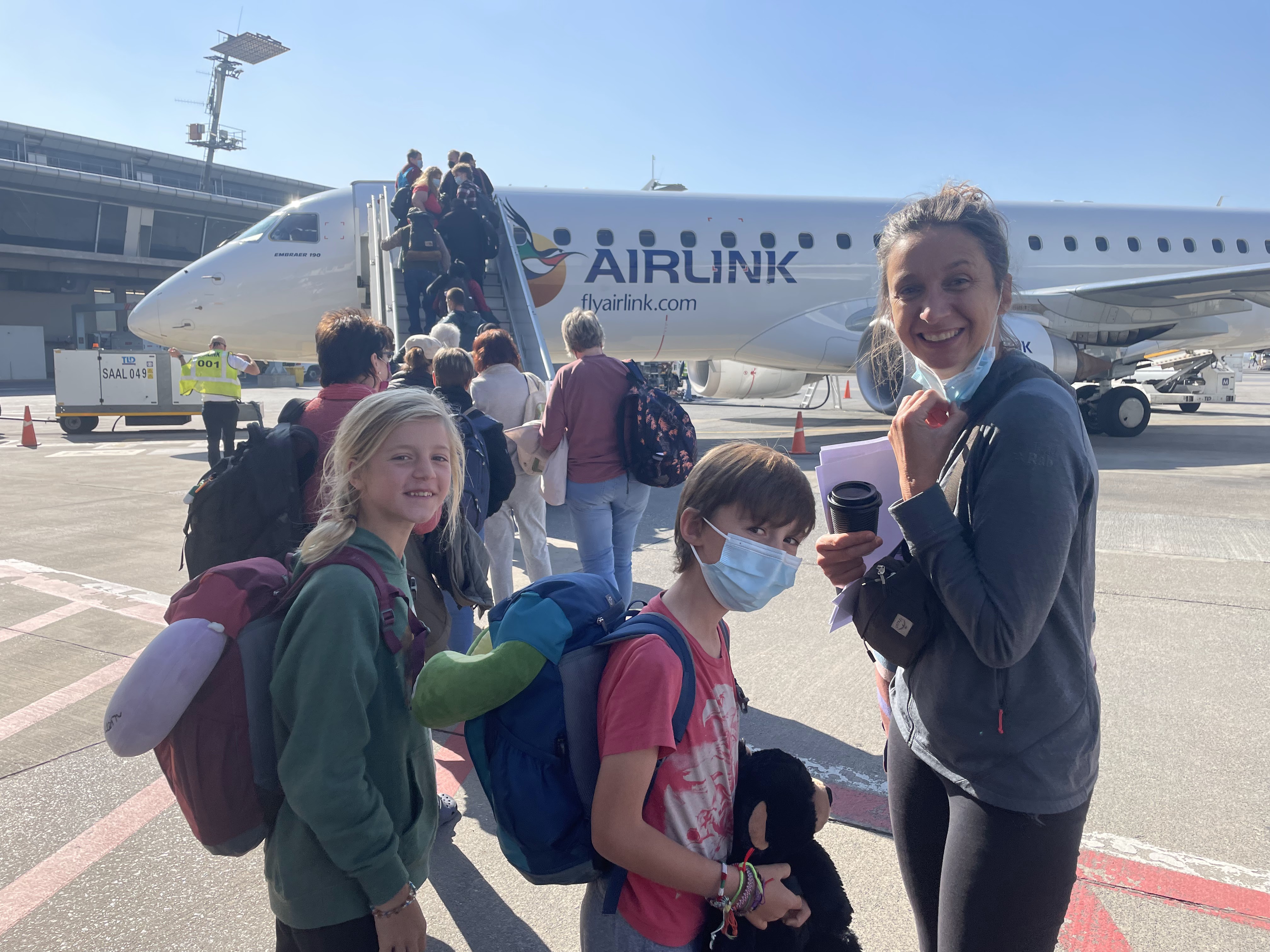
Another sleepless night on the plane followed, as we wondered how we’d resolve this problem the next morning. We needed to file a baggage claim in Johannesburg. But we were already a day late, and if we missed our connection to Windhoek, we’d be at least three days behind schedule, incurring more extra costs. Our itinerary in Namibia would have to be completely restructured. Fortunately, a ground attendant helped us upon arrival in Johannesburg, allowing us to catch our flight to Windhoek on time. But our luggage was now either lost or delayed.
Later that afternoon, now Saturday, we finally stepped out of Windhoek airport. There was no chaotic rush here—no taxi drivers pulling at your arms, no intimidating porters or aggressive SIM card sellers. Namibia felt very different from other African countries I’d known. I had lived in Kenya for six months during my studies and traveled regularly to Africa for projects when I was still based in France. Marie-Laure and I had visited Uganda in 2000 and Madagascar in 2006. But none of these places compared to Namibia. A serene peace, a calm sun, a deserted parking lot, and only a few representatives from travel organizations greeting their guests. In the car that took us to our hotel, Marie-Laure and the kids fell fast asleep in the back seat, exhausted from the past few days. I struggled to keep my eyes open. We let our driver take us through the savanna to Windhoek. The landscape was beautiful. Everything was finally calm. We still needed to sort out the luggage situation, but not right then. The people at the airport had been kind, attentive, and understanding. What a change!
It was Sunday now. The previous evening, I had picked up our 4×4, which would be our home for the next three weeks. This time, we would all be sleeping on the roof, in two rooftop tents, like real adventurers. Before setting out, we stopped at a shopping center in Windhoek. That morning, no one had been able to tell us where our luggage was, so we had to do some shopping: underwear, shorts, t-shirts, warm jackets for the evenings, swimsuits for Anna and Arthur, and four pairs of flip-flops. The essentials to get us through the next few days. Luckily, we had our laptop, iPad, e-readers, and the kids’ schoolwork in our carry-ons. But the chargers and adapters were in our backpacks.
Up until this point, we hadn’t faced any major issues. Everything had gone smoothly. But it seemed we had to earn our time in Namibia. We had planned to start our journey there, but the Omicron variant forced us to rearrange everything at the last moment. We hadn’t wanted to give up, so we decided to push the trip to the end of our journey. And still, there were twists and turns right up to the very end.

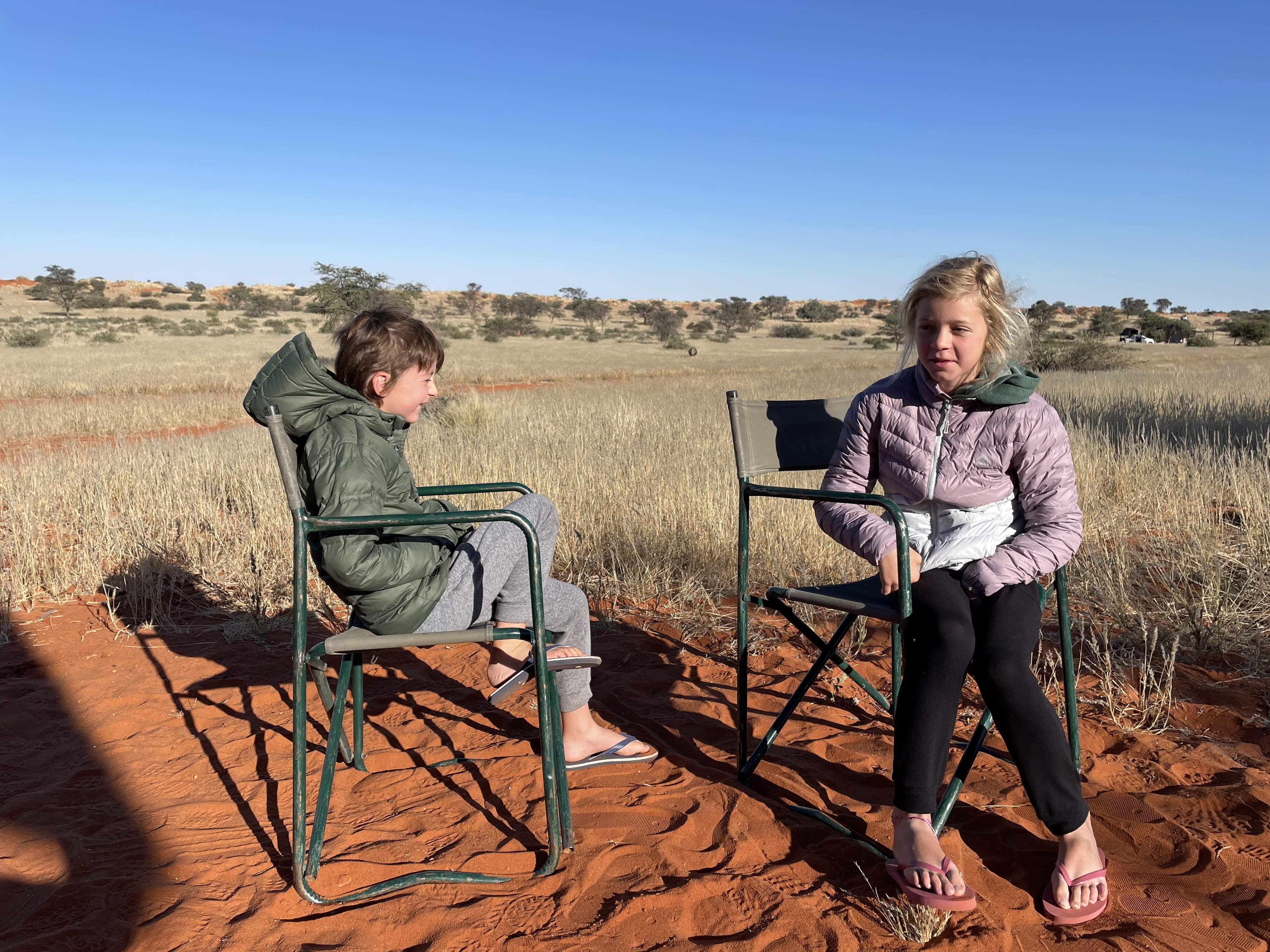
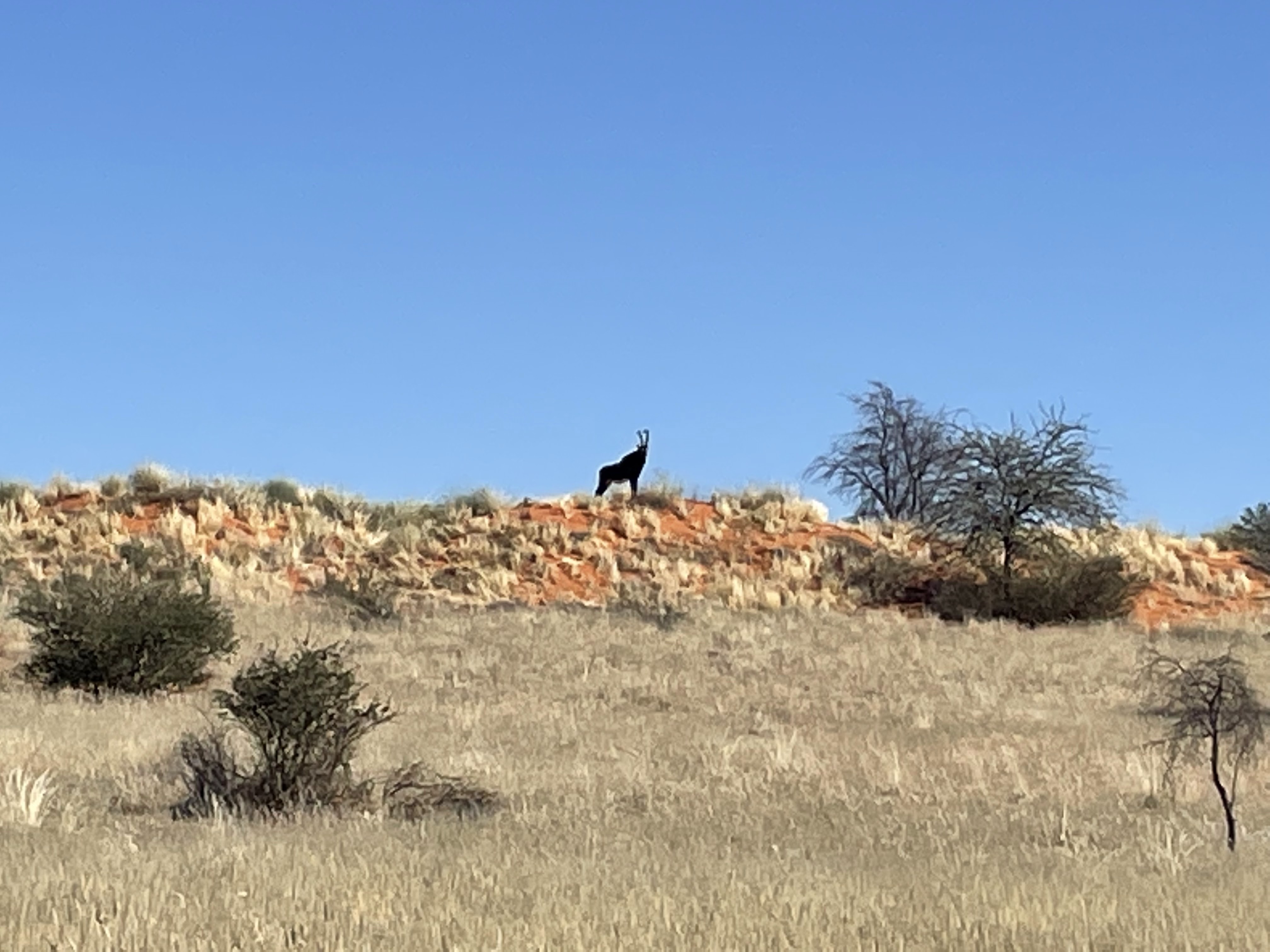

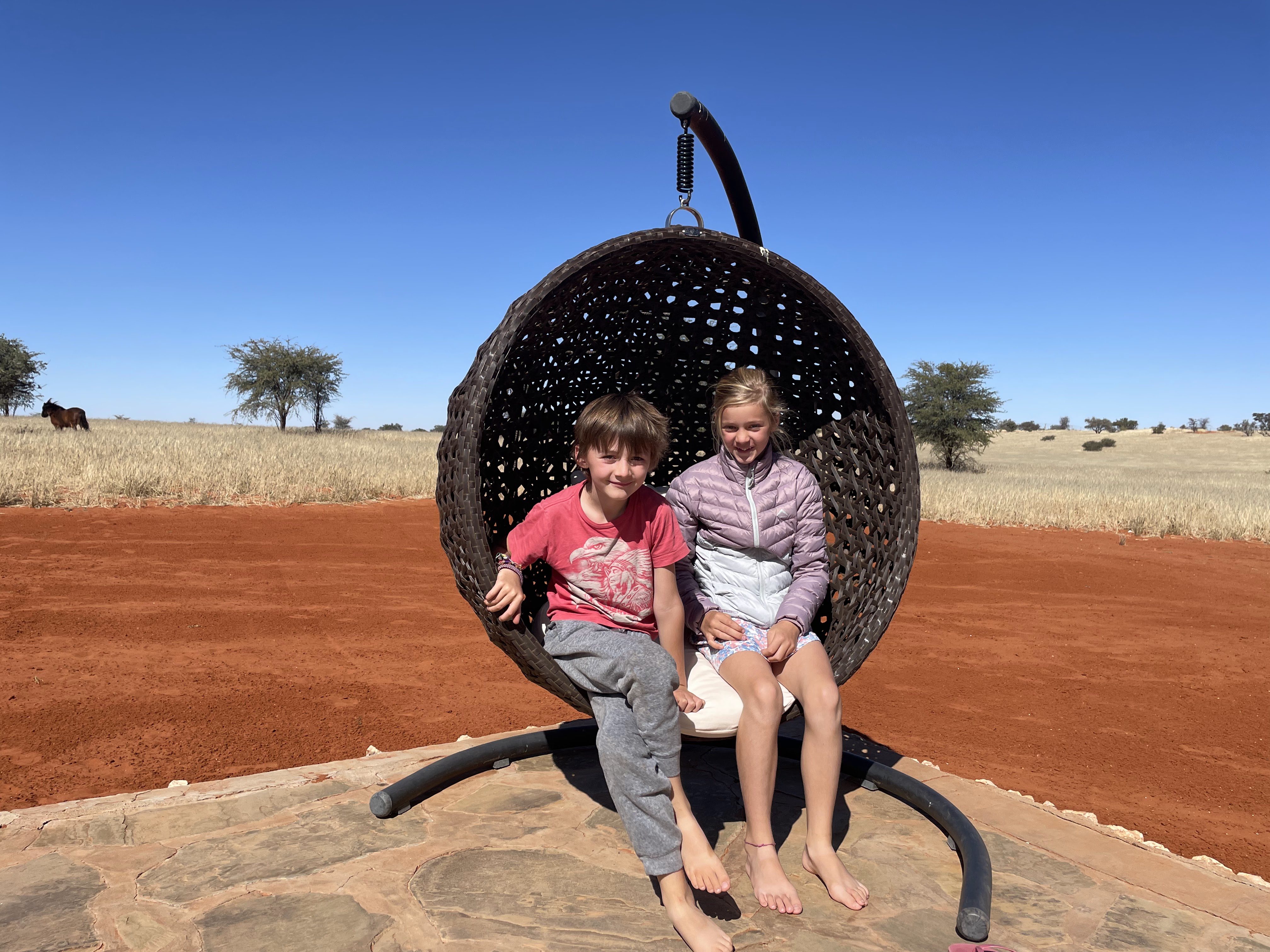
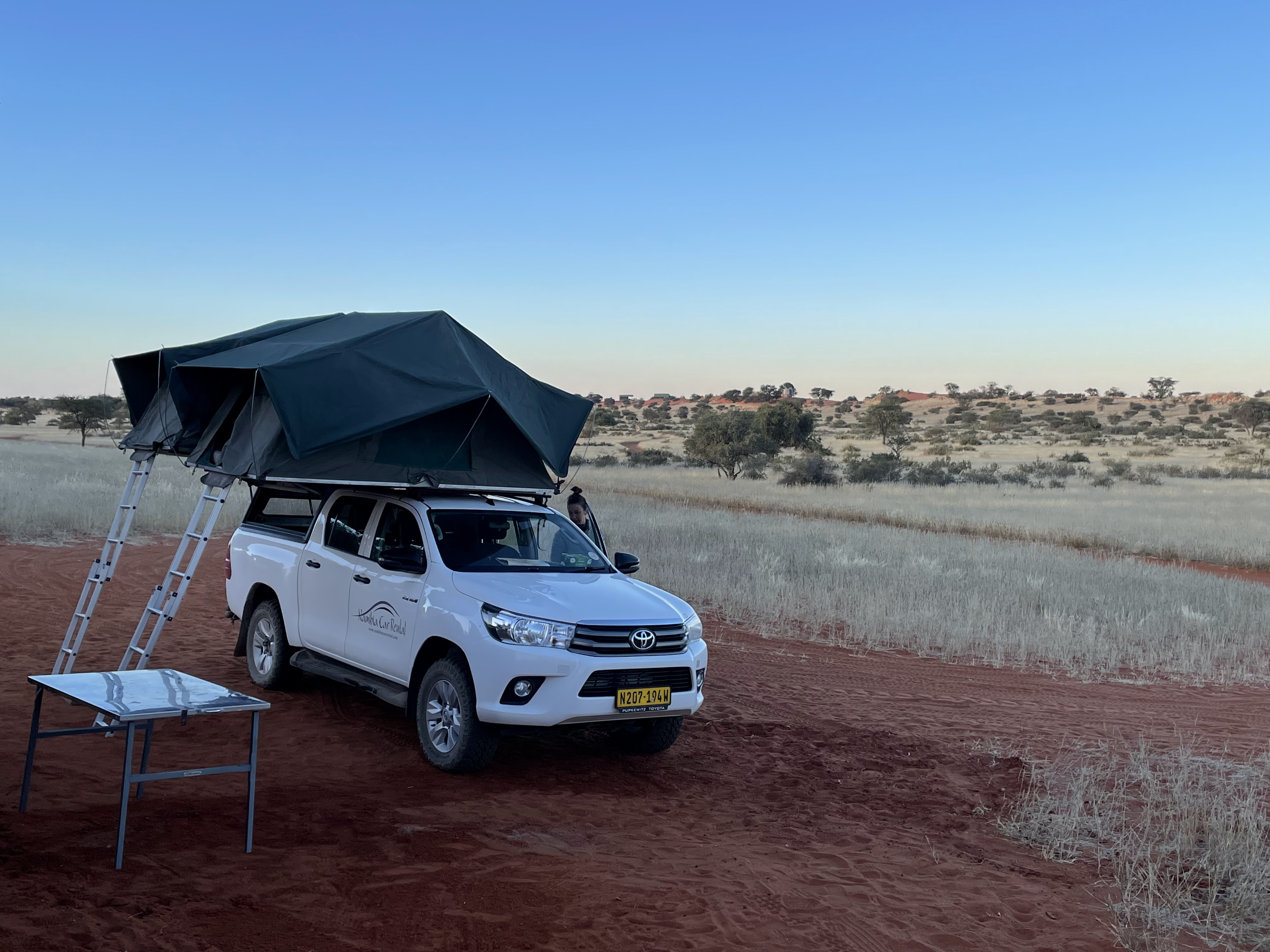
We found it frustrating and wished we could have started our journey in Namibia on a more peaceful note. But tonight, sitting around the kerosene lamp on the table, we felt a sense of appreciation as we realized we had finally arrived in Africa—the last leg of our journey, and probably the most beautiful. We needed to process the past few days, even though they left a bitter taste, and continue hoping our luggage would soon be found.
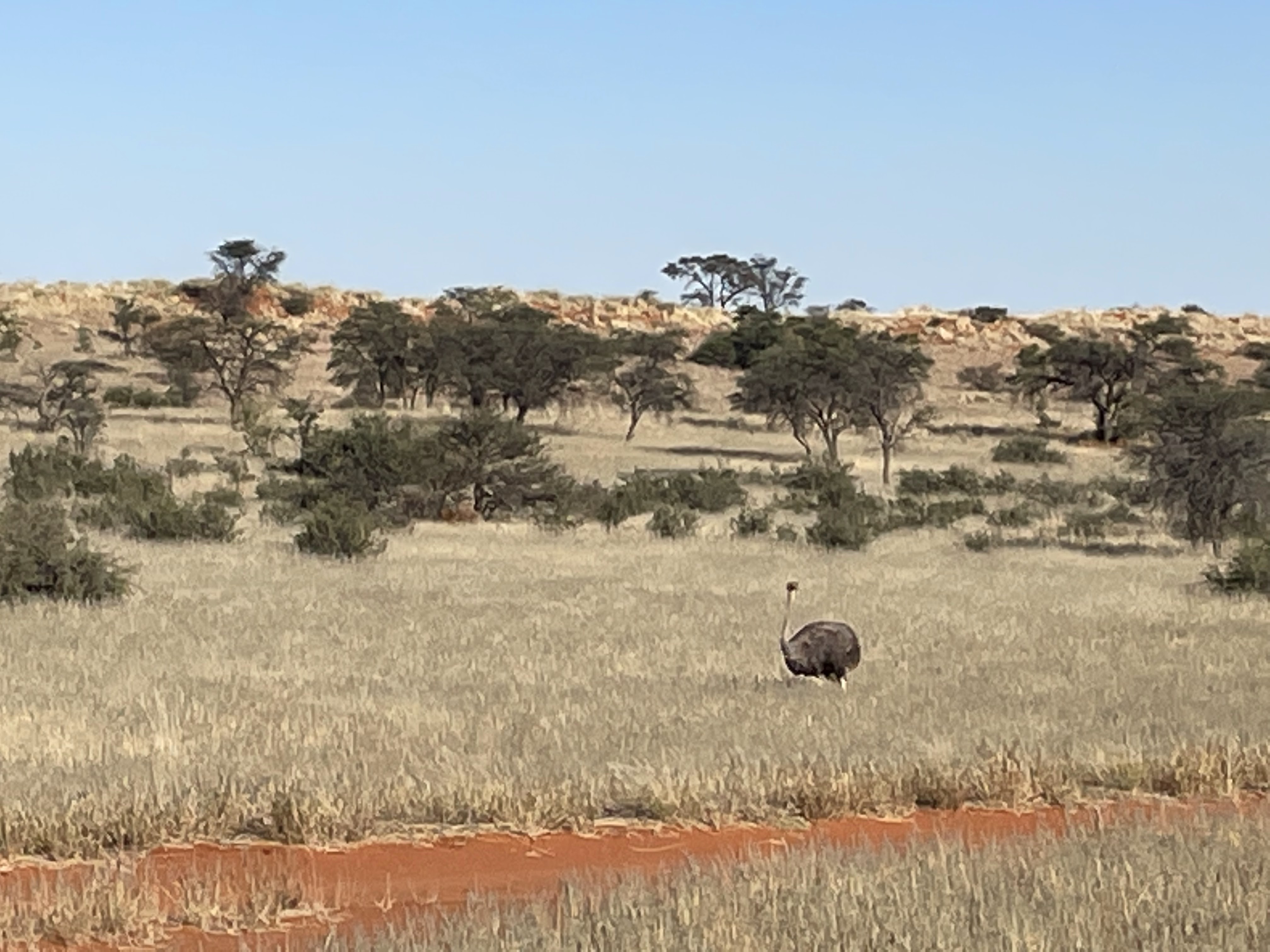
The next morning, everyone was well-rested. The trials of the past few days had, at least, rid us of any lingering jet lag. We woke up with the sun. It was autumn in Namibia. The air was cool, the blond grasses of the savanna glowed under the first rays of light, birds began to sing, and an ostrich came by to visit. A rhino had passed through during the night, leaving its tracks in the red sand of the Kalahari. What luck we had.
In a few weeks, all of this will be just a memory. It’s time to appreciate it while we can.
 Globetrotterdammers