

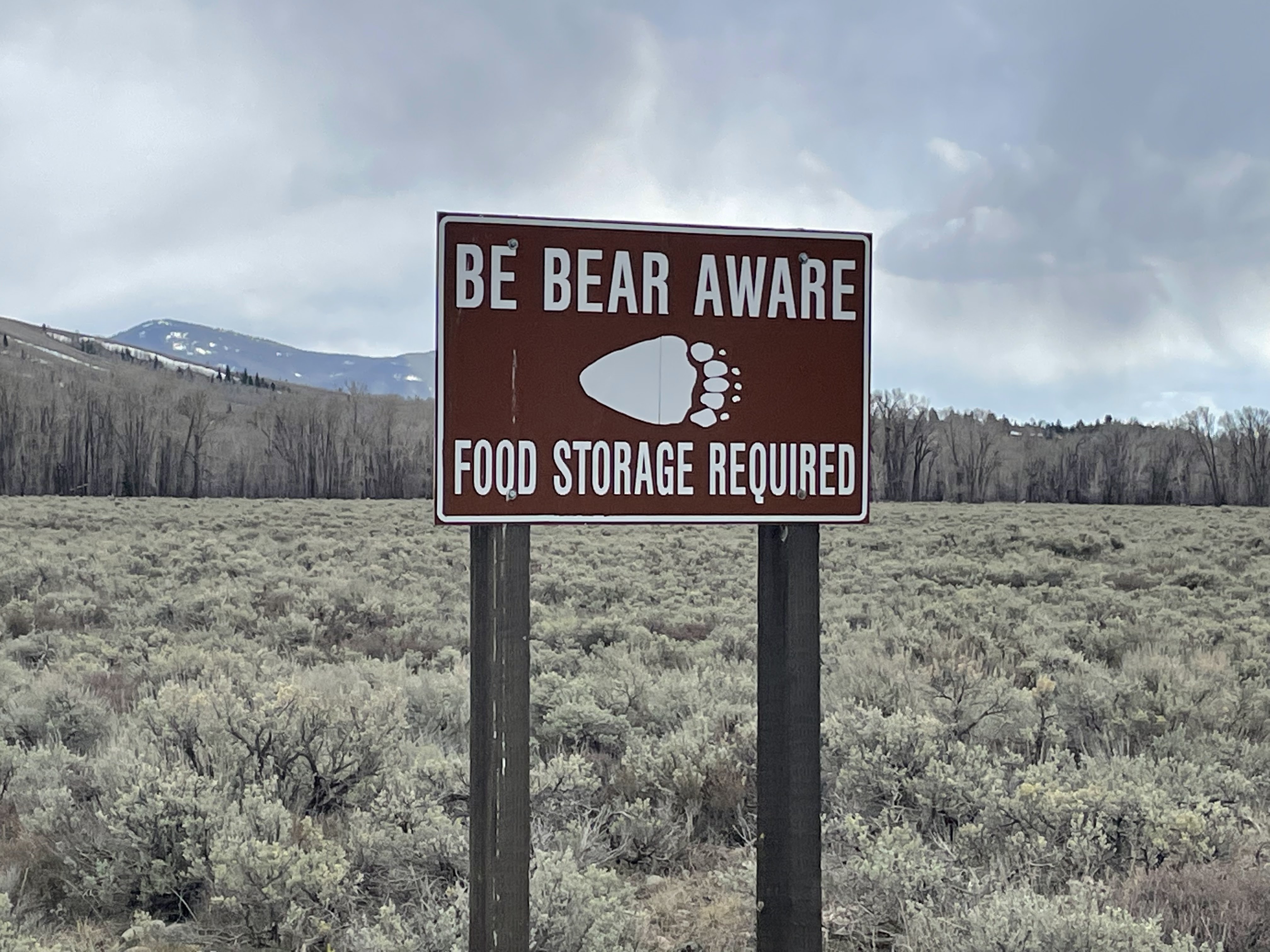
“Watch out, you’re in bear country,” said Lee, the park ranger who greeted us at the information center. “They’ve just come out of hibernation. They’re busy searching for food and not paying much attention to their surroundings. If you happen to come across one, it can be dangerous. Very dangerous! Especially if it’s a mother with cubs.”
We were taken aback for a moment. I saw the kids’ eyes widen. By now, their English was good enough to understand exactly what he was saying. Lee continued, “Make a lot of noise when you walk! Talk loudly. If you encounter one and it hasn’t seen you, back away slowly and quietly leave. If they do see you, raise your hands, speak to them calmly, and walk backwards. Keep the kids between you. Don’t worry. Usually, they’ll leave you alone. They prefer to avoid people.”
That’s reassuring! But just to be sure, we asked, “And if the bear decides not to leave us alone?” “In that case, use bear spray to scare it off. I never go on the park trails without it. Don’t keep it in your bag; wear it around your waist. And make sure you know how to use it!”
We had just arrived in Jackson, Wyoming, 500 kilometers north of Arches, to explore Grand Teton, Yellowstone, and Glacier national parks. Our journey through America, part two. After the dry, arid states of the south, we were heading further north. Idaho, Wyoming, Montana. Bear country! Along with bison, elk, and deer. Pine forests, green-gray mossy steppes between snowy peaks and glaciers.
Bears weren’t the only surprise. The temperature for this time of year caught us off guard. It was cold! At Arches, it had been over 25 degrees during the day. Heading north, we encountered snow as we crossed a higher pass somewhere in Idaho. Anna and Arthur, as always, were delighted. They didn’t care about the drop in temperature. “Snow! We can have a snowball fight!” they shouted, running through the snow in their sandals. Soon, snowballs were flying towards us. How charming! Along the way, the sky was gray. It was quiet. The snow hung heavy and ominous in the air.
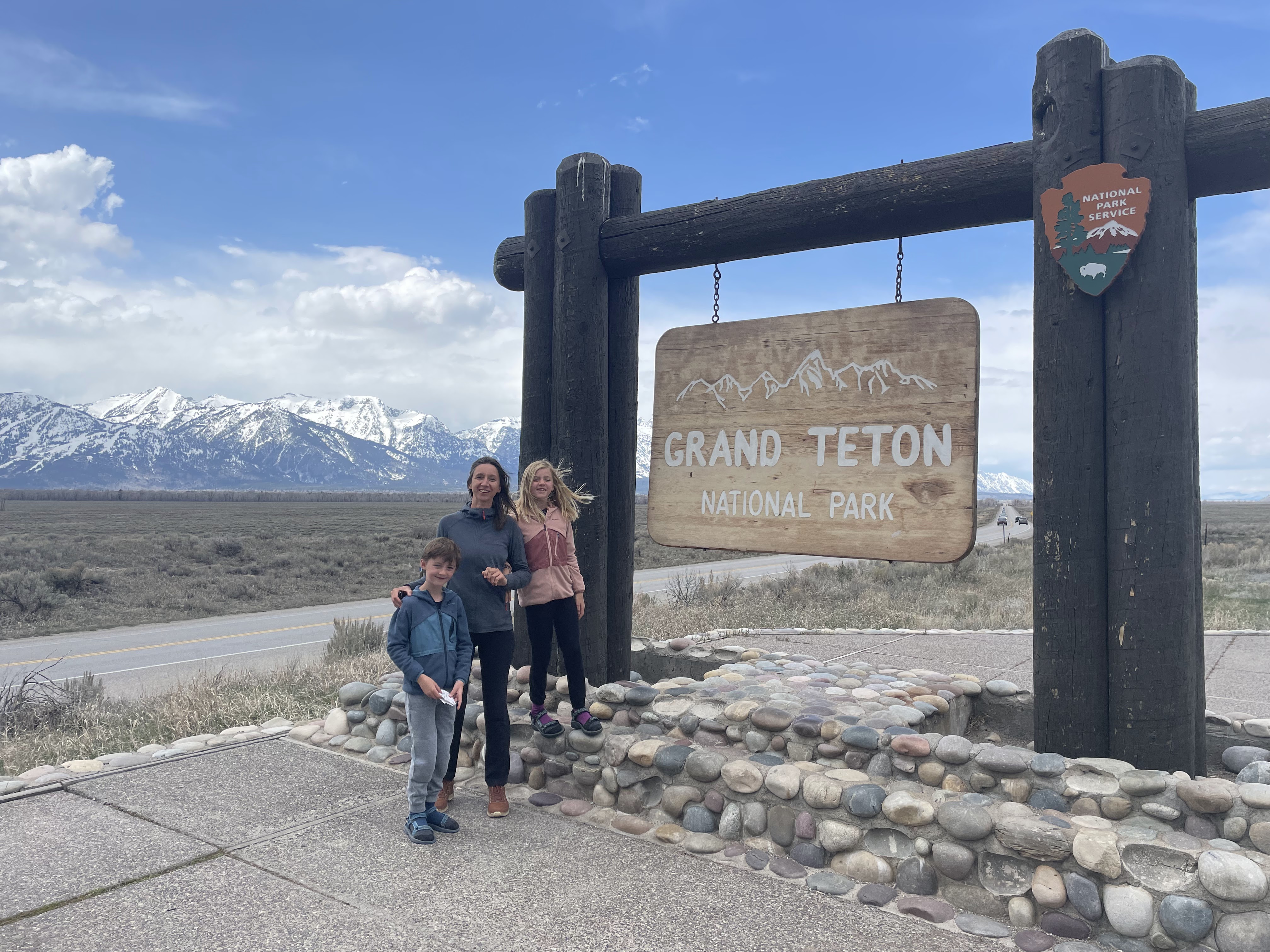
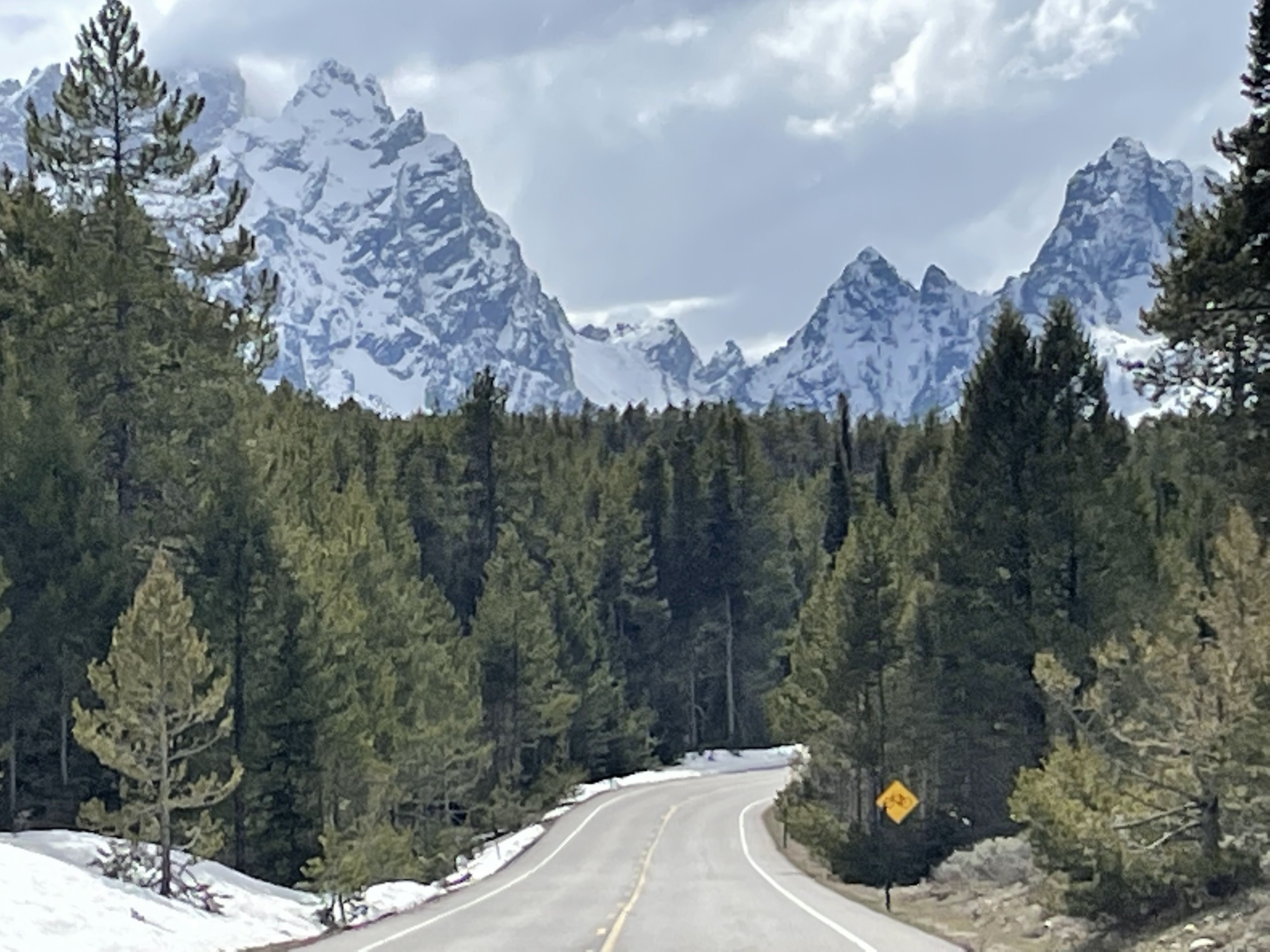
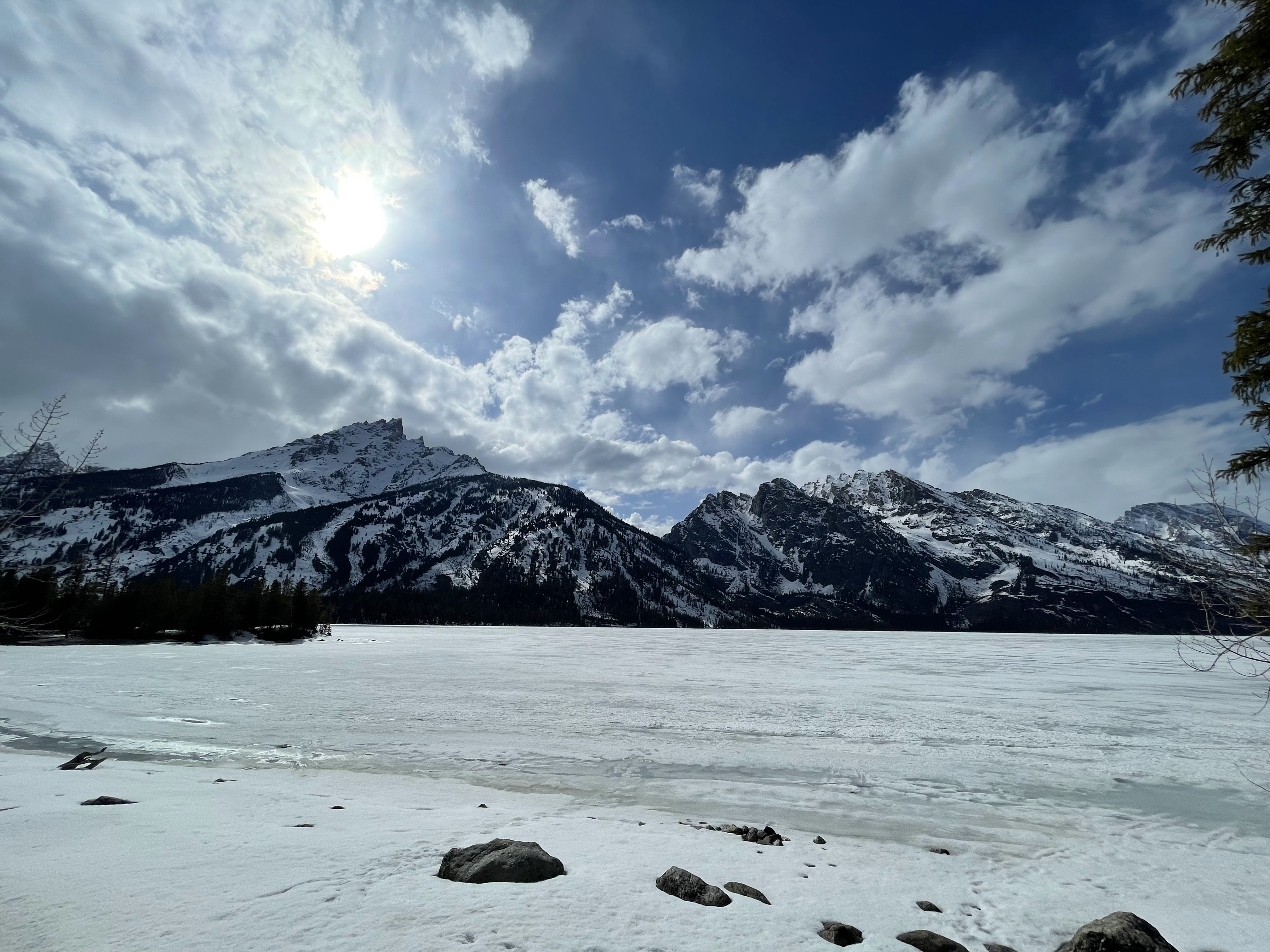
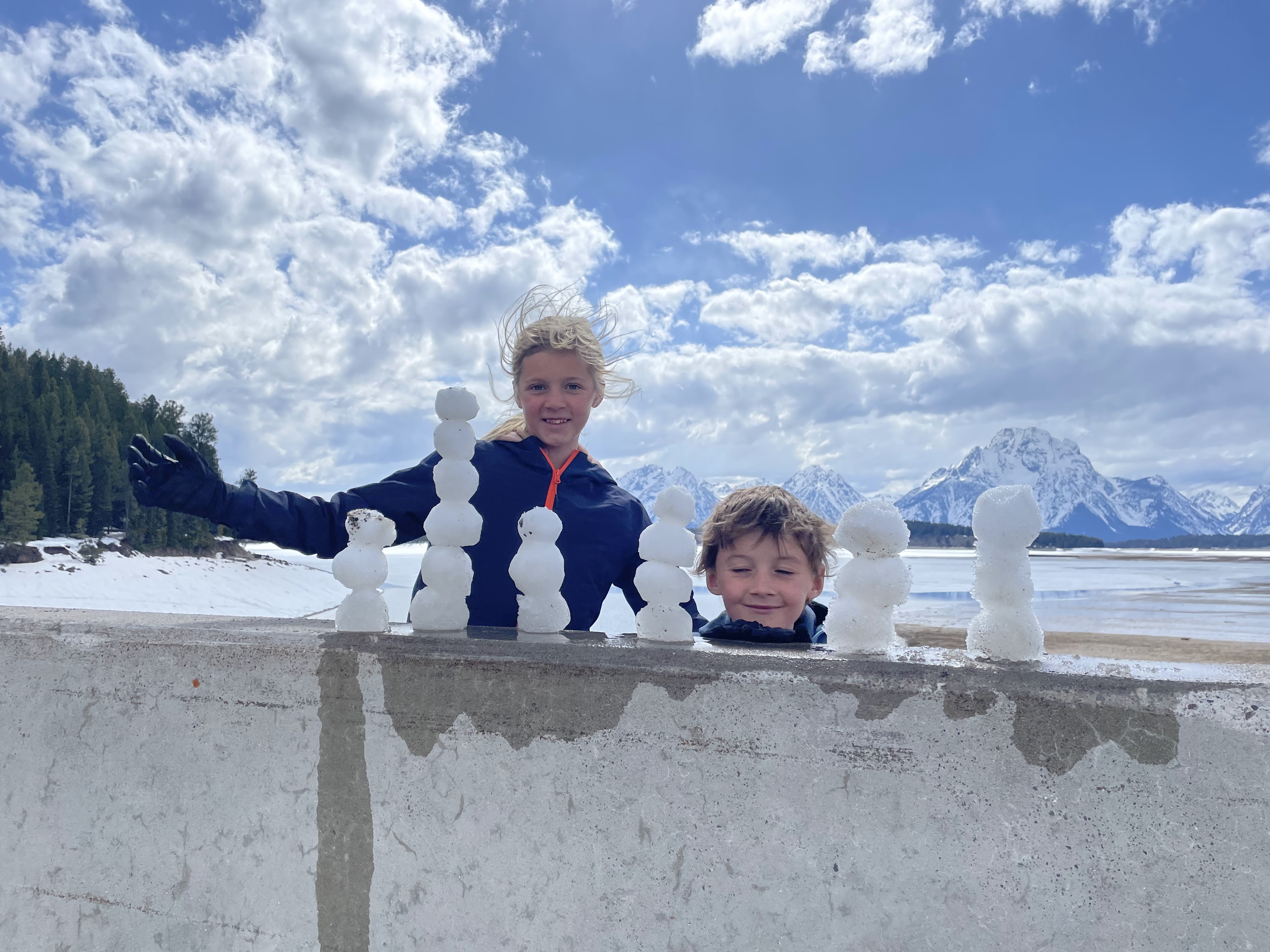
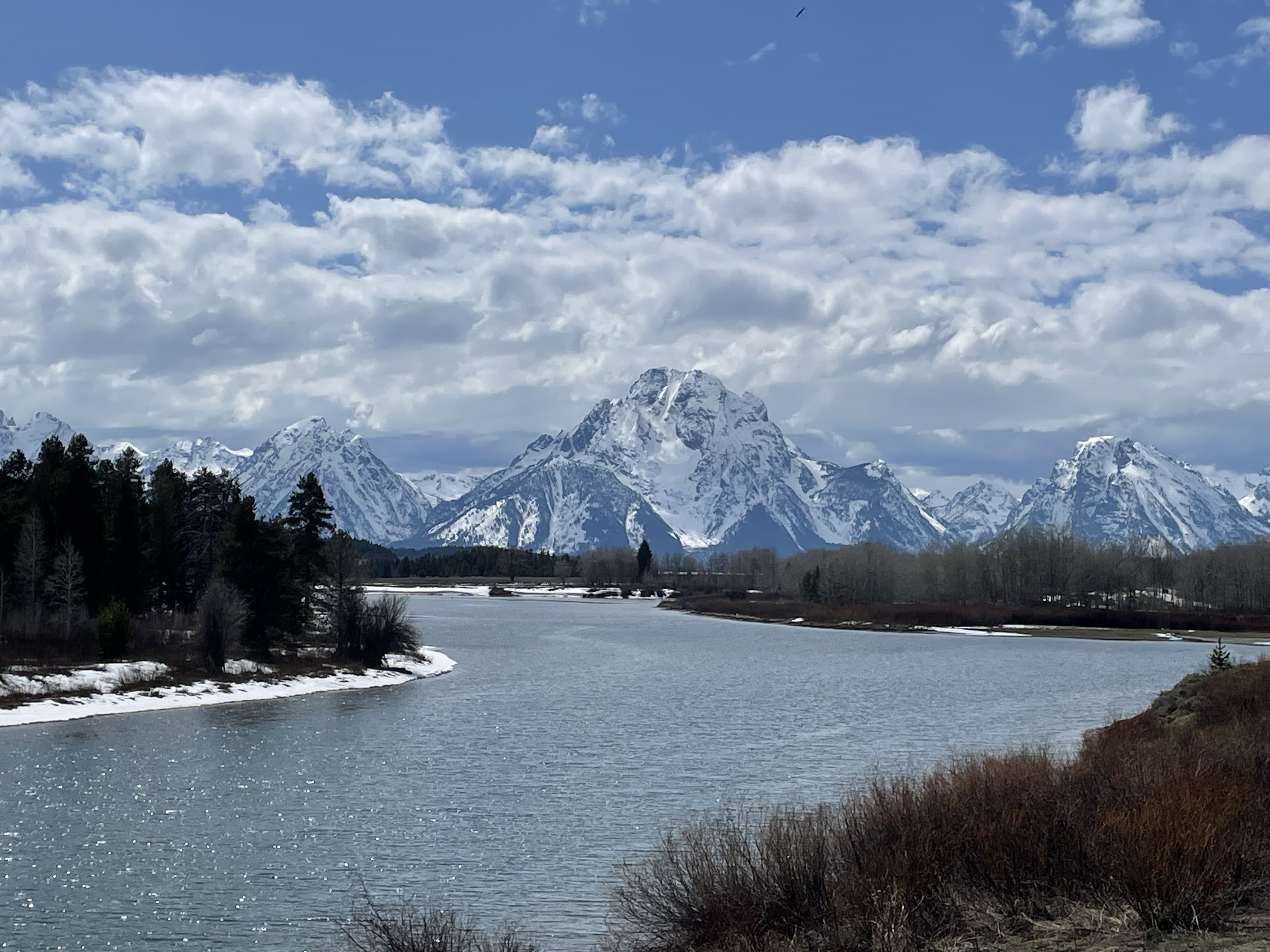
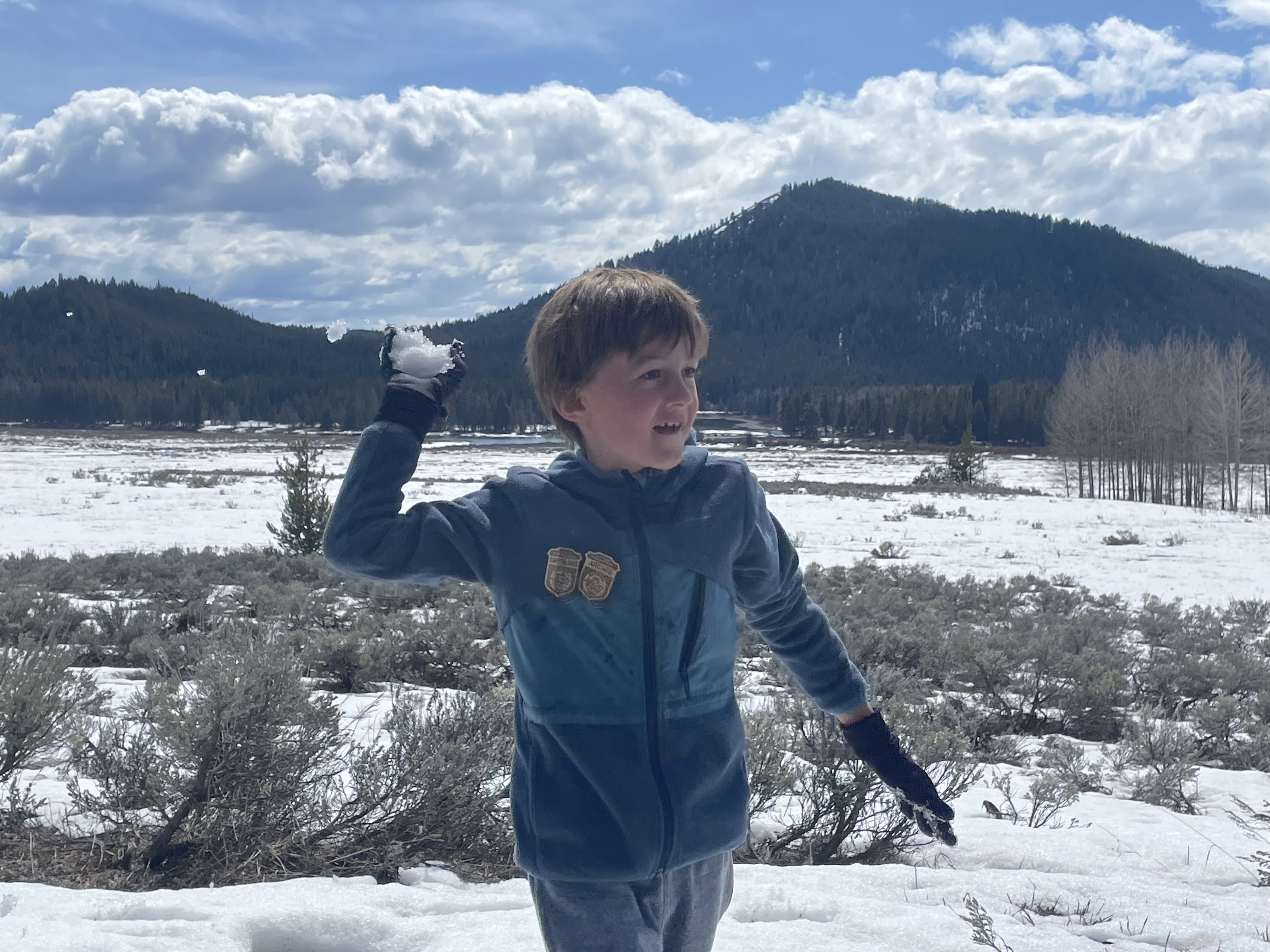
We thought spring would have started by May. And it has, but temperatures in the northern states are much lower than we expected. It turns out this is the coldest spring in 50 years. A few extra layers, a pair of gloves for the kids, and thermal shirts from a sports store in Jackson, and we’re ready for the North.
Jackson is a charming, tourist-friendly town with a few local celebrities, like Harrison Ford. But what intrigues us are the names. The map says Jackson, but locals call it Jackson Hole. Our campsite is near the “Gros Ventre” River, which means “Big Belly” in French. All these names are quite unusual: Grand Teton, Gros Ventre, Jackson Hole. They’ve led to plenty of jokes from the kids. “Grand Teton! Do you have big ‘tatas’?” Arthur asks, giggling, proud of his cheeky joke. Eventually, we asked a ranger about it. It turns out it was French-Canadian trappers who first came here to hunt beavers for their pelts and trade with the Native American tribes. The local tribes included the Nez Percé, Blackfoot, Gros Ventre, Flathead, and Shoshone. These trappers weren’t exactly poets, and the names they chose still make our kids laugh today. But what isn’t named doesn’t exist, and these names helped bring this place to life in the minds of European Americans. And Jackson Hole? “It’s a high-altitude plain surrounded by mountains,” the ranger explained. “There are only three in the U.S., and one of them is here in Jackson. If you say you’re from Jackson, no one knows where that is, but if you say Jackson Hole, they do.”
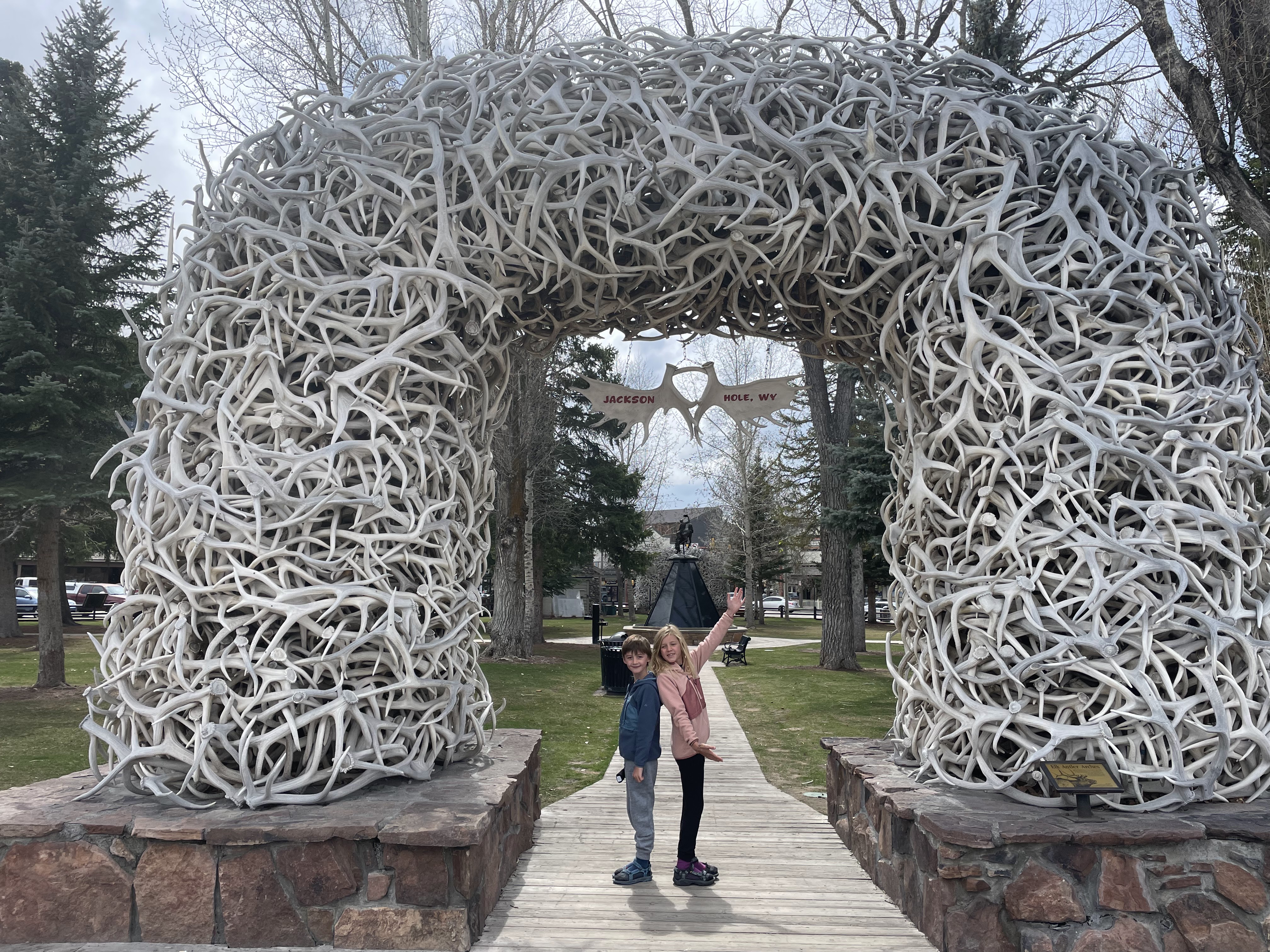
We spotted some bighorn sheep grazing on the hillside overlooking the wide plain. They’re the only ones still wearing their horns. Like every year, the elk and deer shed their antlers at the beginning of spring, and since May 1st, people have been allowed to collect them in the park. It’s like a gold rush. At dawn, pickups head out in search of the antlers. Groups of men, piled in the back of pickups and looking like militias, return to Jackson with their trophies. We were surprised by how many antlers each pickup managed to bring back. They’ll be used to decorate cafés, homes, and even the entrance to the town park, where four antler arches stand, allowing visitors to immortalize their time in Jackson (Hole).
When we arrived at the campsite, we were greeted with the following warning: “Hi there. Did you bring the snow with you? Remember, you’re in bear country. No food, no trash outside. They can smell it from 30 kilometers away. You don’t want a nighttime visit from a bear, do you?”
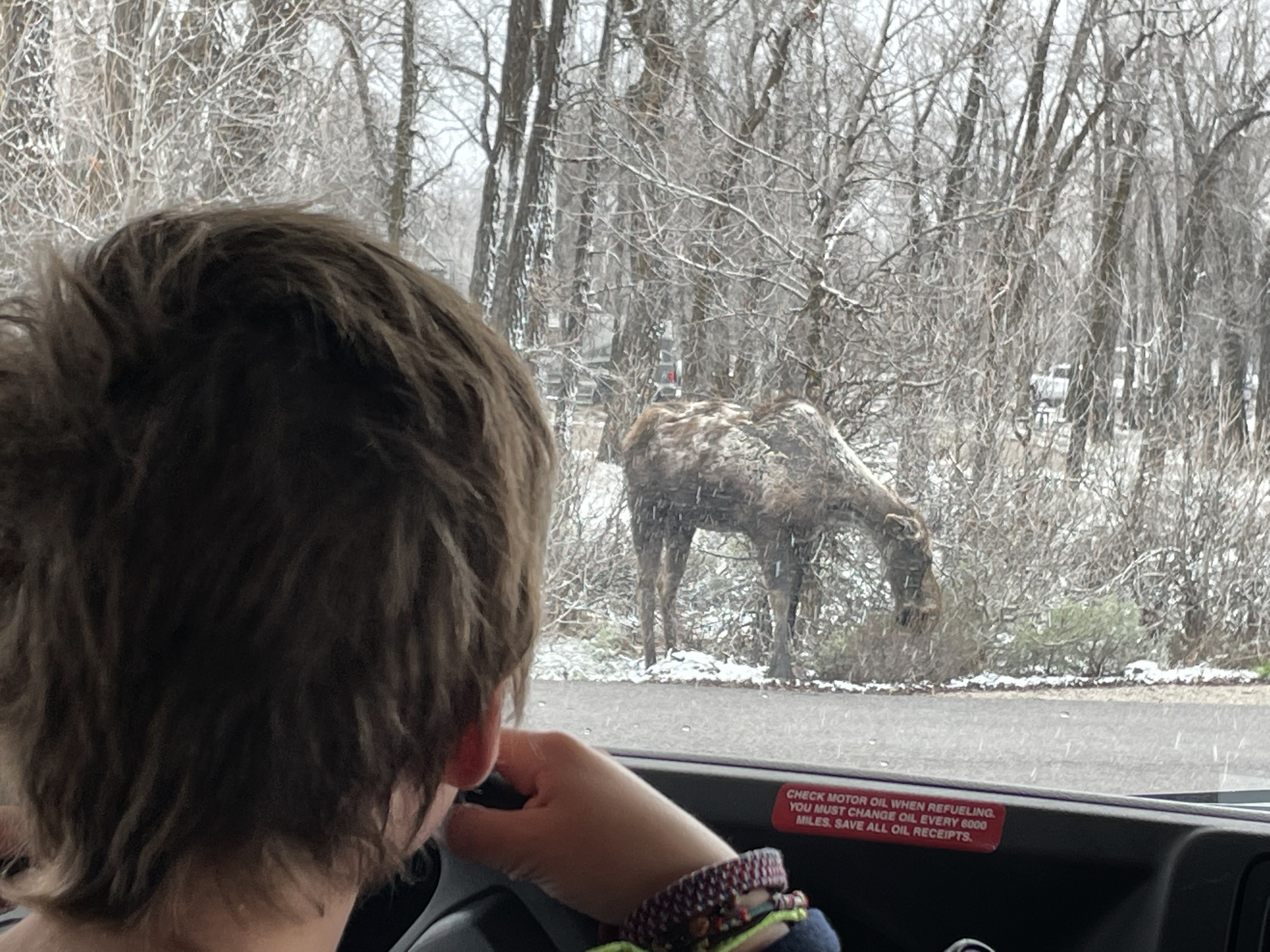
No, we definitely don’t want a nighttime bear visit. But when we woke up the next morning, we did have some unexpected visitors. Two elk were quietly grazing around our camper. As we rubbed our eyes, they stood there, just ten meters away, calmly watching us. For a moment, we watched each other, and then they continued on their way. What an impressive sight, and what magnificent, graceful animals. The surroundings were covered in a thin layer of snow. Later, when we stepped outside, the snow was still falling, and the temperature had dropped a bit. Through the pines, we could see the vast steppes of the park, where herds of elk and deer were grazing peacefully in the distance.
We packed a backpack, put on warm clothes, and set off. Later in the day, during a walk along Jenny Lake at the foot of the Grand Teton, we found ourselves trudging through snow up to our knees. Anna was speaking loudly—louder than usual, even. She didn’t stop. Her favorite topic remained the dog she absolutely wants us to get when we return to the Netherlands. “Which dog do you like best? And do you think Dad will want a dog? Will it have a basket or a doghouse?” Then she switched to another topic. “And what do we do if we run into a bear?” And so on. Soon, we understood everything. She had taken Lee’s advice very seriously and wasn’t taking any chances. The topic of conversation didn’t matter, as long as the bears could hear us coming. Marie-Laure and I kept a close eye on our surroundings, with the bear spray within easy reach.
Meanwhile, Arthur gave us a detailed lesson on the wild world of Freek, a children’s TV presenter known for his wildlife shows. “Dad, did you know Freek got bitten on the leg by a great white shark while diving? Or was it a polar bear? Anyway, he’s really tough, isn’t he! The camera stopped for a moment, and then he kept filming…” Once again, we noticed how different the experience was for a 7-year-old and a 10-year-old. Anna could feel the tension, while Arthur had no clue. But we kept them both close.
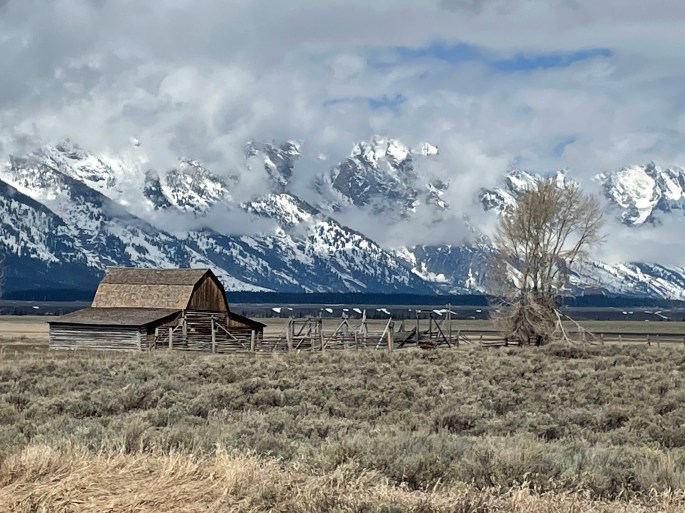
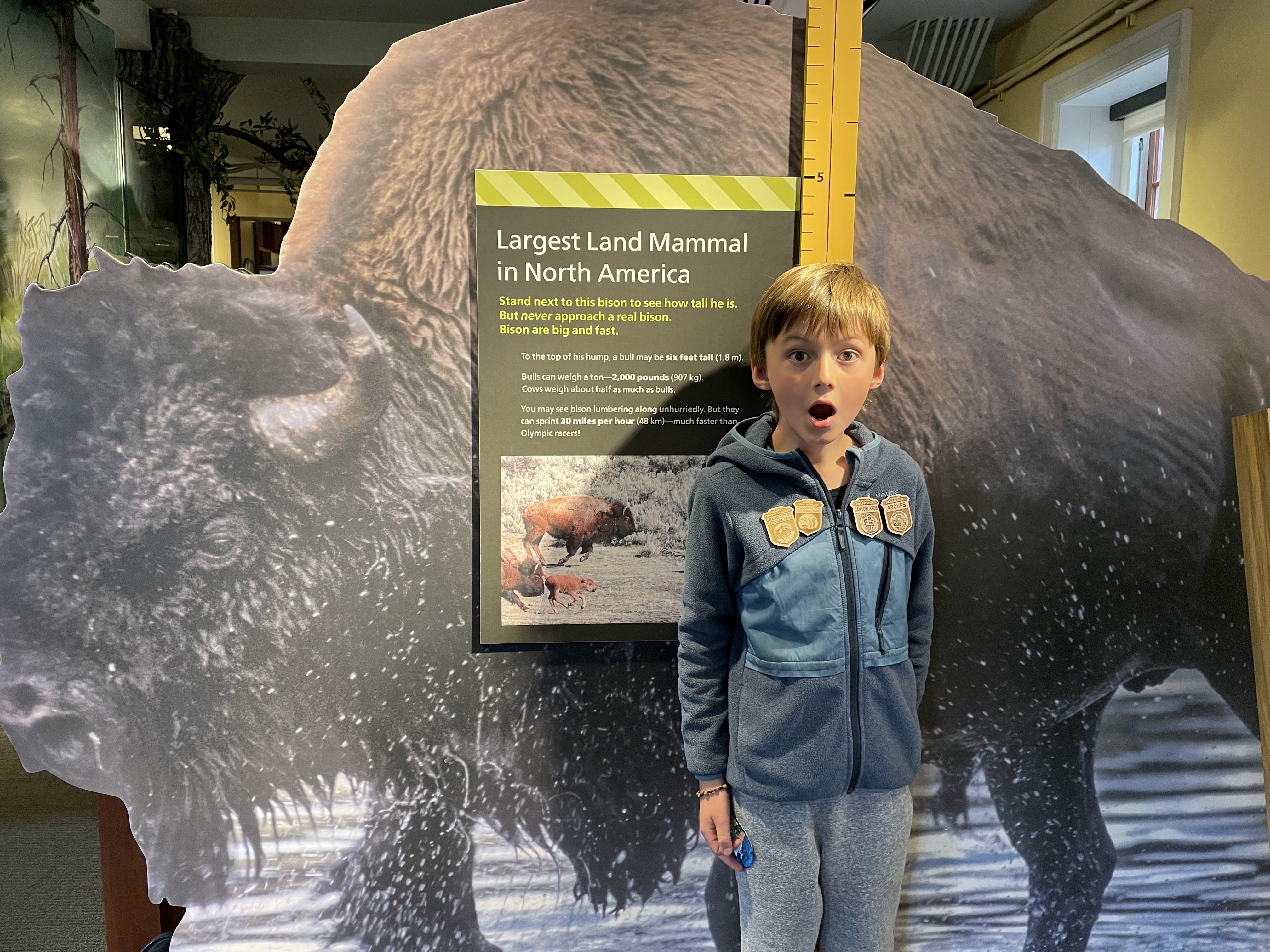
Along the way, we also stopped at historical sites within the park. Places where daring pioneers settled to build a life and a community. Discovering these preserved cabins, farms, and stores—kept for future generations of Americans—is an essential step to earning a Junior Ranger badge. What a magical place to settle! Herds of wild animals like bison, deer, and elk, vast steppes with crystal-clear rivers full of trout, and in the distance, the three snow-capped peaks of the Tetons. But life here could be incredibly harsh in winter, as we could sense even in early spring. Rockefeller, captivated by this valley, fought to preserve its wild beauty by making it a national park. The farmers who had settled here supported the project and sold their lands to keep the wilderness intact. It took a kind of madness and fanaticism for those pioneers to come here and settle. And yet, they eventually gave way to the wild, allowing nature to reclaim the space.
After Grand Teton, we drove further north to Yellowstone, the park we’d perhaps been looking forward to the most on this trip. Since the campgrounds in Yellowstone don’t open until mid-May, we decided to check in for two days at the Moose Creek Inn, a cozy motel in West Yellowstone. Real beds, a hot bath, and your own coffee machine. In this small town on the edge of the park, a spot at an RV campground costs about the same as a motel, so the choice was easy. And to be honest, it felt really nice.
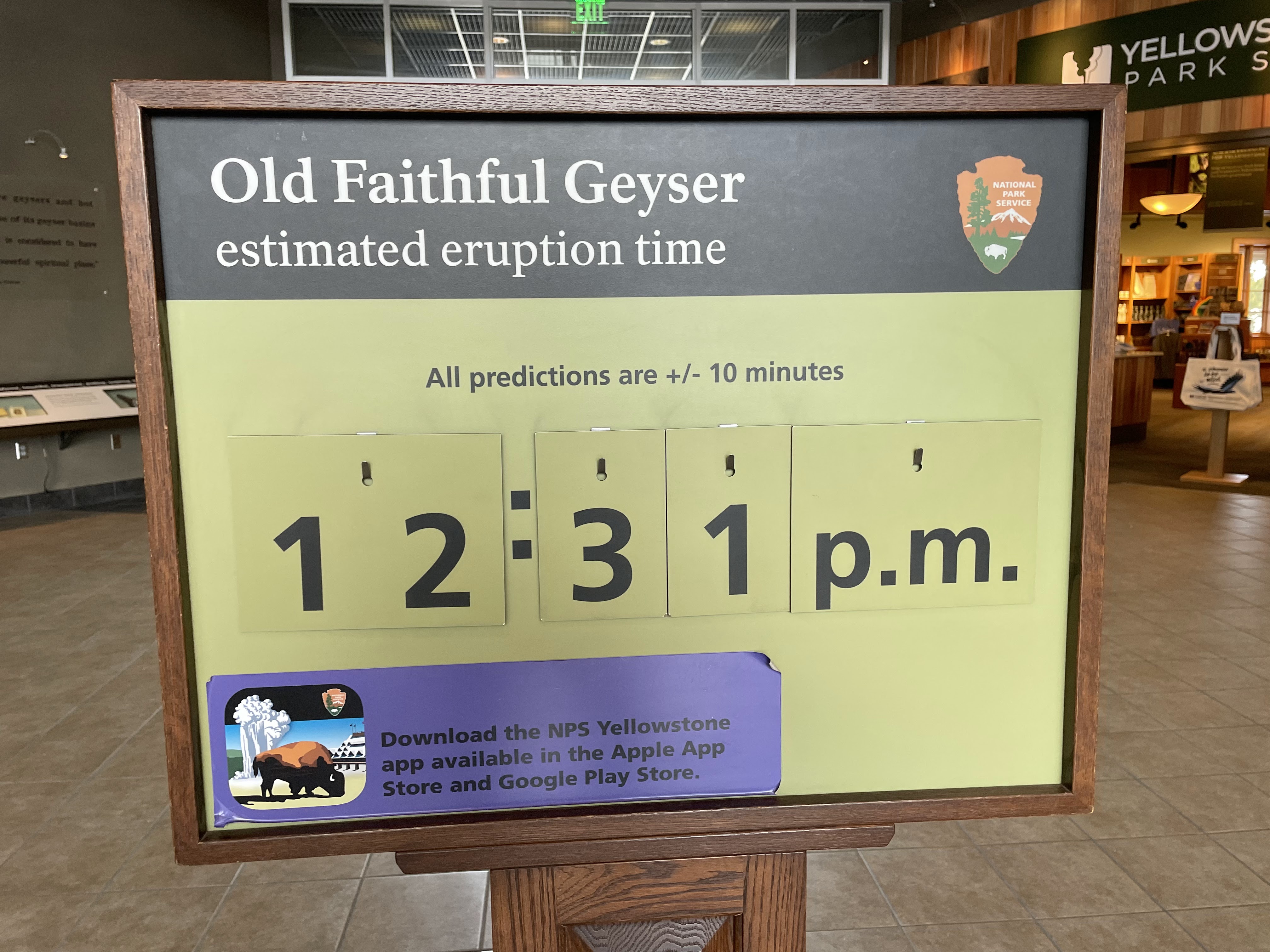
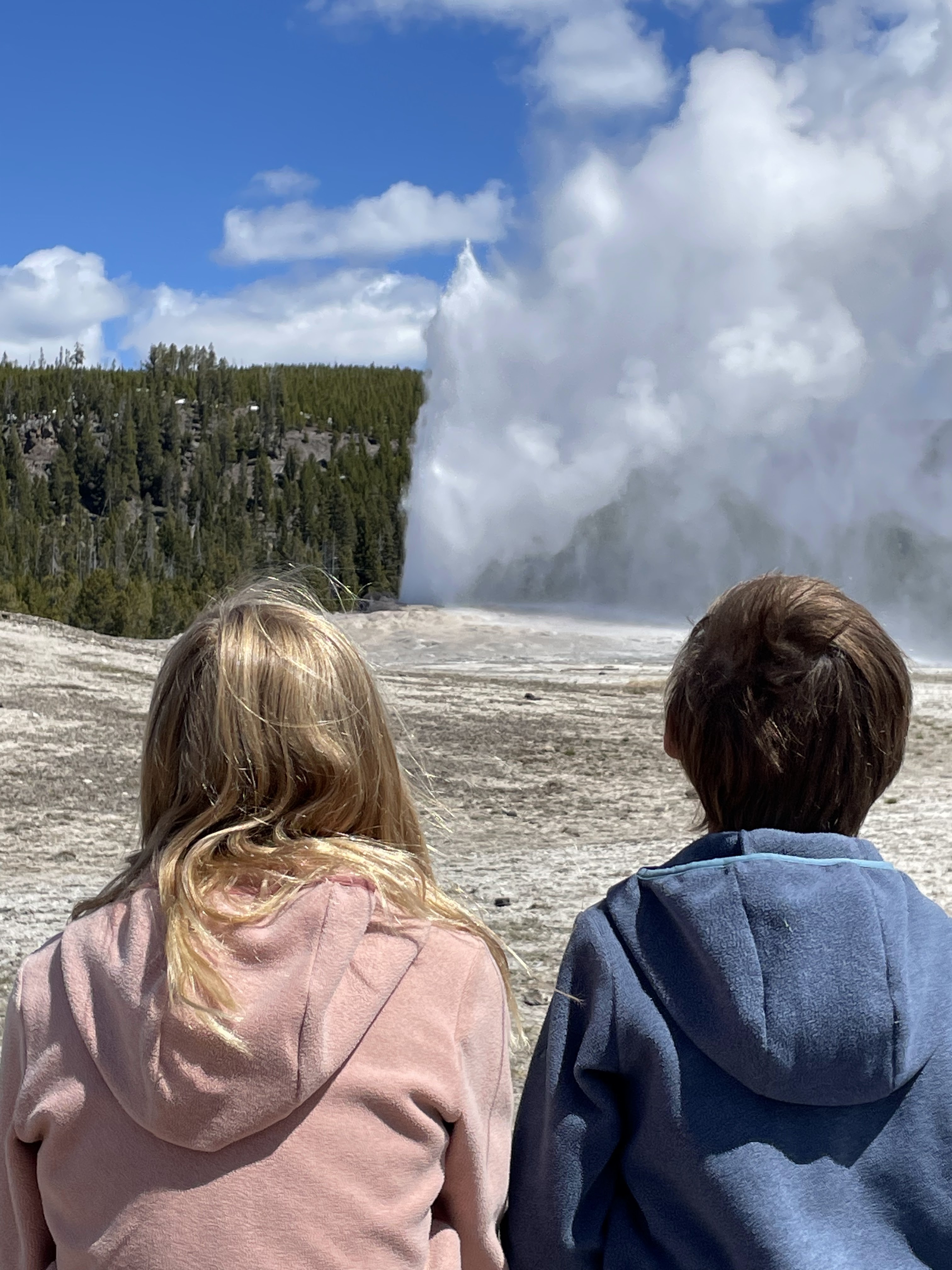
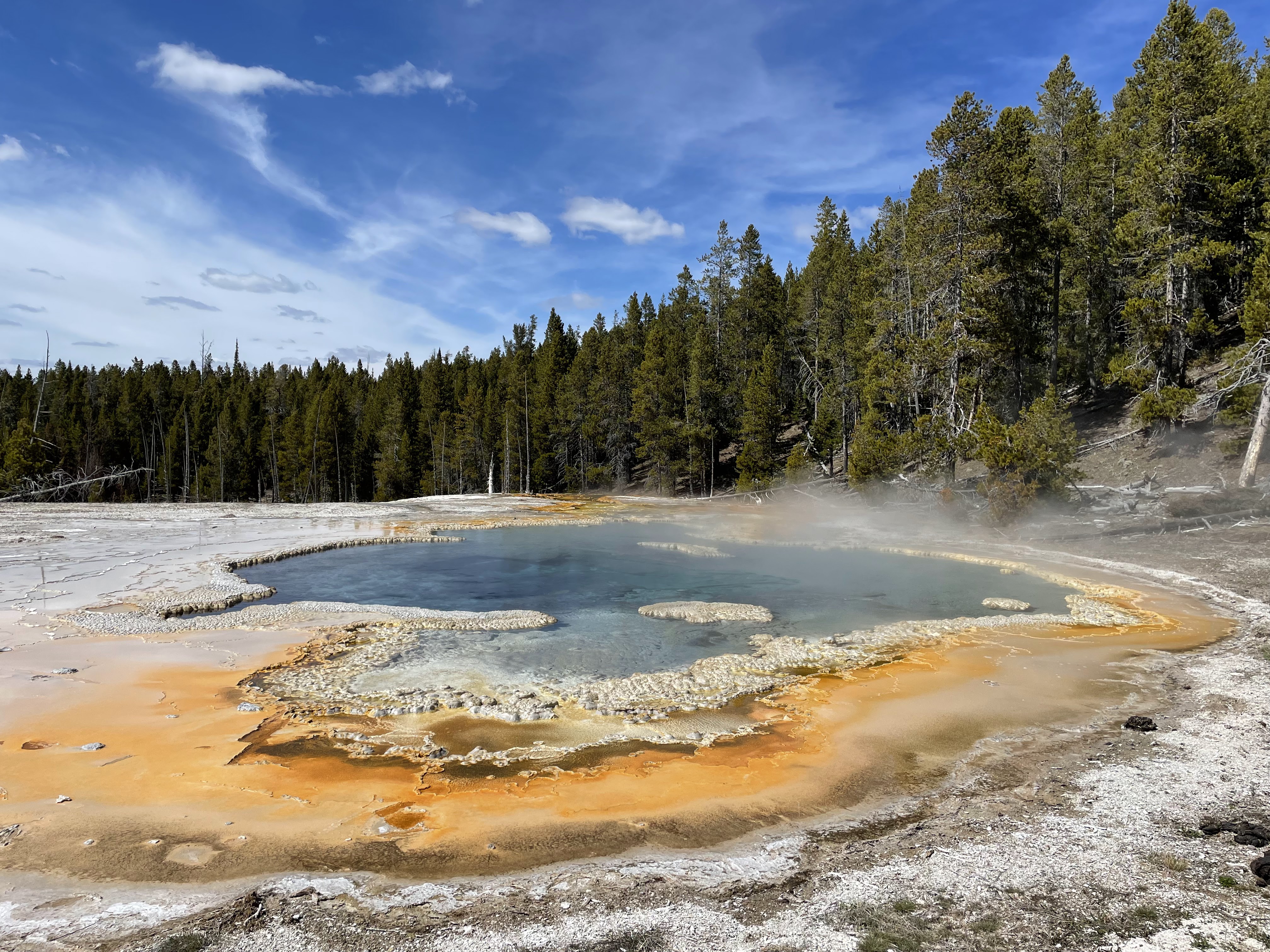
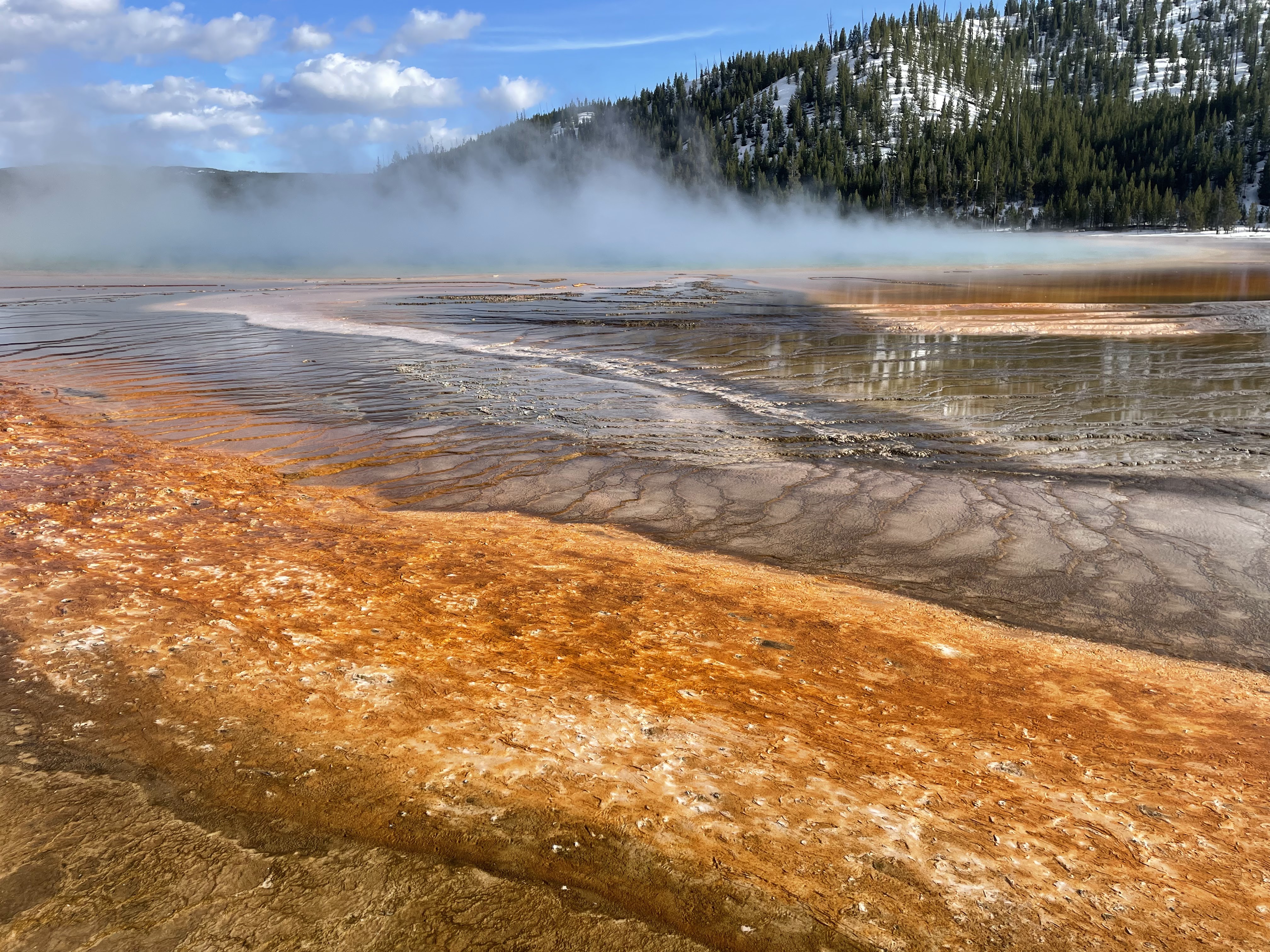
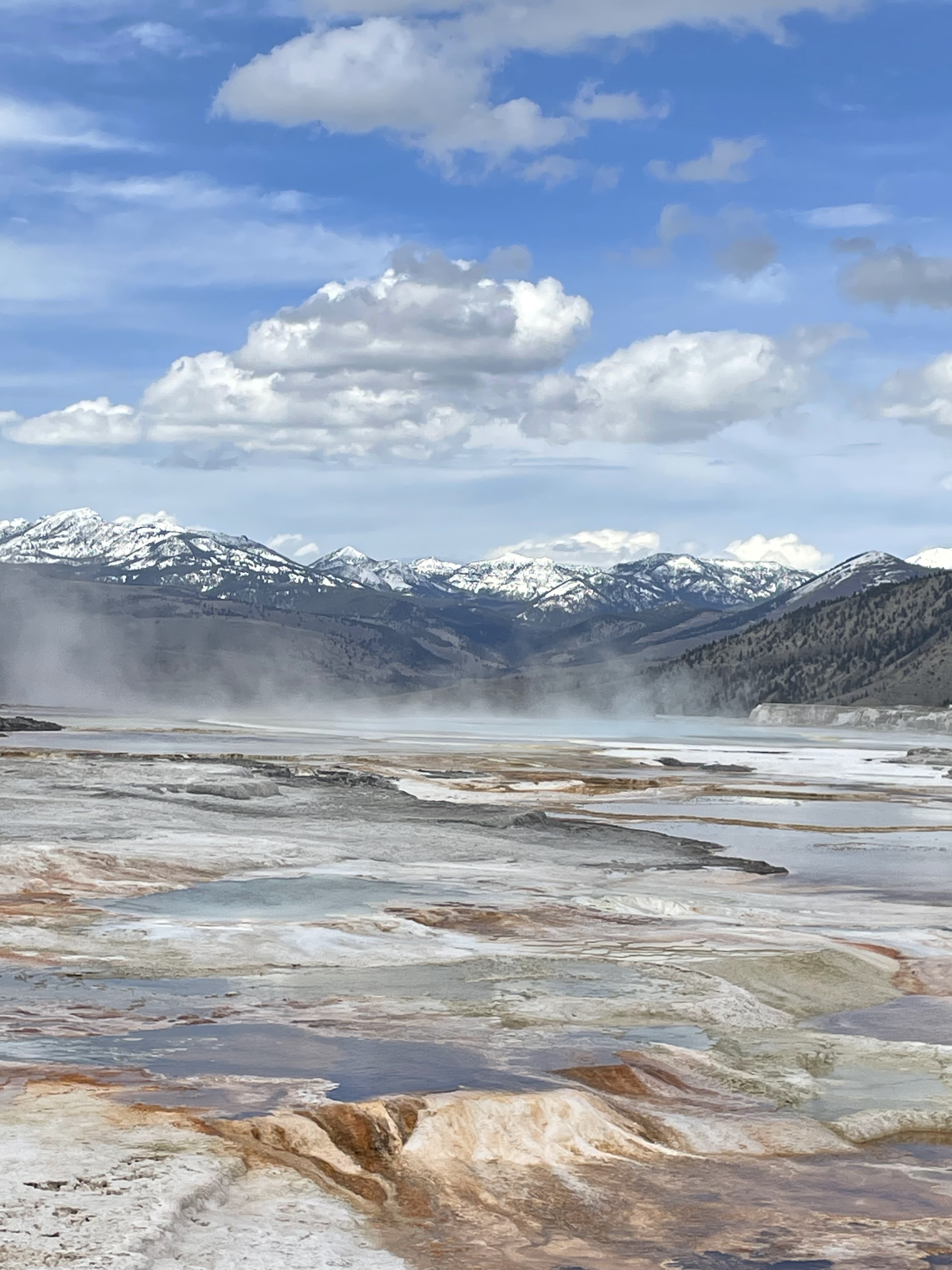
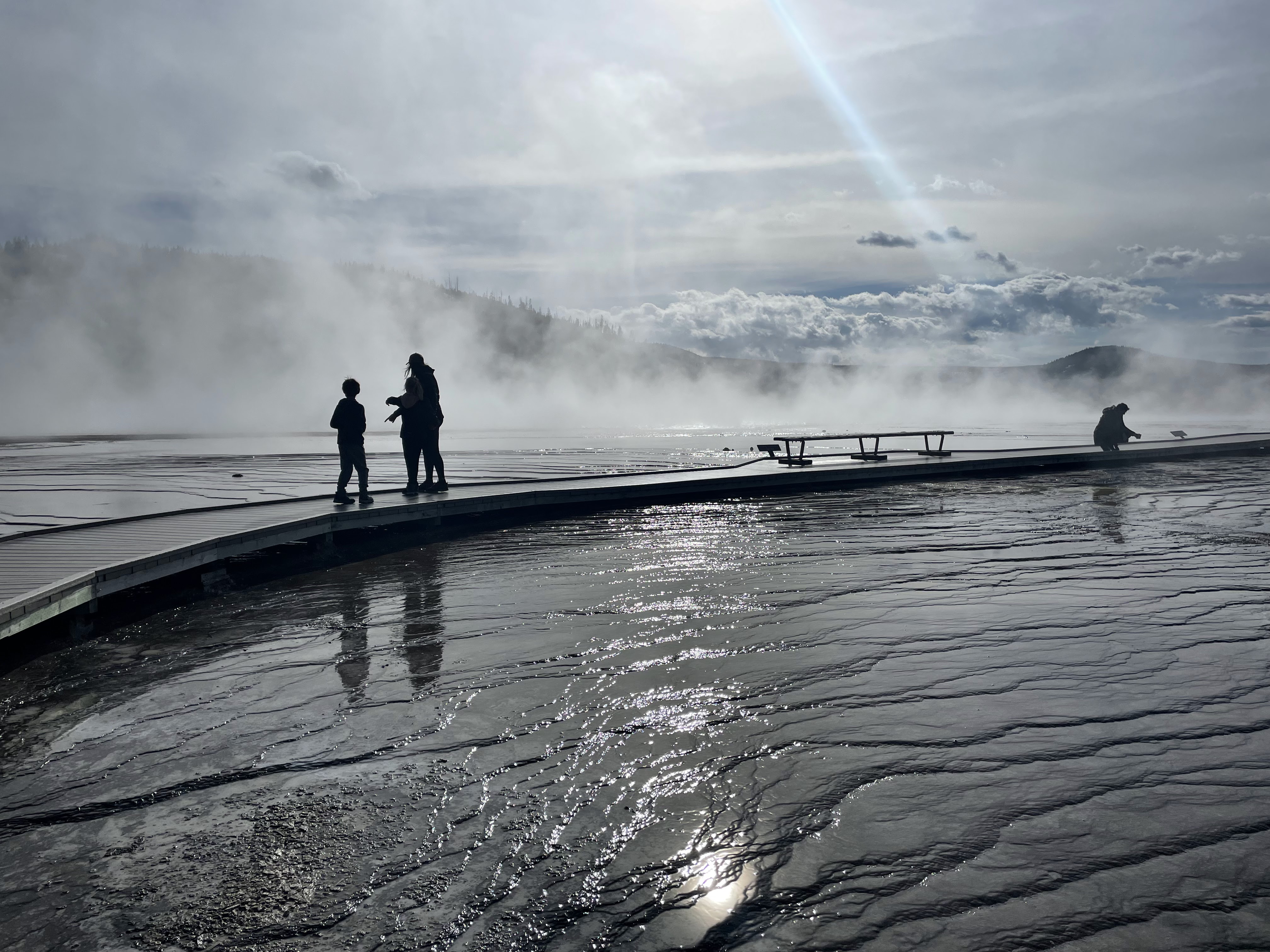
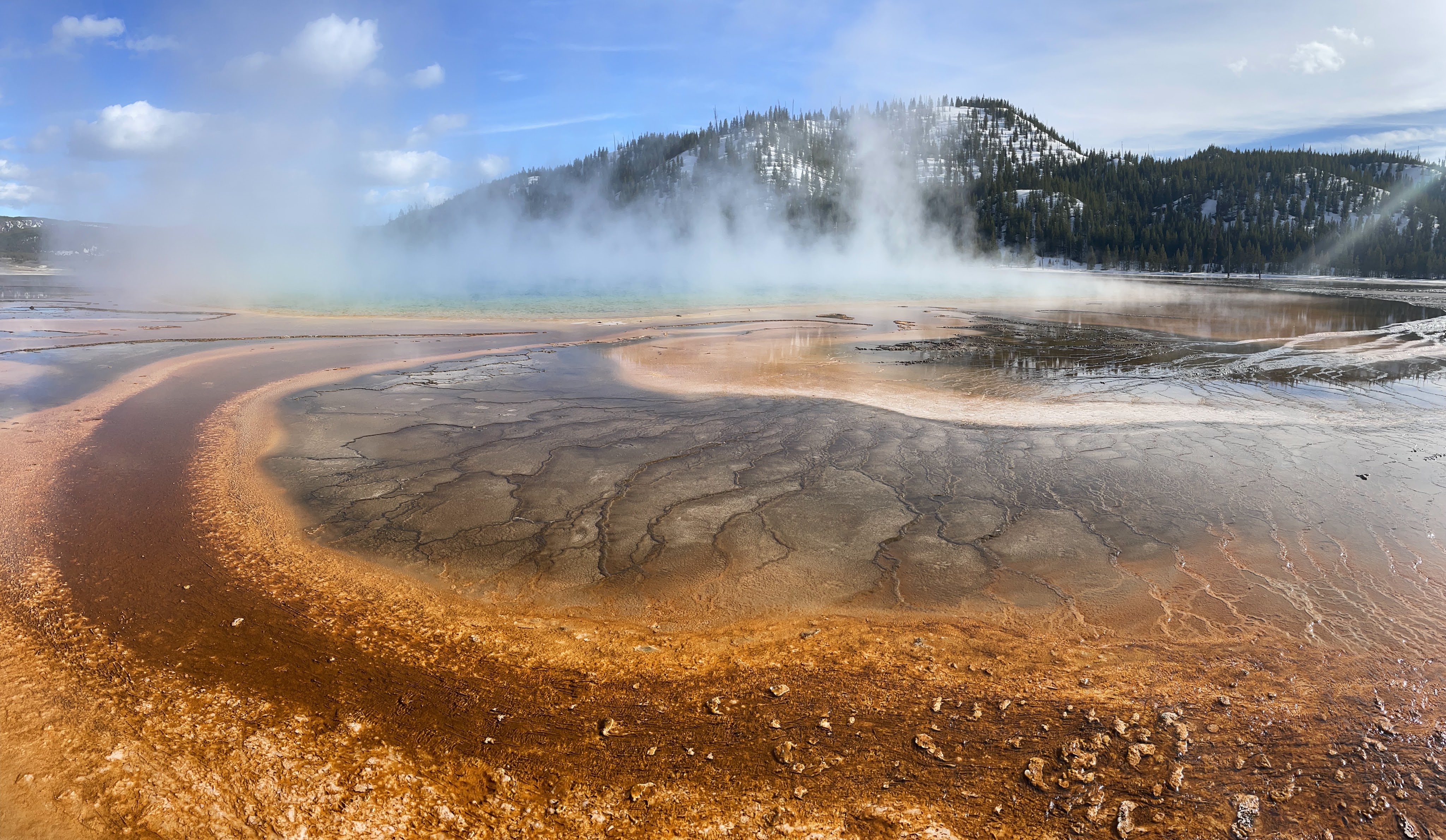
Yellowstone is famous for its geysers. In fact, 95% of the world’s geysers are found here—a fantastic display of the power and complexity of nature. There’s Old Faithful, as punctual as ever. Arthur, caught off guard by the surprise, even dropped his Junior Ranger booklet into the water flowing from the geyser. Luckily, a Dutch woman retrieved it a few meters down, once it had cooled. And then there’s the Grand Prismatic Spring, a 350-foot-wide hot spring with the most stunning colors of golden brown, yellow, green, and purple, caused by high concentrations of bacteria thriving at different temperatures on the surface of the spring. A magical sight! These bacteria have also had to endure extreme conditions to survive. They are the same kind of bacteria that helped spark the origin of life on Earth. They were the original pioneers, showing that even in the most extreme conditions, life finds a way to adapt.
Further down the road, we noticed cars and people parked along the roadside. Photographers with long lenses were aiming at a spot in the mountains, and we got out of the car, hoping to catch a glimpse of a grizzly. But alas, we arrived too late. The bear had already slipped away from all those paparazzi.
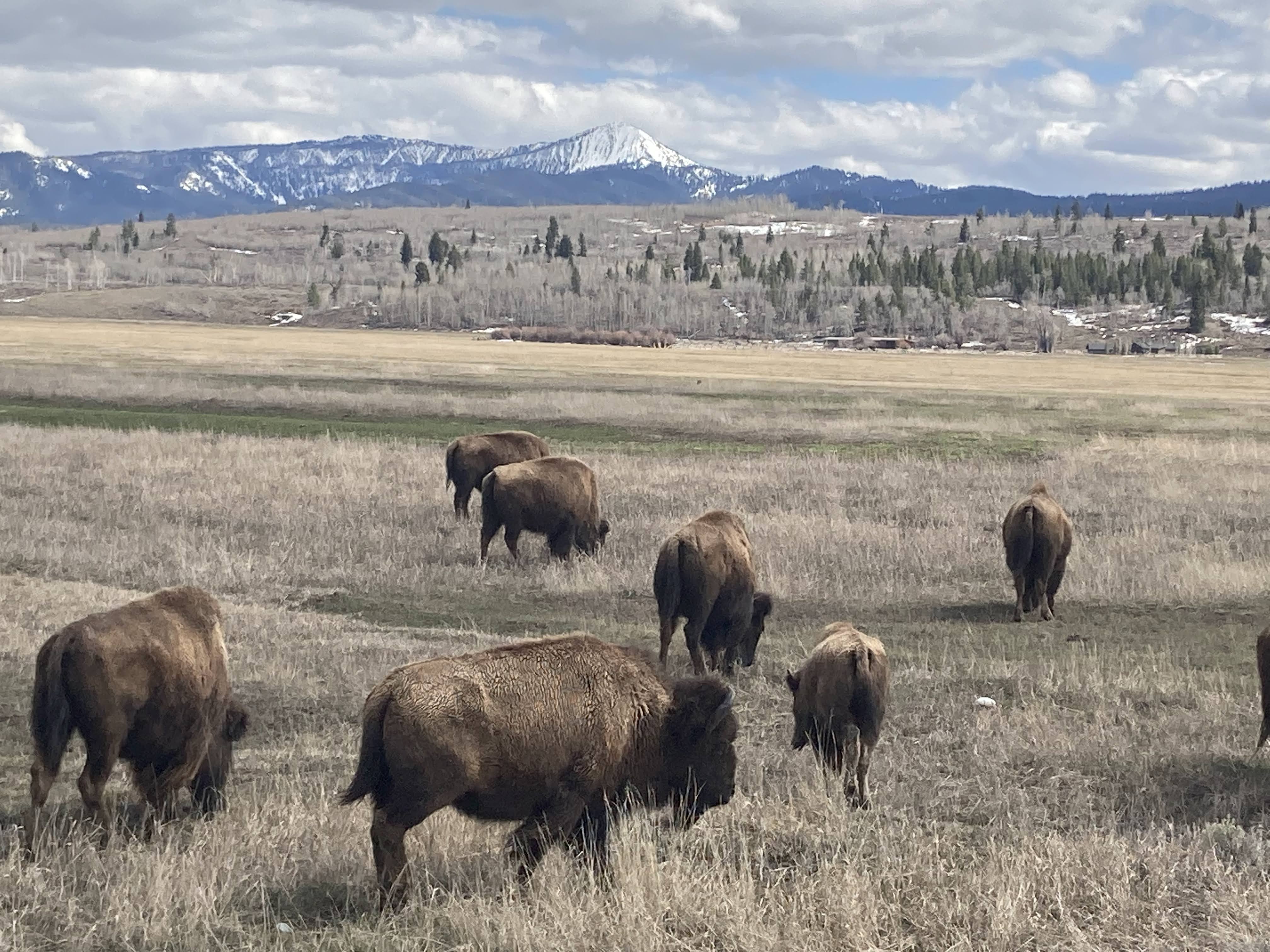
In the end, over five days, we spotted moose, plenty of bison (which we kept a safe distance from, as they are truly impressive animals), deer, elk, pronghorns, beavers, chipmunks, eagles, ospreys, and even a wolf. But no bears. Our bear spray remained unused, which was a relief.
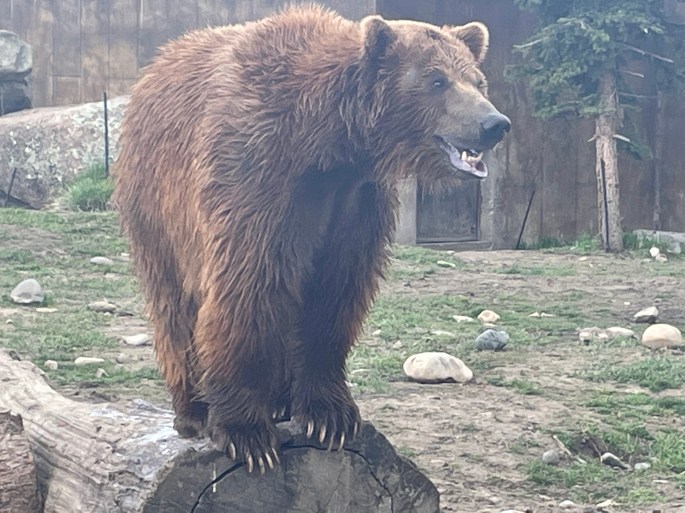
To wrap things up for the kids, on our last day, we visited a bear sanctuary where young bears that are injured or orphaned are cared for. Max, a sixteen-year-old grizzly, greeted us with a big toothy smile! And we were glad there was a fence between us!
We’ve been traveling for four months now, and there are moments when I feel overwhelmed by all the impressions. It’s overflowing, just like it is right now. We’ve experienced and seen so much that I need to take a break. To write. To give space to all these impressions. To reflect. To find calm and inner silence. To clear my head. To make room and gather energy for everything that’s still to come. And there’s still a lot ahead. Tomorrow, we’ll leave Yellowstone for the northwest. Traveling through Montana, Idaho, and Oregon, we’ll arrive in Washington state in about ten days. We’ve been making our way through the western U.S. in a sort of semicircle. Finally, we’ll fly from Seattle to the East Coast.
On our last day, the kids receive their Junior Ranger badges. It’s already the fourth time, but the ceremony is slightly different this time:
As a Junior Ranger,
I promise to learn,
And protect Grand Teton National Park,
And all wild places.
And to talk about this park,
And the importance of its preservation,
To at least three people once I get back home.
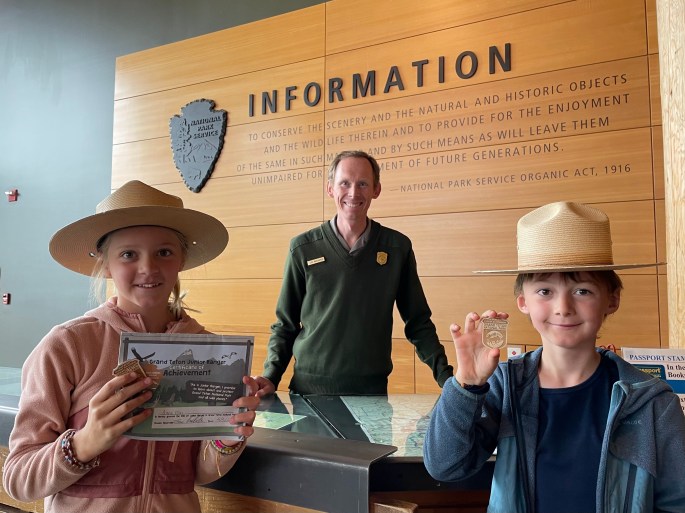
They pose proudly for the photo, wearing the Ranger hats on their heads and badges on their chests. Another wonderful memory for the trophy shelf, which is already full.
 Globetrotterdammers